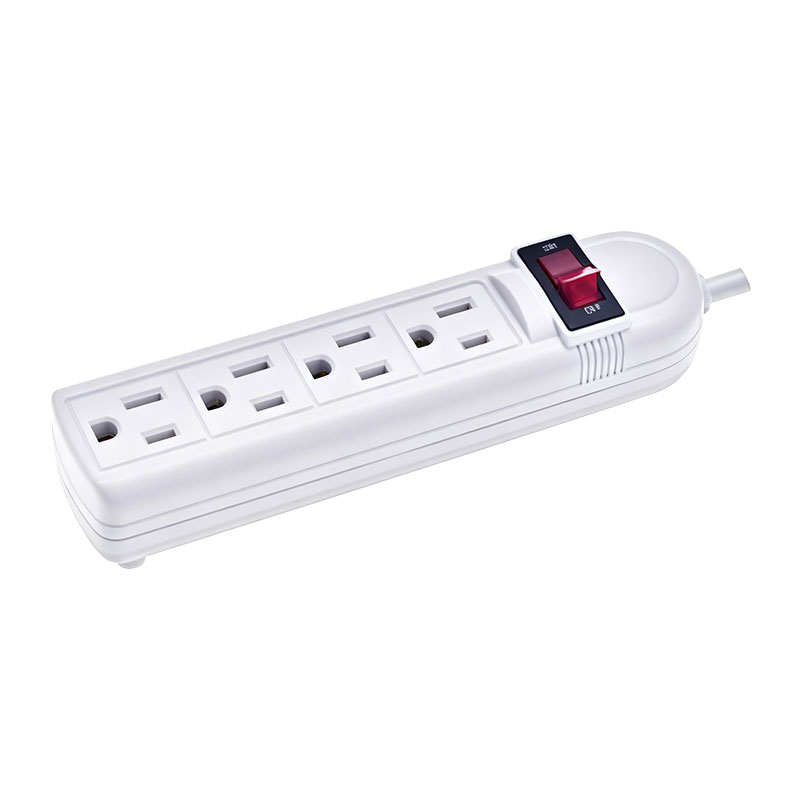
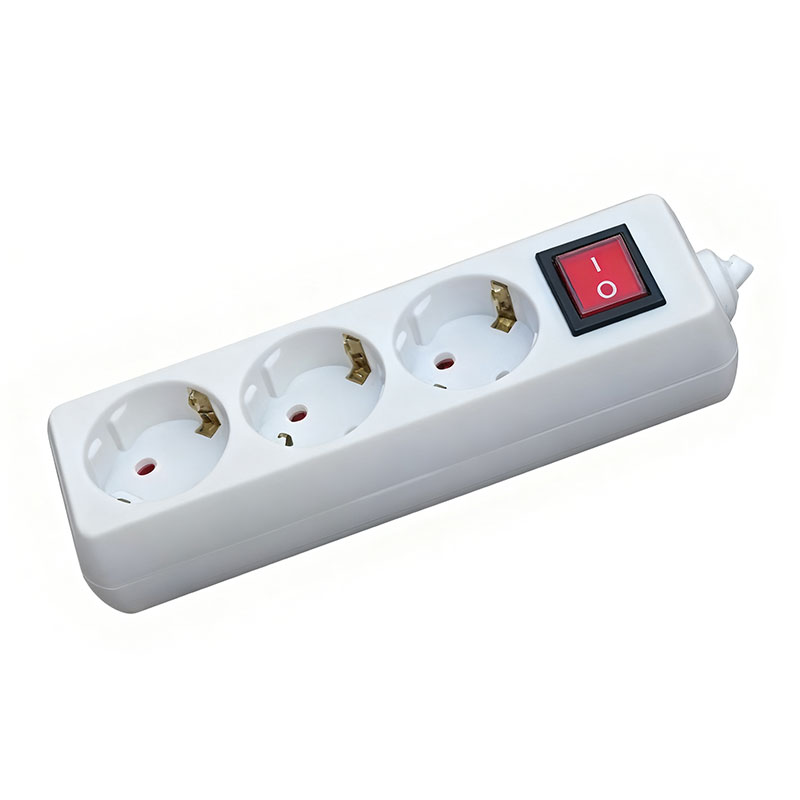
An outlets power strip is one of the most practical and frequently purchased electrical accessories in both residential and commercial settings. It takes a single wall outlet and multiplies its connection capacity, allowing multiple devices to draw power simultaneously from a single source point. Whether positioned on a desk with a computer, monitor, and charging peripherals all connected at once, or mounted behind a home entertainment system serving a television, soundbar, streaming device, and gaming console, the outlets power strip is the component that makes modern multi device living possible without rewiring every room in a building.
The direct conclusion for anyone selecting an outlets power strip is this: the most important specifications are the total current capacity of the strip (rated in amperes), the number and spacing of outlets, the quality of the surge protection (if included), and the certifications that confirm the product has been independently tested to relevant safety standards. A power strip without surge protection is adequate for devices that are not sensitive to voltage spikes, but any electronics including computers, televisions, audio equipment, and smart home devices should be connected through a strip with genuine surge protection rated in joules. This article covers all of these factors in full practical depth.
How an Outlets Power Strip Works?
At its simplest, an outlets power strip is a length of electrical cable with a plug at one end and a row of socket outlets in a housing at the other. The internal wiring connects all outlets in parallel, meaning each outlet receives the full supply voltage and each connected device draws current independently. The total current drawn by all connected devices simultaneously must not exceed the rated current capacity of the power strip's cable and internal wiring, which is the fundamental safety constraint that determines how many and what types of devices can be safely connected at once.
Current Capacity and Why It Matters
The current rating of a power strip, typically 10 amperes or 13 amperes in the UK market and 15 amperes or 20 amperes in the North American market, defines the maximum total current that can safely flow through the strip's wiring simultaneously. Exceeding the rated current causes the wiring to overheat, which in the worst case results in insulation melting, short circuits, and fire. A standard 13A UK outlets power strip operating at its full rated capacity delivers a maximum power of 3,120 watts (13A x 240V), which is sufficient for most combinations of office and household electronics but would be exceeded if large heating appliances such as kettles, space heaters, or hair dryers are connected alongside other devices. Most electronics including computers, monitors, televisions, and phone chargers draw relatively low currents individually, so the total rarely approaches the strip's limit in office and entertainment applications; the risk arises when high wattage heating or cooking appliances are connected.
Surge Protection: What It Does and How It Is Rated
Surge protection in an outlets power strip uses metal oxide varistors (MOVs) to divert transient voltage spikes away from connected devices before they can cause damage. Voltage surges occur from lightning strikes on the power network, switching of large electrical loads on the same circuit, and the switching of utility company equipment. Without protection, a surge of several hundred to several thousand volts lasting microseconds can destroy the internal components of sensitive electronics. A surge protected outlets power strip diverts this energy to the earth connection before it reaches the connected devices. The energy absorption capacity of the MOV protection is expressed in joules: a strip rated at 1,000 joules will absorb larger surges and tolerate more cumulative surge events than a strip rated at 200 joules before the MOV protection degrades. For home offices and entertainment systems, a joule rating of 1,000 to 2,500 joules is the appropriate specification for meaningful protection.
Types of Outlets Power Strips and Their Applications
The outlets power strip category includes several distinct product types that serve different use environments and requirements. Understanding the differences between these types ensures that the selected strip is appropriate for the specific application rather than simply the nearest available product.
| Strip Type |
Key Features |
Best Application |
Surge Protection |
| Basic power strip |
Multiple outlets, on/off switch, no surge protection |
Lamps, fans, low value appliances |
None |
| Surge protected strip |
MOV surge diversion, joule rated protection, indicator light |
Computers, TVs, audio equipment |
Yes: 200 to 4,000+ joules |
| USB outlets power strip |
AC outlets combined with USB A and USB C ports |
Desks, bedside tables, travel |
Optional |
| Individually switched strip |
Separate on/off switch per outlet socket |
Home offices, studio setups |
Optional |
| Smart outlets power strip |
Wi Fi or app control, energy monitoring, scheduling |
Smart home, remote work setups |
Usually included |
| Heavy duty industrial strip |
Metal housing, higher current rating, rack mount options |
Server rooms, workshops, studios |
Often included |
USB Integrated Outlets Power Strips
One of the most significant developments in the outlets power strip category over the past decade has been the integration of USB charging ports alongside AC outlets. Dedicated USB ports in a power strip deliver regulated DC voltage directly at the strip level, meaning devices charged through USB do not each require a separate wall adapter plugged into one of the AC outlets, which frees up AC outlets for mains powered devices and reduces the total number of adapters contributing heat within the strip housing. Modern USB C Power Delivery (PD) ports integrated into premium outlets power strips deliver up to 65 watts or 100 watts per port, sufficient to fast charge a laptop, making the USB C port a genuinely useful outlet for high demand portable devices rather than a low power convenience feature.
Key Safety Standards and Certifications for Outlets Power Strips
The safety of an outlets power strip depends on the quality of its electrical components, the integrity of its wiring and connections, and compliance with the safety standards of the market in which it is sold. Purchasing a power strip that lacks recognized safety certification is a genuine risk: uncertified products from unknown manufacturers frequently use undersized wiring, flammable plastic housings, and inadequately rated components that do not maintain safety under the sustained load and heating conditions of normal use.
- CE marking (European Union): Confirms that the product meets the essential requirements of applicable EU directives including the Low Voltage Directive and the Electromagnetic Compatibility Directive. CE marking is a manufacturer's self declaration and is a minimum requirement for sale in EU markets, but does not guarantee third party independent testing.
- BS 1363 approval (United Kingdom): The relevant British Standard for UK type plugs and socket outlets. Power strips sold in the UK should carry BS 1363 approval for their plug and outlet construction, along with the BS 5733 standard for general purpose electrical accessories.
- UL listing (United States and Canada): Underwriters Laboratories listing confirms that the product has been independently tested and found to comply with UL 1363, the Standard for Relocatable Power Taps. The UL mark on an outlets power strip is the most meaningful safety credential available in the North American market and should be considered a minimum requirement for any strip used with electronics.
- RoHS compliance: Restriction of Hazardous Substances compliance confirms that the product does not contain restricted levels of lead, mercury, cadmium, and other substances hazardous to health and the environment, required for sale in the EU and adopted as a standard by many manufacturers globally.
Outlet Spacing and Physical Design Considerations
The physical design of an outlets power strip, particularly the spacing between its individual outlet sockets, has a significant practical impact on usability that is often not apparent from product specifications alone. Many power adapters and chargers have a physical footprint wider than the outlet they plug into, meaning that plugging a large adapter into one socket can physically obstruct the adjacent sockets and prevent their use even though the electrical capacity of the strip is not exceeded.
A power strip with outlets spaced 2.5 cm apart center to center (common in budget strips) may only accommodate 3 to 4 usable connections from its 6 outlets when larger adapters are present, effectively halving its functional connection capacity. Strips with wider outlet spacing of 4 to 5 cm, or those designed with alternating outlet orientations to accommodate large plugs without blocking adjacent sockets, provide significantly better real world usability when a mix of standard cables and bulky adapters are in use.
Cord Length and Routing
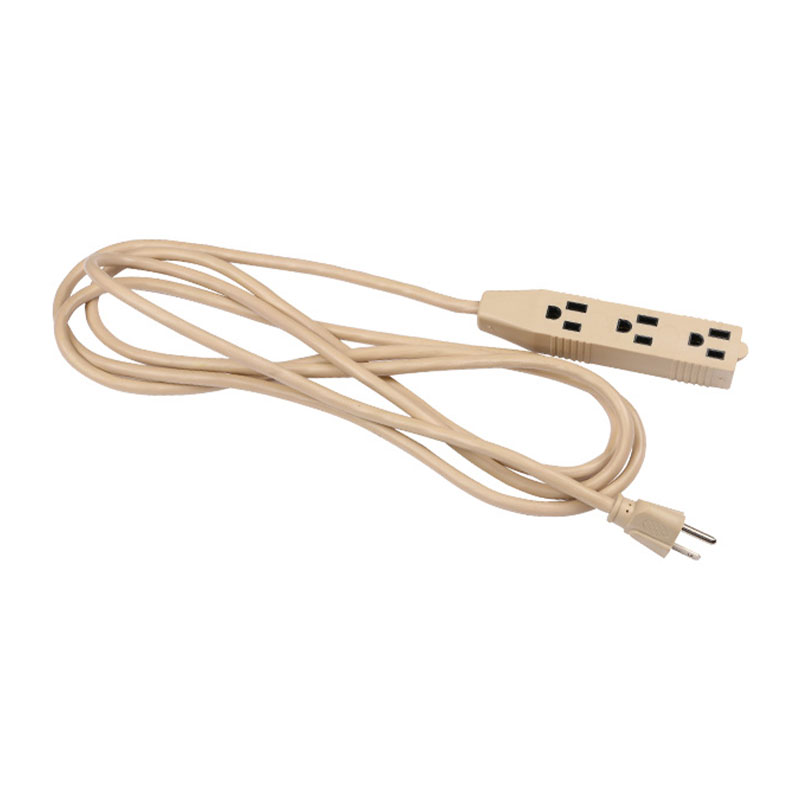
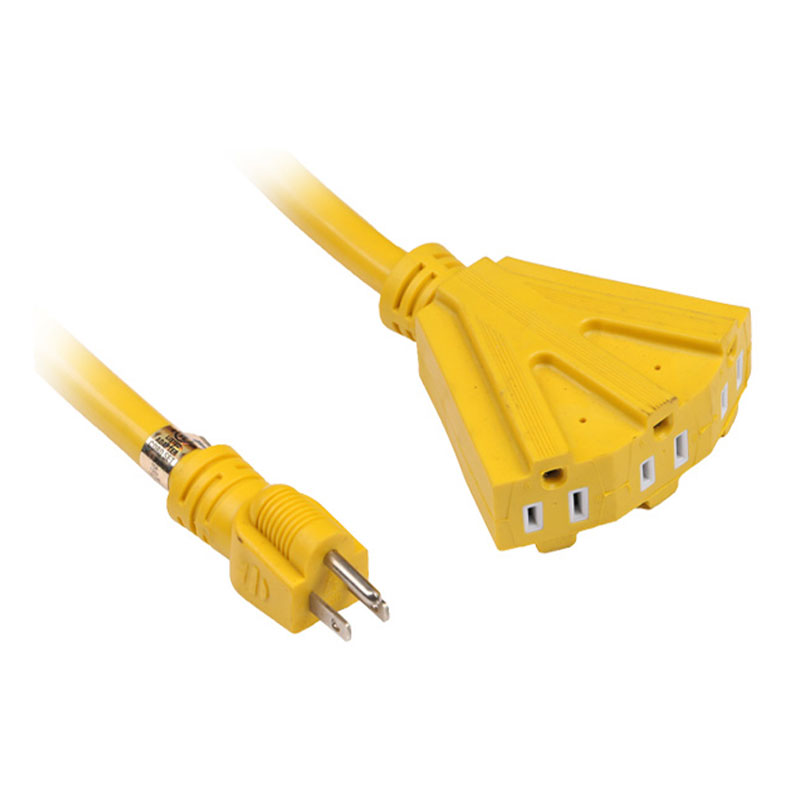
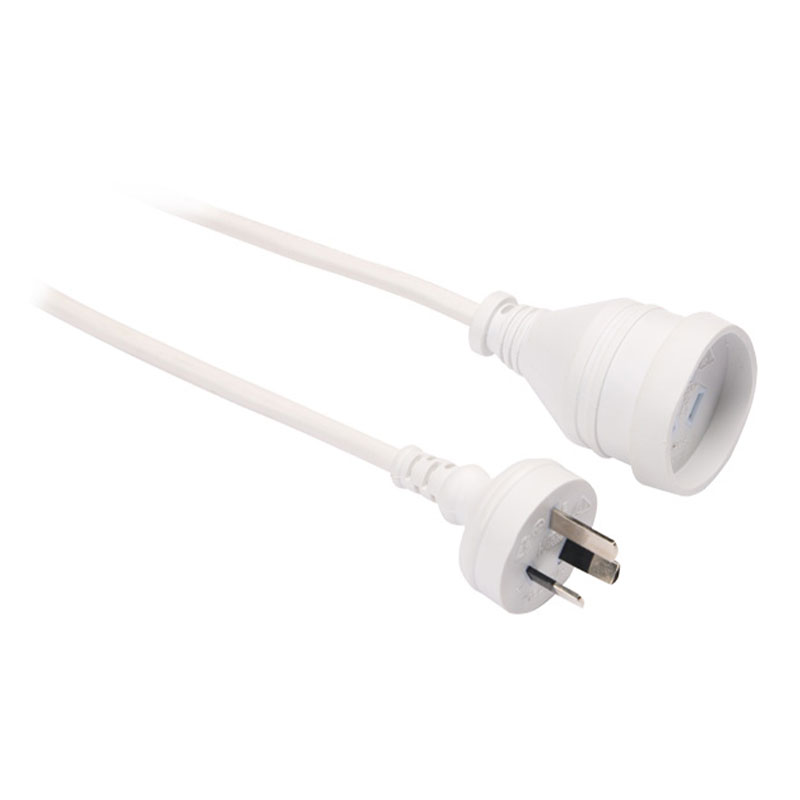
The length of the power cord between the wall plug and the strip housing determines how flexibly the strip can be positioned relative to the wall outlet. Standard cord lengths for outlets power strips are 1.5 meters, 2 meters, and 3 meters. For desk use where the wall outlet is near the desk, 1.5 meters is typically sufficient. For entertainment centers and home cinema setups where equipment may be positioned some distance from the wall outlet, 3 meters provides more placement flexibility. Extension leads that add extra length beyond the strip's integral cord should only be used if the extension lead is rated for the same or higher current as the power strip, and daisy chaining one power strip into another is a practice that should be avoided as it can create a current overload condition that neither strip's overload protection detects correctly.
Safe Use Practices for Outlets Power Strips
The most common causes of power strip related electrical incidents are predictable and preventable through straightforward safe use practices. Following these guidelines eliminates the principal risks associated with outlets power strips in both home and office environments:
- Never exceed the rated total current. Add up the wattage of all devices connected to the strip and verify that the total does not exceed the strip's watt rating (current rating multiplied by supply voltage). If in doubt, leave one or two outlets unoccupied as a safety margin rather than connecting every available socket simultaneously.
- Do not connect high wattage heating appliances. Electric kettles, space heaters, electric radiators, hair dryers, and other resistance heating appliances draw currents of 8 to 13 amperes individually and should be plugged directly into wall outlets rather than through a power strip. A single high wattage heating appliance can use the strip's entire current capacity, leaving no safety margin for other connected devices.
- Keep the strip accessible and unobstructed. Power strips generate heat during normal use, particularly when operating near their rated capacity. Covering a power strip with carpet, placing it under furniture without air circulation, or burying it under papers and cushions restricts the heat dissipation that the housing is designed to manage and can lead to overheating. Always ensure the strip is positioned in an open location with adequate airflow around the housing.
- Replace the strip if surge protection has been exhausted. Surge protected outlets power strips include an indicator light that signals when the MOV protection is still functional. When this light extinguishes or changes color, the surge protection has been depleted by accumulated surge events, and while the strip continues to function as a power strip, connected electronics are no longer protected. Replace the strip rather than continuing to use it without protection for sensitive devices.
- Inspect the cord and plug regularly. Physical damage to the power cord, discoloration of the plug, and outlets that feel loose or spark when a plug is inserted are all signs that the strip should be taken out of service immediately. Damaged wiring inside a power strip housing is not visible from the outside and a strip that shows external damage signs should be replaced rather than repaired.
A correctly specified and safely used outlets power strip is an entirely reliable and beneficial electrical accessory that can serve many years of daily use without incident. The combination of appropriate current capacity, meaningful surge protection, adequate outlet spacing, recognized safety certification, and adherence to straightforward safe use principles covers virtually all of the practical considerations required to select and use this product safely and effectively in any residential or commercial setting.


 English
 русский
 Español
 عربى
عربى

 Custom Electric Heater Components Manufacturers