What You Must Know Before Combining These Three Devices
Never plug an Immersion Water Heater into an Extension Cord or an Outlets Power Strip unless the cord or strip is explicitly rated for the heater's full wattage load. Most immersion heaters draw between 1000 and 2000 watts continuously, which exceeds the safe capacity of the vast majority of standard household extension cords and many multi-outlet power strips. Plugging a high-wattage heating device into an undersized extension cord or overloaded power strip is one of the leading causes of residential electrical fires in countries where portable immersion heaters are widely used.
The practical rule is straightforward: an Immersion Water Heater should be plugged directly into a grounded wall outlet wherever possible. If an Extension Cord must be used, it must be a heavy-duty cord rated for at least 15 amperes and 1875 watts at 125 volts, made with 14 AWG or thicker wire, and kept as short as possible. An Outlets Power Strip used with an immersion heater must carry an individual outlet rating and a total circuit rating that both exceed the heater's rated wattage, and no other significant load should share the same strip simultaneously.
This guide covers each device in detail so you can make safe, informed decisions about how to use them together or separately.
Immersion Water Heater: How It Works, What It Draws, and Where It Belongs
How an Immersion Water Heater Operates
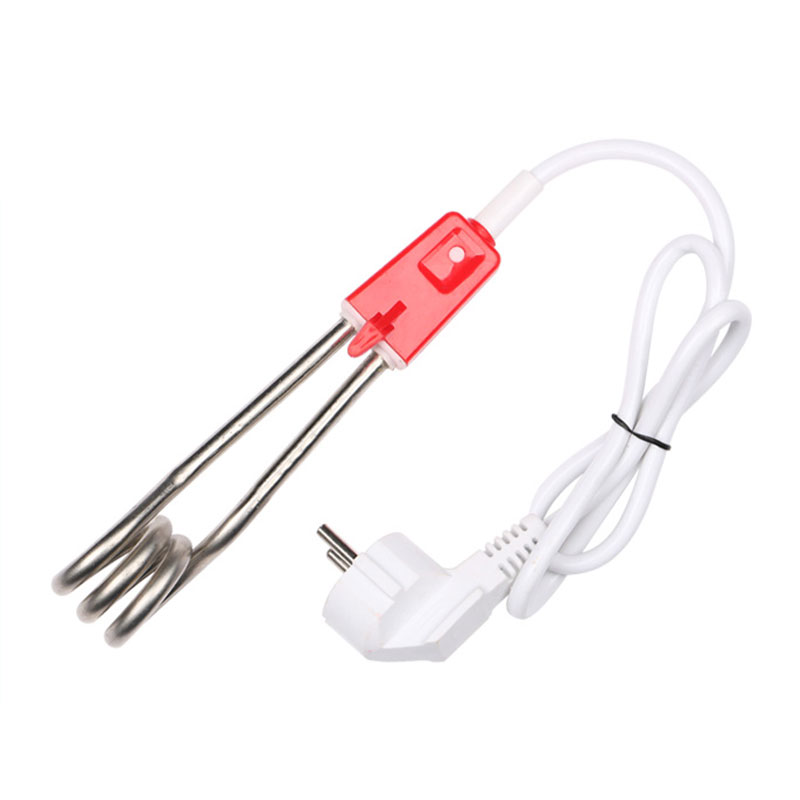
An Immersion Water Heater is a portable resistive heating element, typically a stainless steel or nichrome wire coil encased in a protective sheath, that is submerged directly into a container of liquid to heat it. Unlike a kettle or an electric stove, the heating element makes direct contact with the water, transferring energy with very high efficiency since no heat is lost through an intermediary vessel base or radiated into the surrounding air.
Most consumer immersion heaters sold globally operate at 1000 to 2000 watts and can bring one liter of water from room temperature (20 degrees Celsius) to boiling (100 degrees Celsius) in approximately 5 to 8 minutes at 1500 watts. The heating time scales linearly with volume: two liters takes 10 to 16 minutes, and so on. This rapid heating speed is precisely why the sustained electrical draw is so high and why electrical infrastructure requirements are stricter than for many other household appliances.
Safe Usage Rules for an Immersion Water Heater
- Always ensure the heating element is fully submerged before connecting to power. Running the element in air, even briefly, causes the sheath to overheat and can destroy the element within seconds or ignite nearby materials
- Use only in heat-resistant containers such as ceramic mugs, glass pitchers, or stainless steel bowls. Never use in thin plastic containers, which can melt or leach chemicals into the water at boiling temperatures
- Never leave an operating Immersion Water Heater unattended. Unlike a kettle with an auto-shutoff, most basic immersion heaters have no boil-dry protection and will continue heating until manually disconnected or until the element fails
- Disconnect from power before removing the heater from the water. Touching a live immersion heater element outside of water creates an immediate electrocution risk
- Inspect the cord, plug, and element sheath before each use. Any crack, discoloration, fraying, or visible corrosion on the element is grounds for immediate disposal and replacement
- Always use a grounded three-prong outlet with a properly earthed circuit. A ground fault circuit interrupter (GFCI) outlet provides additional protection and is strongly recommended for any water heating application
Wattage and Ampere Draw Reference for Common Immersion Heaters
| Heater Wattage |
Current Draw at 120V |
Current Draw at 240V |
Minimum Cord Rating Required |
Time to Boil 1 Liter |
| 500W |
4.2A |
2.1A |
10A rated cord |
Approx. 15 to 20 minutes |
| 1000W |
8.3A |
4.2A |
12A rated cord minimum |
Approx. 8 to 10 minutes |
| 1500W |
12.5A |
6.25A |
15A rated cord minimum |
Approx. 5 to 7 minutes |
| 2000W |
16.7A |
8.3A |
20A rated cord minimum |
Approx. 4 to 5 minutes |
Extension Cord: Choosing the Right Rating and Length for High-Load Devices
Why Extension Cord Gauge Matters More Than Most People Realize
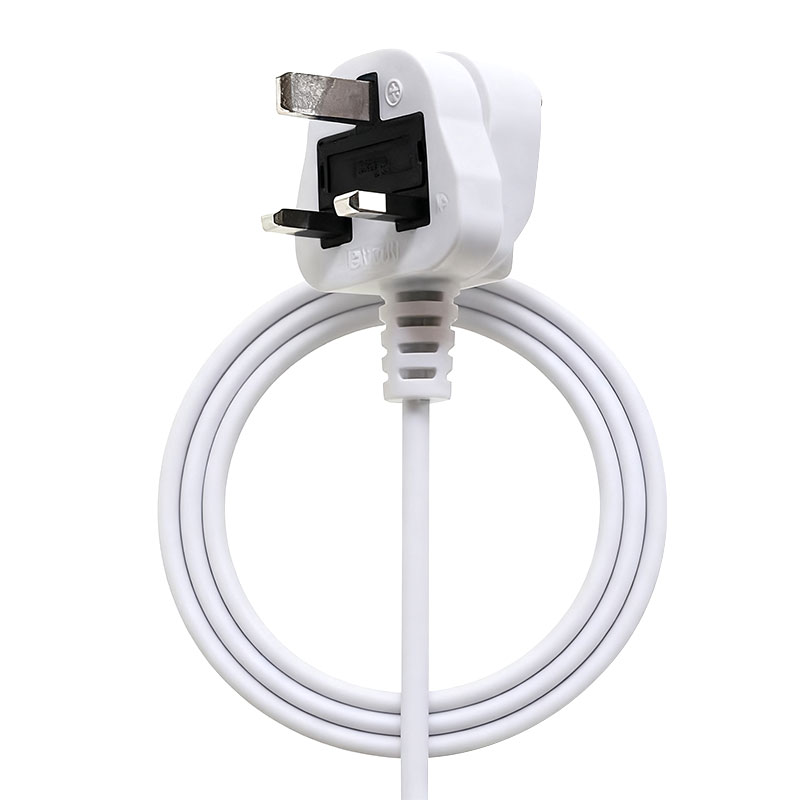
An Extension Cord is not a simple passive conductor. Its internal wire has resistance, and that resistance generates heat proportional to the square of the current flowing through it. A cord that is too thin for its load does not just perform poorly; it heats up, softens its insulation from the inside, and can ignite surrounding materials or its own jacket before any visible warning is apparent. The majority of extension cord fires investigated by fire safety authorities involve cords being used at or beyond their rated capacity, often for sustained periods with heating appliances.
Wire gauge in the American Wire Gauge (AWG) system works inversely: a lower AWG number means a thicker wire with lower resistance and higher current capacity. The most important gauges for household use are:
- 16 AWG: rated for up to 1250 to 1625 watts at standard household voltage. Suitable for lamps, phone chargers, computers, and small appliances. Not suitable for an Immersion Water Heater above 1000 watts
- 14 AWG: rated for up to 1875 watts. The minimum acceptable gauge for a 1500-watt Immersion Water Heater and the standard for most heavy-duty household extension cords sold in retail settings
- 12 AWG: rated for up to 2500 watts. Required for 2000-watt immersion heaters, large power tools, and other high-draw appliances. These cords are noticeably thicker and heavier than standard cords
- 10 AWG: rated for up to 3750 watts. Industrial or workshop grade, rarely needed for typical household appliances
How Cord Length Affects Safe Current Capacity
A critical and frequently overlooked fact about Extension Cords is that their safe current capacity decreases as their length increases, because longer cords have higher total resistance and generate proportionally more heat under load. A 14 AWG cord rated for 15 amperes at 25 feet (7.6 meters) may be safely derated to only 12 amperes at 50 feet (15.2 meters) and to approximately 10 amperes at 100 feet (30.5 meters). For an Immersion Water Heater drawing 12.5 amperes at 1500 watts, this means a 14 AWG cord longer than roughly 8 to 10 meters begins to exceed its safe operating temperature under continuous use.
The practical guidance is to use the shortest Extension Cord that the installation situation requires. Coiling unused length of a cord under load is particularly dangerous because the coiled section cannot dissipate heat into the surrounding air effectively, causing temperatures to rise even faster than a straight cord of equivalent length would.
Extension Cord Features That Improve Safety
- Built-in circuit breaker or thermal fuse that trips if the cord exceeds its rated current, providing a last-resort protection against overload
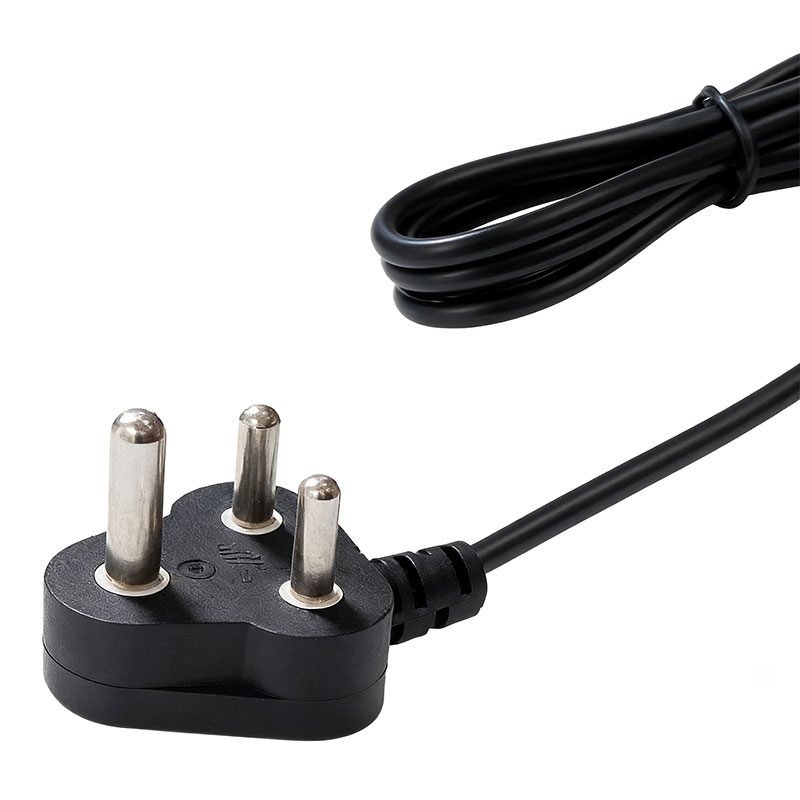
- Three-prong grounded plug and grounded outlets on the cord body, ensuring the earth connection is maintained from the wall outlet through to the connected appliance
- UL, ETL, or equivalent third-party safety certification marking on the cord jacket, confirming the stated gauge and rating have been independently verified
- Heavy-duty insulation jacket rated for outdoor or workshop use, which provides better abrasion resistance and temperature tolerance than thin indoor-only cord jackets
Outlets Power Strip: Understanding Ratings, Surge Protection, and Load Limits
What an Outlets Power Strip Actually Provides and What It Does Not
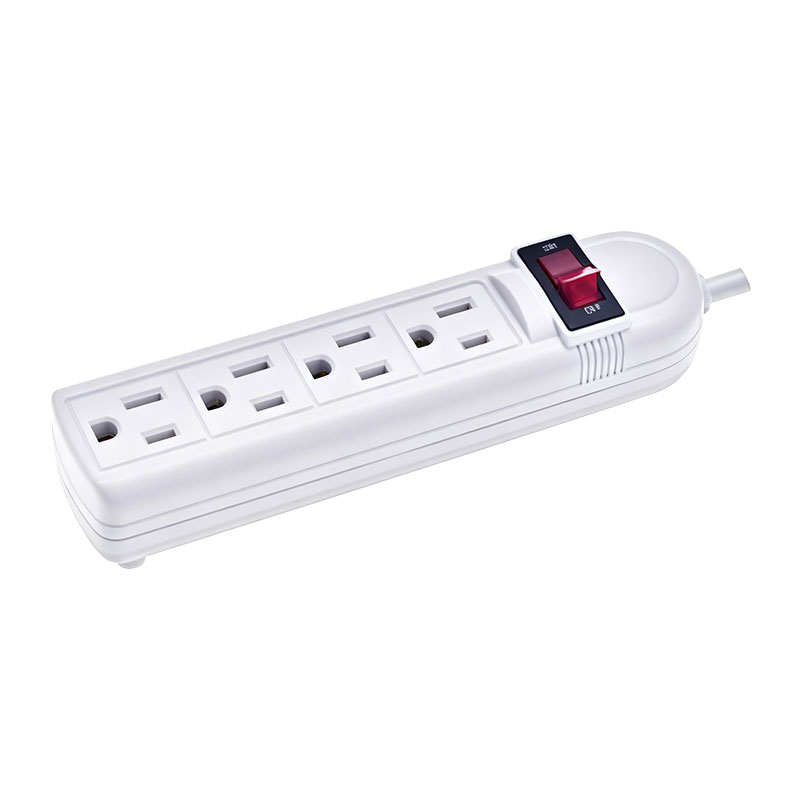
An Outlets Power Strip is a device that multiplies a single wall outlet into multiple receptacles, typically 4 to 12 outlets in a single housing, often combined with a power switch and in many models a surge protection circuit. What a power strip does not do is increase the available electrical capacity of the circuit it is connected to. The total wattage that can be safely drawn through an Outlets Power Strip is limited by whichever is lowest: the strip's own rated capacity, the Extension Cord connecting it to the wall if one is used, or the wall circuit breaker capacity.
Most standard household Outlets Power Strips are rated for 15 amperes and 1875 watts total across all outlets combined, not per outlet. This is a commonly misunderstood point. A strip with 6 outlets does not provide 6 times 1875 watts of capacity; it provides a single shared capacity of 1875 watts across all 6 outlets simultaneously. Connecting a 1500-watt Immersion Water Heater to such a strip leaves only 375 watts of remaining capacity for all other devices on the same strip.
Surge Protection vs Simple Power Strip: Which One to Choose
Outlets Power Strips fall into two broad categories: basic multi-outlet strips with no surge protection, and surge-protected power strips that include a metal oxide varistor (MOV) circuit designed to absorb voltage spikes and protect connected electronics. The distinction matters significantly for what you connect to each type:
| Feature |
Basic Outlets Power Strip |
Surge-Protected Power Strip |
| Surge protection |
None |
Yes, rated in joules (typically 600 to 3000 J) |
| Best for |
Lamps, fans, phone chargers |
Computers, TVs, audio equipment |
| Safe for heating appliances |
Only if total load stays within rating |
Generally not recommended; heat degrades MOV components |
| Circuit breaker included |
Sometimes |
Usually yes |
| Typical total rating |
15A or 1875W |
15A or 1875W |
| Price range |
Lower cost |
Higher cost (dependent on joule rating) |
A surge-protected power strip is designed primarily for sensitive electronics that need protection from transient voltage spikes. High-wattage resistive loads like an Immersion Water Heater produce no voltage spikes themselves and derive no benefit from surge protection circuitry, while the sustained high current draw from the heater can degrade the MOV components in a surge strip over time. For an immersion heater, a heavy-duty basic strip with a circuit breaker is preferable to a surge-protected strip if a power strip must be used at all.
How to Calculate Whether Your Power Strip Can Safely Handle Your Devices
Calculating safe loading on an Outlets Power Strip is straightforward. Add up the wattage of every device connected simultaneously and compare it to the strip's total rated wattage. The sum must be less than the rated capacity, with a safety margin of at least 20 percent recommended for sustained high-wattage loads. For example:
- Immersion Water Heater at 1500W plus laptop charger at 65W plus desk lamp at 40W equals 1605W total, which is within a 1875W rated strip but leaves only 270W of remaining capacity and no meaningful safety margin for a 1500W continuous load
- The recommended approach: connect the Immersion Water Heater to its own dedicated wall outlet and use the Outlets Power Strip only for the low-wattage devices such as chargers, lamps, and small electronics
Using All Three Together: Safe Configurations and What to Avoid
The One Combination That Creates the Most Risk
The highest-risk configuration is: Immersion Water Heater plugged into an Outlets Power Strip, which is itself connected to the wall via a lightweight Extension Cord. This daisy-chain arrangement stacks three potential failure points in series and is responsible for a disproportionate share of electrical fires involving portable heating appliances. At 1500 watts, a single undersized extension cord in this chain can reach internal temperatures above 60 degrees Celsius within 10 to 15 minutes of continuous operation, well above the temperature at which the PVC insulation of budget cords begins to soften and degrade.
Safe Configurations for Each Use Scenario
- Ideal setup: Immersion Water Heater plugged directly into a grounded GFCI wall outlet. No extension cord, no power strip in the circuit. This is the only configuration that carries no added electrical risk beyond the heater itself
- Acceptable setup when distance from outlet is necessary: Immersion Water Heater plugged into a single heavy-duty 14 AWG or thicker Extension Cord rated for at least 15 amperes, kept as short as possible and fully uncoiled during use. The cord connects directly to the wall outlet with no power strip in between
- Acceptable use of Outlets Power Strip: Connect only low-wattage devices (chargers, lamps, clocks, small fans) to the power strip, keeping the total load well below 80 percent of the strip's rated capacity. Keep the Immersion Water Heater on a separate circuit entirely
- Never do this: plug an Immersion Water Heater into any Outlets Power Strip that also carries other significant loads, or into any Extension Cord that is coiled, kinked, run under a rug, or of unknown or unverified gauge rating
Frequently Asked Questions
1. Can I plug an Immersion Water Heater into a standard Extension Cord?
Only if the Extension Cord is rated for the full wattage of the heater. A standard 16 AWG light-duty extension cord rated for 1250 watts is not safe for a 1500-watt or 2000-watt immersion heater. You need a minimum 14 AWG cord rated for at least 15 amperes for a 1500-watt heater, and a 12 AWG cord rated for 20 amperes for a 2000-watt heater. Always verify the cord's AWG rating printed on its jacket before use.
2. Is it safe to use an Immersion Water Heater with an Outlets Power Strip?
It is not recommended and should be avoided wherever possible. If no alternative exists, the Outlets Power Strip must be rated for at least 15 to 20 amperes total, must have no other significant loads connected simultaneously, and must be connected directly to a wall outlet without an extension cord in between. Even under these conditions, direct wall outlet connection is always the safer choice for any high-wattage heating appliance.
3. What happens if an Extension Cord overheats under load from an Immersion Water Heater?
An overloaded Extension Cord heats from the inside outward. The copper conductors transfer heat to the PVC insulation, which softens, melts, and eventually ignites. The outer jacket may show no visible damage until the internal temperature is already dangerously high, which is why overheating cords provide little visible warning before failure. A cord that feels warm or hot to the touch anywhere along its length during use is being overloaded and should be disconnected immediately.
4. How do I know if my Outlets Power Strip can handle a specific total load?
Check the label on the power strip body or the packaging for the total ampere rating and total wattage rating. Most standard strips are rated for 15 amperes and 1875 watts total across all outlets combined. Add up the wattage of all devices you plan to connect simultaneously. That total must stay below 80 percent of the strip's rated capacity for sustained loads, meaning no more than 1500 watts for a standard 1875-watt strip.
5. What AWG Extension Cord should I use for a 2000-watt Immersion Water Heater?
A 2000-watt Immersion Water Heater draws approximately 16.7 amperes at 120 volts. This exceeds the safe capacity of a 14 AWG cord (rated for 15 amperes) under sustained continuous operation. You need a 12 AWG cord rated for at least 20 amperes. Additionally, keep the cord as short as possible since longer cords have higher resistance and lower safe current capacity, and always keep it fully uncoiled during use.
6. Can I leave an Immersion Water Heater running unattended?
No. Most basic immersion heaters have no automatic shutoff, boil-dry protection, or thermal cutoff. If left running after the water has boiled away or at any point when the element is no longer fully submerged, the element will overheat catastrophically, potentially melting its housing, igniting nearby materials, or causing an electrical fault. Always monitor an operating Immersion Water Heater and disconnect it from power before walking away.
7. Does surge protection in an Outlets Power Strip protect against damage from an Immersion Water Heater?
No. Surge protection is designed to absorb transient voltage spikes from the power line, not to manage overcurrent from connected appliances. An Immersion Water Heater draws sustained high current rather than generating voltage spikes. Connecting a high-wattage heater to a surge-protected Outlets Power Strip provides no benefit from the surge components and may degrade those components over time due to the high thermal load in the circuit.
8. Why does my Extension Cord feel warm when the Immersion Water Heater is running?
Some warmth in a cord under heavy load is normal for a correctly rated cord, but warmth that is uncomfortable to hold or that increases progressively over time is a warning sign of overloading. If the cord feels more than slightly warm anywhere along its length, disconnect the heater immediately. This indicates either that the cord's gauge is insufficient for the heater's wattage, that the cord is partially coiled and cannot dissipate heat normally, or that the cord has internal damage increasing its resistance.
9. What is the safest container to use with an Immersion Water Heater?
Stainless steel and borosilicate glass are the safest container materials for use with an Immersion Water Heater. Both can withstand sustained boiling temperatures without deforming or releasing chemicals into the water. Ceramic mugs are also acceptable for small volumes. Avoid thin plastic containers entirely, as they can soften and deform at boiling temperature and may leach plasticizers or other compounds into the water when in contact with a hot metal element.
10. Can I use one Outlets Power Strip to power both an Immersion Water Heater and a computer simultaneously?
This is not recommended and may be unsafe. A 1500-watt Immersion Water Heater alone draws 12.5 amperes, which is 83 percent of the total 15-ampere capacity of a standard power strip. Adding a computer, monitor, and chargers pushes the total load beyond the strip's safe rating. More importantly, the surge protection circuits designed to protect your computer can be compromised by the high sustained current draw of the heater sharing the same strip. Keep heating appliances and sensitive electronics on separate circuits at all times.


 English
 русский
 Español
 عربى
عربى

 Custom Electric Heater Components Manufacturers