Whether you need to heat water for a large industrial process, a commercial kitchen, or simply a small aquarium, the humble immersion water heater often provides the simplest and most direct solution. Also known as a bucket heater, electric immersion heater, or bayonet heater, this versatile device consists of an electric heating element that is placed directly into the liquid to be heated. But is an immersion water heater the right choice for your specific application? How does it compare to other heating methods like tankless heaters or heat exchangers? What safety precautions are essential, and how do you select the correct wattage, voltage, and material for your needs? This comprehensive guide answers every question you might have about immersion water heaters, from their basic operation to advanced industrial applications, energy efficiency considerations, and maintenance best practices.
An immersion water heater is a resistive heating device that is submerged directly into water or other process liquids. The heating element—typically made of copper, stainless steel, or Incoloy—converts electrical energy into heat, which is then transferred directly to the surrounding liquid. Because the element is in direct contact with the water, heat transfer is highly efficient, with minimal thermal losses. Immersion heaters are available in a wide range of sizes, from small 100-watt units for fish tanks to massive 100+ kW industrial models for boiler feedwater and chemical processing. They can be portable (plug-in bucket heaters) or permanently installed via threaded flanges or screw plugs (bayonet heaters).
In this article, we will explore the different types of immersion heaters, their key applications, how to size them correctly, installation and safety procedures, maintenance tips, and common troubleshooting. We will also compare them to alternative heating technologies and discuss emerging trends such as digital controls and energy-efficient designs. By the end, you will have the knowledge to select, install, and maintain the ideal immersion water heater for your home, workshop, or factory.
What Are the Different Types of Immersion Water Heaters?
Immersion water heaters come in several configurations, each suited to specific applications, installation methods, and performance requirements. Understanding the differences helps you choose the right model.
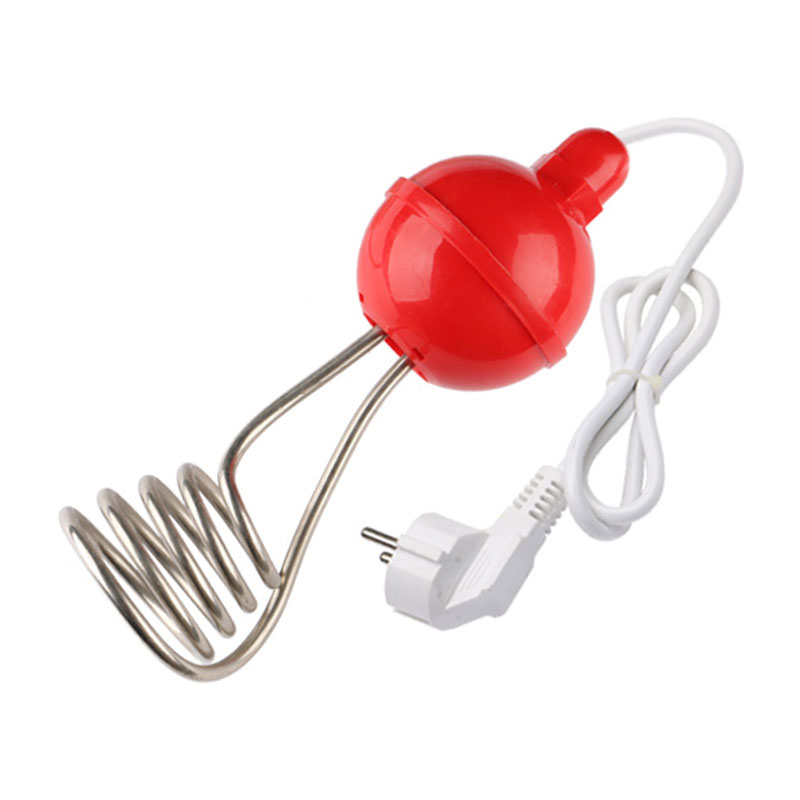
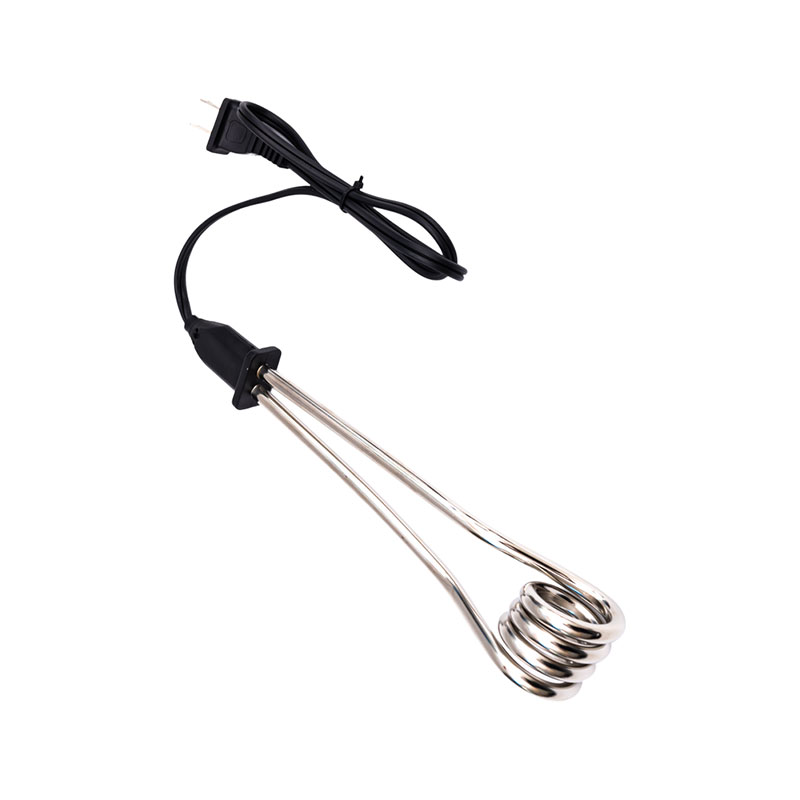
Portable Bucket Heaters (Handheld Immersion Heaters)
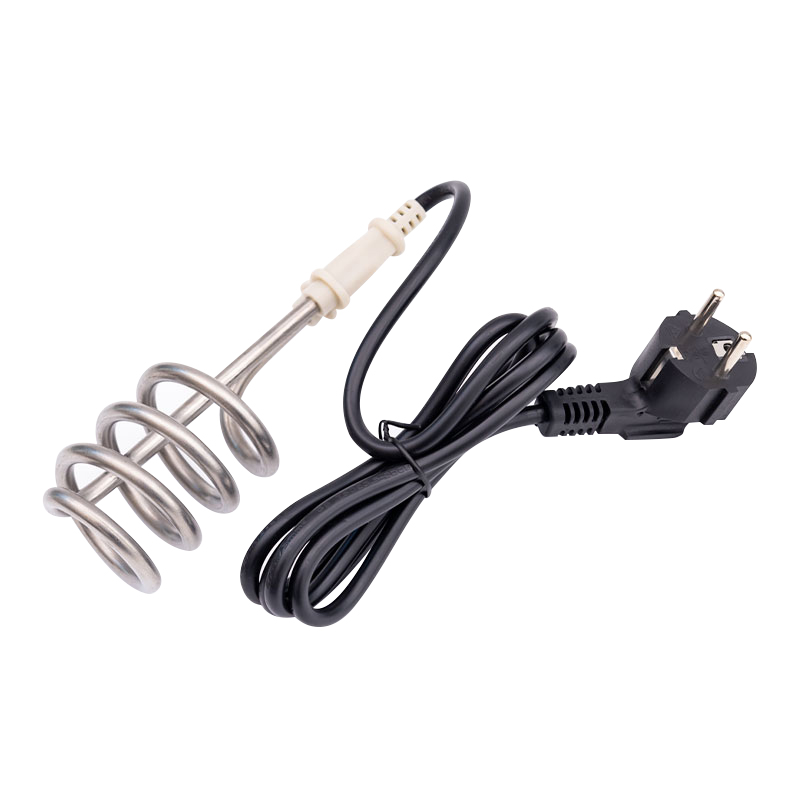
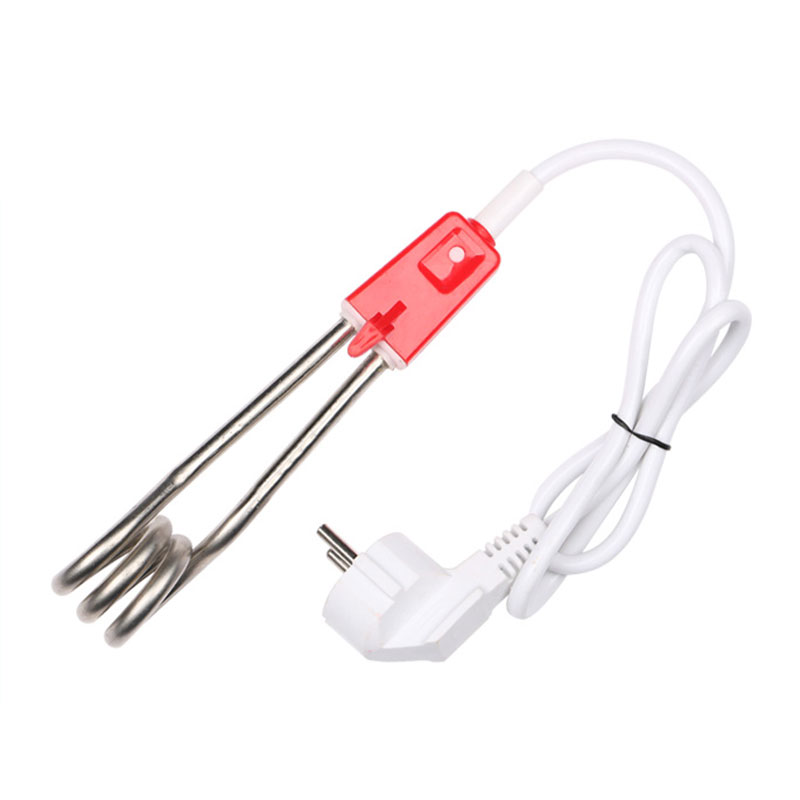
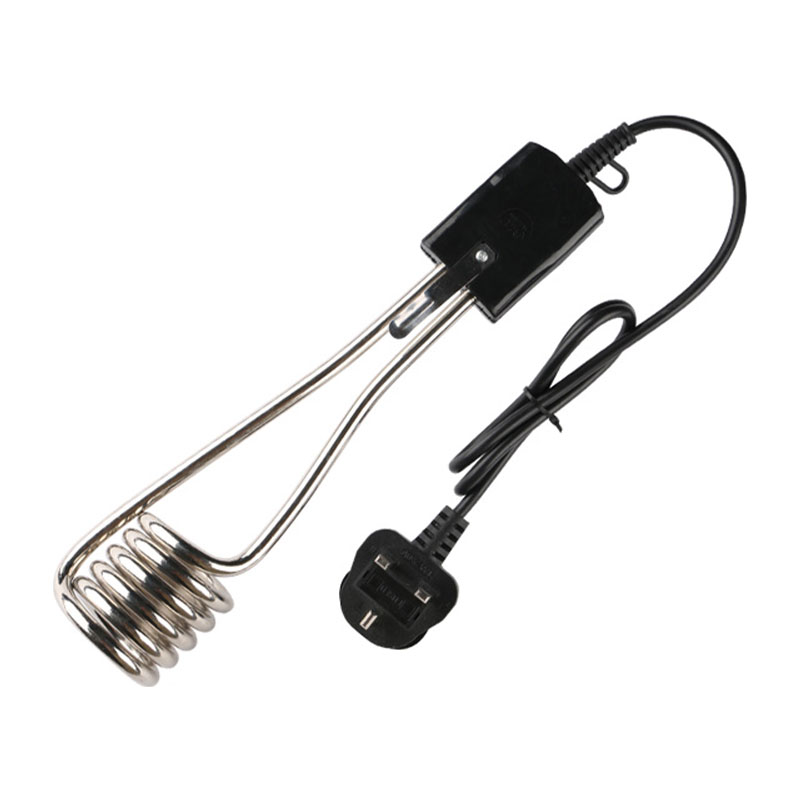
These are small, lightweight units with a heating element at the end of a flexible or rigid stem, often with a hook or clip to suspend them over the edge of a container. They plug into a standard electrical outlet (usually 120V or 240V) and are commonly used for heating water in buckets, troughs, or small tanks. Typical wattage ranges from 100W to 1500W. They are popular in agriculture (for livestock water troughs), on farms, in garages, and for camping or emergency use. Portable immersion heaters are inexpensive and easy to use, but they are not designed for continuous operation in large volumes.
Screw Plug or Bayonet Immersion Heaters
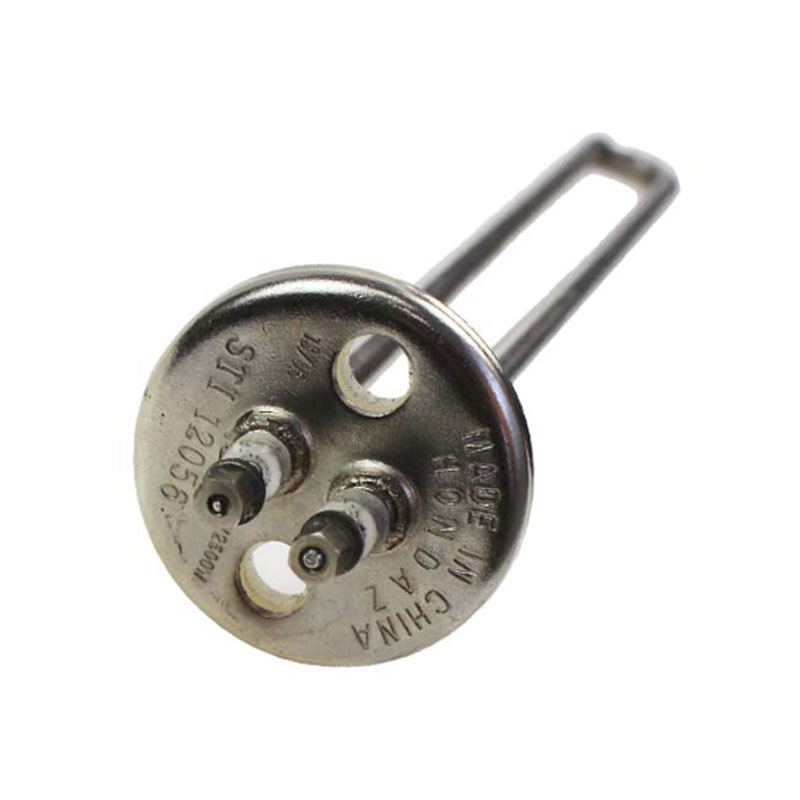
These heaters are permanently installed by threading into a matching NPT or BSP fitting on the side or bottom of a tank. They consist of a heating element bent into a hairpin shape, welded to a screw plug (usually 1-inch to 2-inch diameter). The element extends into the tank, and the external terminals are connected to power. Bayonet heaters are widely used in residential water heaters, boilers, and small industrial tanks. They are available in a range of wattages (1 kW to 20 kW) and voltages (120V to 480V). They offer a reliable, leak-proof seal and can be replaced without draining the tank (if a shut-off valve is installed).
Flange-Mounted Immersion Heaters
For larger tanks and higher power requirements, flange-mounted heaters are used. The heating elements are attached to a circular flange (e.g., 4-inch to 8-inch diameter) that is bolted to a matching tank opening. Multiple U-shaped or spiral elements are arranged in a bundle, allowing for high power densities (up to several hundred kW). Flange heaters are common in industrial process heating, including oil, water, chemicals, and heat transfer fluids. They can be designed with thermowells for temperature sensors and are available with explosion-proof enclosures for hazardous areas.
Over-the-Side Immersion Heaters
These are designed for large open tanks or vessels where a side or bottom mounting is not feasible. The heating element is suspended from a support structure that sits on the tank rim, with the element immersed in the liquid. They are used in plating tanks, cleaning solutions, and wastewater treatment. They are often made of corrosion-resistant alloys and can include built-in temperature controls.
In-Line or Flow-Through Immersion Heaters
These heaters are installed in a pipe or circulation loop, where liquid flows past the heating element. They are used for heating water or other fluids in continuous processes, such as in car washes, pressure washers, or food processing lines. They are less common than tank-type immersion heaters but are ideal for on-demand heating applications.
What Are the Main Applications of Immersion Water Heaters?
The versatility of immersion water heaters makes them valuable across many sectors. Key applications include:
Residential water heating: In many homes, an electric immersion heater (often a screw-plug type) is the primary heating element in a storage water heater tank. It provides hot water for bathing, cleaning, and cooking.
Commercial and institutional: Cafeterias, hospitals, hotels, and schools use larger immersion heaters to maintain hot water supplies or to supplement solar or gas systems. They are also used in dishwashers and laundry equipment.
Industrial process heating: Factories use immersion heaters to heat water for cleaning, rinsing, chemical baths, plating solutions, and heat treatment. They are also used to heat oils, solvents, and corrosive liquids (with appropriate sheath materials).
Agriculture and livestock: Farmers use portable immersion heaters to prevent water troughs from freezing in winter, ensuring livestock have access to drinking water.
Aquaculture and aquariums: Submersible aquarium heaters are a type of immersion heater that maintains consistent water temperature for fish and aquatic plants.
Laboratory and medical: Small immersion heaters are used for heating solutions in beakers, baths, and sterilizers.
Emergency and temporary heating: In disaster relief or temporary worksites, immersion heaters provide a quick source of hot water for sanitation and cleaning.
In each application, the choice of heater type, wattage, and sheath material depends on the volume of water, desired temperature rise, ambient conditions, and the chemical properties of the liquid.
How to Size an Immersion Water Heater Correctly
Selecting the correct wattage and voltage for your immersion water heater is crucial to achieve the desired heating time and avoid underpowering or overheating. The following step-by-step method will help you calculate the required power.
Step 1: Determine the volume of water to be heated (in gallons or liters).
Step 2: Calculate the required temperature rise – the difference between the starting temperature and the target temperature (in °F or °C).
Step 3: Choose the desired heating time (in hours). For industrial processes, this might be 1-2 hours; for residential water heaters, it could be 1-3 hours.
Step 4: Use the formula:
Power (kW) = (Volume (gallons) × Temperature Rise (°F) × 8.34) / (Heating Time (hours) × 3412)
Or for metric: Power (kW) = (Volume (liters) × Temperature Rise (°C) × 4.186) / (Heating Time (seconds)) × 1000
For a quick estimate, a typical residential water heater (40 gallons) needs about 4.5 kW to raise water from 60°F to 140°F in about 1.5 hours.
Step 5: Account for heat losses from the tank surface. In well-insulated tanks, losses are usually 5-10%; add a safety margin of 10-20% to the calculated power.
Step 6: Select the voltage based on available power supply (120V, 208V, 240V, 277V, 480V, etc.). Higher voltage allows lower current for the same wattage, reducing cable size and heating costs.
Energy Efficiency of Immersion Water Heaters
One of the key selling points of immersion heaters is their near-100% efficiency at the point of use because all electrical energy is converted to heat and transferred directly to the water with no flue losses, as in gas or oil heaters. However, overall system efficiency depends on tank insulation, ambient temperature, and operating patterns. For storage tanks, standby heat losses can be significant; hence, modern immersion heaters are often used with well-insulated tanks and timers to heat water during off-peak hours (when electricity is cheaper and the grid is less strained).
When compared to gas water heaters, electric immersion heaters have lower upfront costs, simpler installation (no venting required), and no risk of carbon monoxide poisoning. However, electricity is often more expensive than natural gas per unit of energy, so operating costs may be higher. For renewable energy systems, immersion heaters can be powered by solar PV panels, making them a sustainable option. Some advanced immersion heaters incorporate smart controls that learn usage patterns and optimize heating schedules, further improving efficiency.
Material Selection: Sheath Materials for Immersion Water Heaters
The sheath material of an immersion heater determines its corrosion resistance and lifespan. The most common materials are:
Copper: Excellent thermal conductivity and good resistance to fresh water, but not suitable for acidic or saltwater environments. Common in residential water heaters.
Stainless Steel (304 or 316): 304 stainless is suitable for most fresh water and mild chemicals. 316 stainless offers superior resistance to chlorides and acids, ideal for seawater, chemical baths, and food processing.
Incoloy (800 or 825): High-nickel alloy that withstands high temperatures and corrosive media, including oxidizing acids and salts. Used in industrial and chemical heating.
Titanium: Extremely corrosion-resistant, especially in chlorides, seawater, and aggressive chemicals. Used in marine and electroplating applications.
PTFE (Teflon) coated: For highly corrosive acids and alkalis where even titanium may fail, a PTFE coating provides a non-stick, chemical-resistant surface.
Always check the compatibility of the sheath material with your water chemistry. For potable water, only copper, stainless steel, or Incoloy are typically approved.
Installation and Safety Considerations for Immersion Water Heaters
Proper installation is essential for safety and performance. Follow these guidelines.
Electrical safety: Ensure the power supply is correctly rated for the heater's wattage and voltage. Use appropriate circuit breakers, fuses, and cable gauges. All electrical connections must be waterproof and weatherproof if installed outdoors. Ground the heater properly to prevent electric shock.
Immersion depth: The heating element must be fully submerged in water at all times. Running an immersion heater dry will cause rapid overheating and burnout. Many heaters are equipped with a low-water cutoff switch to prevent dry firing.
Mounting and sealing: For screw-plug and flange heaters, use appropriate thread sealant or gaskets to prevent leaks. Ensure the mounting hole is clean and free of debris. Do not overtighten, which can damage threads.
Thermostat and over-temperature protection: Install a thermostat to regulate water temperature and a high-limit safety cutout to shut off power if the temperature exceeds a safe level (e.g., 190°F for water).
Pressure relief: For closed tanks, install a temperature and pressure (T&P) relief valve to prevent excessive pressure build-up if the thermostat fails.
Location: Place the heater in an accessible location for maintenance, away from flammable materials, and with adequate clearance for airflow.
Maintenance and Troubleshooting of Immersion Water Heaters
Regular maintenance extends the life of your immersion heater and ensures efficient operation.
Inspect the element: Periodically remove the heater and inspect the element for scale (limescale) buildup, corrosion, pitting, or cracks. Scale acts as insulation, reducing heat transfer and causing overheating. Clean scale with a descaling solution or vinegar; replace heavily scaled elements.
Check electrical connections: Ensure all terminals are tight and free from corrosion. Loose connections cause arcing and premature failure.
Test the thermostat and safety cutout: Verify that the thermostat turns on and off at the set temperature and that the high-limit switch functions correctly.
Replace gaskets and seals: Rubber or silicone seals can harden over time; replace them if they show signs of leakage.
Common problems and solutions:
- Heater does not heat: Check power supply, circuit breaker, and thermostat settings. Test the heating element for continuity with a multimeter; if open, replace.
- Water heats slowly: Likely scale buildup or an undersized heater. Descale or upgrade wattage.
- Heater trips the circuit breaker: Short circuit in the element or a ground fault. Replace the element or check insulation resistance.
- Leakage from the mounting point: Loose or worn seal. Retighten or replace gasket.
Immersion Heater vs. Other Water Heating Methods
How does an immersion heater compare to other technologies? Here is a quick summary.
Gas water heaters: Faster recovery, lower operating costs (if gas is cheap), but require venting and have higher upfront installation costs. Immersion heaters are simpler and safer (no combustion).
Tankless (instantaneous) heaters: Provide hot water on demand without storage tanks, saving space and eliminating standby losses. However, they have high instantaneous power draw and may not be suitable for large flow rates. Immersion heaters with storage tanks are better for high-volume, intermittent use.
Heat pumps (hybrid water heaters): Very energy-efficient (coefficient of performance >2.0), but have higher upfront costs and require ambient heat. They are best for warm climates. Immersion heaters are simpler and cheaper.
Solar water heaters: Virtually free energy but require sunshine and have high initial investment. Immersion heaters are often used as a backup for solar systems.
For most residential and many commercial applications, the immersion water heater offers a proven, low-maintenance, and cost-effective solution.
Emerging Trends in Immersion Water Heater Technology
The immersion heater market is evolving with new technologies that enhance efficiency, control, and connectivity.
Smart controls with IoT: Wi-Fi-enabled immersion heaters can be controlled via smartphone apps, allowing users to schedule heating, monitor temperature, and receive alerts. This enables time-of-use energy savings and remote troubleshooting.
Self-cleaning and anti-scale coatings: Some modern elements are coated with hydrophobic or nano-ceramic layers that reduce scale adhesion, improving efficiency and extending lifespan.
Variable power control: Advanced models use SCR (silicon-controlled rectifier) power controllers to modulate power output, precisely maintaining set temperature without cycling, which reduces thermal stress and improves element life.
Integration with renewable energy: Immersion heaters are being designed to directly accept DC power from solar panels, bypassing the need for an inverter, improving overall system efficiency.
How to Choose the Right Immersion Water Heater Supplier
When purchasing a new immersion heater, consider these factors.
- Reputation and certifications: Look for UL, CSA, or CE certifications for safety.
- Customization: Some suppliers offer custom wattage, voltages, sheath materials, and mounting configurations.
- Warranty and support: A minimum 1-year warranty is standard; longer warranties indicate confidence in quality.
- Availability of spare parts: Ensure replacement elements and thermostats are readily available.
- Technical assistance: Suppliers should assist with sizing and installation advice.
Frequently Asked Questions (FAQ)
Can I use an immersion water heater in any liquid? No. Immersion heaters are typically designed for water or water-based solutions. For oils, chemicals, or corrosive fluids, you must select a heater with a compatible sheath material and appropriate power density. Always check the manufacturer's specifications.
Is it safe to leave an immersion heater on continuously? Yes, if it is properly installed with a thermostat and safety cutout, and the tank is well-insulated. However, for energy savings, it is better to use a timer or smart control to only heat when needed.
How often should I replace the immersion heater element? Typically every 3-5 years for residential use, depending on water quality. Hard water accelerates scale buildup and corrosion. Frequent temperature cycling can also shorten life. Inspect annually.
Can I install an immersion heater in a plastic tank? Yes, but ensure the heater is designed for plastic tanks (usually lower wattage density and a mounting flange that seals against the plastic). Also, use a tank that can withstand the temperature without deforming.
What is the difference between a single-phase and three-phase immersion heater? Single-phase heaters operate on 120V or 240V and are common in residential and small commercial applications. Three-phase heaters (208V, 480V) are used for higher power (over 5 kW) in industrial settings because they draw lower current per phase, reducing wiring costs and improving efficiency.
Why does my immersion heater make a popping noise? Popping or bubbling sounds are usually caused by scale on the element creating localized steam bubbles as water boils around the scale. Descale the element. If the noise is accompanied by discolored water, the element may be corroding and needs replacement.
Can I use an immersion heater to heat a swimming pool? Small portable immersion heaters are not suitable for pools due to their low power and potential safety issues. For pools, use dedicated electric or heat pump pool heaters that are designed for outdoor, large-volume heating.
What is the maximum temperature an immersion water heater can reach? For water, the temperature is limited by the thermostat setting (typically up to 180-190°F) to prevent boiling and pressure build-up. For industrial fluids, elements can operate up to 750°F with proper controls, but the liquid's boiling point and compatibility must be considered.
Do immersion heaters require a special electrical outlet? For portable units up to 1500W, a standard 15A or 20A outlet (depending on voltage) is sufficient. For larger permanent heaters, a dedicated circuit with appropriate breaker and wiring is required. Always consult an electrician.
Can an immersion heater be used with a timer? Yes, an external timer can control power to the heater, allowing you to heat water during off-peak hours or only when hot water is needed, saving energy.
How do I determine if my immersion heater is faulty? Use a multimeter to check continuity across the element terminals (should be a low resistance, typically 10-20 ohms for a 240V, 4.5kW element). Also, check for continuity to ground – if there is continuity, the element is shorted and must be replaced.
Can I replace the heating element in a screw-plug heater? Yes, screw-plug heaters are designed to allow element replacement. You can purchase a replacement element (same wattage and voltage) and install it using appropriate tools and sealant.
What is the typical lifespan of an immersion water heater? With proper maintenance and water quality, an immersion heater can last 8-12 years. In hard water areas, lifespan may be shorter due to scale and corrosion.
Is it possible to overheat water with an immersion heater? Yes, if the thermostat fails or the heater is left on without a high-limit safety, water can boil, creating steam and pressure, which may cause tank rupture. Always use a properly rated thermostat and pressure relief valve.
Can an immersion heater be used for heating water in a car or RV? Yes, there are 12V and 24V DC immersion heaters designed for vehicle use, often for heating water in campervans or for defrosting. They are low wattage (e.g., 100-300W) and suitable for small volumes.
What is the difference between a water heater element and a heating element for oil? Oil heating elements typically have lower watt density (Watts per square inch of surface area) to prevent localized overheating and oil degradation. They also use sheath materials compatible with hydrocarbons, such as stainless steel or Incoloy. Do not use a water heater element in oil.
Do I need a thermowell for my immersion heater? A thermowell is a protective tube that allows a temperature sensor to be inserted without exposing it to the liquid. While not always required for water heaters (which often have a built-in thermostat mounted on the element), it is recommended for precise temperature control and sensor protection in industrial applications.
How do I safely drain a tank before replacing an immersion heater? Turn off power, close the inlet water supply, connect a hose to the drain valve at the bottom, and open the valve to empty the tank. Open a hot water faucet to allow air in to aid draining. After draining, use a bucket under the opening to catch residual water.
Final recommendation: An immersion water heater offers a dependable, cost-effective, and straightforward way to heat water for countless applications. Whether you need a simple bucket heater for farm use or a heavy-duty flange heater for an industrial plant, careful selection of wattage, sheath material, and safety controls will ensure long-term satisfaction. Regular maintenance and proper installation are key to avoiding downtime and costly repairs. By following the guidance in this article, you can confidently choose, install, and maintain the ideal immersion water heater for your needs.


 English
 русский
 Español
 عربى
عربى

 Custom Electric Heater Components Manufacturers