Power cords are among the most ubiquitous yet overlooked components in modern electrical engineering and consumer electronics. Serving as the vital link between an electrical outlet and an appliance, a power cord must deliver electrical current safely, efficiently, and reliably under a wide variety of operating conditions. When manufacturing, purchasing, or specifying electrical equipment, one of the most critical material decisions involves selecting the insulation and sheathing compound for the cable.
Among the various polymer materials used in cable manufacturing, rubber and polyvinyl chloride, which is commonly abbreviated as PVC, are the two dominant choices that shape the global wire and cable industry. Both materials offer distinct physical, thermal, and chemical properties that directly influence the flexibility, lifespan, and safety of the final product.
To determine whether a rubber power cord is superior to a PVC Power Cord, it is essential to look closely at the molecular composition of these materials, their mechanical behaviors under physical stress, their resistance to environmental hazards, and their performance across specific household, commercial, and industrial applications.
Chemical Composition and Material Classifications
To understand the practical differences in performance between these two materials, one must first explore their chemical structures, polymerization processes, and basic physical classifications.
Chemical Structure and Properties of a PVC Power Cord
Polyvinyl chloride is a synthetic thermoplastic polymer that has been utilized in industrial manufacturing for nearly a century. The raw polymer is produced through the polymerization of vinyl chloride monomer, resulting in a naturally rigid and brittle plastic. To make this material flexible enough to be used as insulation and sheathing for a PVC Power Cord, chemical additives known as plasticizers must be blended into the polymer matrix during the manufacturing process.
These plasticizers, which are typically phthalate compounds, insert themselves between the polymer chains, increasing the free volume and allowing the chains to slide past one another with greater ease. This modification transforms a rigid plastic into a flexible, rubbery material.
However, because PVC is a thermoplastic, its physical state remains highly dependent on temperature. Under elevated temperatures, the plasticizers become highly active, causing the material to soften and lose its structural integrity.
Conversely, when exposed to freezing temperatures, the molecular movement of the plasticizers is severely restricted, causing the polymer chains to lock into a rigid matrix, which makes the cable stiff, difficult to bend, and highly susceptible to cracking under minimal physical impact.
Chemical Structure and Properties of Rubber Power Cords
Unlike thermoplastic PVC, rubber used for electrical cable insulation is an elastomer, which is typically classified as a thermoset polymer. Rubber power cords can be manufactured using natural rubber or, more commonly in modern industrial applications, synthetic rubbers such as ethylene propylene diene monomer, chlorinated polyethylene, or neoprene, which is chemically known as polychloroprene.
The manufacturing process of a rubber cable involves a critical chemical reaction known as vulcanization or cross-linking. During vulcanization, the polymer chains are treated with curing agents, heat, and pressure, which creates strong covalent chemical bonds, or cross-links, between adjacent polymer chains.
This cross-linked molecular network transforms the liquid or highly plastic raw rubber into a highly elastic, three-dimensional solid matrix.
Once vulcanized, a thermoset rubber compound cannot be melted or reshaped by heat. If exposed to extreme temperatures, it will eventually scorch or char rather than melt, and its molecular structure ensures that it retains its physical flexibility and elasticity across an exceptionally wide temperature range, from severe sub-zero cold to intense industrial heat.
Mechanical Durability and Flexibility Metrics
The mechanical demands placed on power cords vary wildly depending on whether they are installed inside a static office appliance or utilized on a dynamic construction site where equipment is constantly moved and repositioned.
Bending Cycles and Cold Weather Flexibility
Flexibility is a primary metric of performance for any portable power cable. A high-quality power cord must be able to bend, twist, and coil repeatedly without suffering from wire strand fatigue or insulation cracking.
In terms of pure physical flexibility, a rubber power cord is highly superior to a standard PVC Power Cord, particularly in challenging thermal environments. Because of the cross-linked molecular network of vulcanized rubber, the material possesses excellent elastic memory, allowing it to stretch and bend easily and return to its original shape instantly.
This high elasticity remains virtually unaffected by changes in ambient temperature. A rubber cord remains remarkably supple and easy to handle even at temperatures as low as negative forty degrees Celsius, making it the preferred choice for outdoor winter operations, cold storage facilities, and polar research stations.
A PVC Power Cord exhibits decent flexibility at standard room temperatures of approximately twenty degrees Celsius. However, as the temperature drops toward freezing, the plasticizers inside the PVC compound begin to lose their mobility.
The cable becomes increasingly stiff and rigid, often retaining the coiled shape it was stored in, which is a physical phenomenon commonly referred to as cable memory.
If an operator attempts to forcibly uncoil or bend a frozen PVC cable, the rigid polymer chains cannot slide past one another to relieve the localized stress. This physical restriction causes the outer sheath to fracture, exposing the internal insulated conductors to moisture and creating a severe electrical shock and short-circuit hazard.
Abrasion, Impact, and Tear Resistance
In rugged working environments, power cords are constantly subjected to severe physical abuse, including being dragged across rough concrete floors, scraped against sharp metal edges, run over by heavy vehicles, and pinched in heavy machinery doors.
Rubber sheathing compounds, especially those formulated with heavy-duty neoprene or chlorinated polyethylene, offer exceptional resistance to tearing, abrasion, and crushing impacts. The elastomeric nature of rubber allows the sheath to compress and absorb physical impacts, effectively protecting the delicate copper conductors inside from being crushed or severed.
Additionally, rubber exhibits high coefficient of friction, which helps it resist slipping on smooth surfaces while maintaining high tensile strength when pulled over sharp, abrasive obstacles.
A PVC Power Cord is generally harder and smoother on its surface than a rubber cord, which can be advantageous in terms of preventing the cable from snagging on furniture or office equipment.
However, this surface hardness makes PVC more susceptible to localized notch propagation. If a PVC sheath suffers a small scratch or cut from a sharp object, the stress concentration at that point can cause the tear to split open rapidly when the cable is pulled or bent.
While heavy-duty PVC formulations exist, they generally cannot match the rugged, impact-absorbing resilience of a vulcanized rubber sheath, making standard PVC cords unsuitable for high-abuse environments such as mining operations, heavy manufacturing facilities, and active construction zones.
Environmental and Chemical Resistance Profiles
The environment in which a power cord operates can introduce various chemical and atmospheric stressors that can quickly degrade the polymer insulation if the material is not selected correctly.
Temperature Tolerance and Thermal Degradation
The temperature limits of a cable material dictate its safe operating window and current-carrying capacity. When electrical current passes through the copper conductors inside a power cord, a small amount of electrical energy is converted into heat due to the natural electrical resistance of the copper, a physical process known as copper loss or resistive heating.
If a cable carries a high electrical load, the internal temperature of the cable can rise significantly.
Rubber insulation materials are engineered to withstand continuous high temperatures, with standard formulations rated for operating temperatures up to ninety degrees Celsius, and specialized silicone rubber cables capable of operating safely at temperatures exceeding one hundred eighty degrees Celsius.
Because rubber does not melt, it provides a high margin of safety against thermal runaway and localized overloading.
A standard PVC Power Cord is typically rated for a maximum continuous operating temperature of sixty or seventy-five degrees Celsius. If the internal temperature of a PVC cable exceeds this limit due to high current draw or high ambient heat, the PVC compound will begin to soften, lose its tensile strength, and eventually deform.
Furthermore, prolonged exposure to elevated temperatures accelerates the volatilization and migration of the plasticizers out of the PVC matrix.
As the plasticizer molecules escape into the surrounding atmosphere, the PVC sheath gradually dries out, becomes brittle, and develops microscopic cracks, significantly shortening the useful life of the power cord and increasing the risk of electrical failure.
Resistance to Chemicals, Oils, and Moisture
In industrial workshops, commercial kitchens, and automotive garages, power cords frequently come into contact with aggressive chemicals, lubricating oils, automotive fuels, grease, and moisture.
Synthetic rubber compounds like polychloroprene and chlorinated polyethylene are highly valued for their exceptional resistance to oils and organic solvents.
The chemical structure of these synthetic elastomers prevents oil molecules from penetrating the polymer matrix, ensuring that the sheath does not swell, soften, or lose its physical strength when saturated with grease or fuel.
This chemical immunity is essential for maintaining the physical protection of the cable in machine shops and industrial processing plants.
A standard PVC Power Cord offers excellent resistance to inorganic chemicals, acids, alkalis, and moisture, which is why PVC is widely used for underground conduits and municipal water piping.
However, PVC is highly vulnerable to organic solvents, petroleum-based oils, and gasoline.
When a PVC cable is exposed to these substances, the oil molecules act as a solvent for the plasticizers inside the PVC, drawing them out of the plastic matrix.
This extraction process causes the PVC sheath to stiffen rapidly and shrink, eventually leading to deep structural cracking that exposes the live copper conductors to the surrounding environment, creating a severe shock and fire hazard.
Comparison of Cable Material Characteristics
The following table provides a comprehensive, qualitative comparison of standard rubber and PVC sheathing materials used in the power cord manufacturing industry, highlighting their physical and chemical behaviors.
|
Performance Metric
|
Rubber Power Cords
|
PVC Power Cords
|
|
Material Classification
|
Thermoset Elastomer (Cross-linked polymer)
|
Thermoplastic Polymer (Linear polymer with plasticizers)
|
|
Low-Temperature Flexibility
|
Outstanding; remains highly flexible below freezing
|
Poor; becomes stiff and brittle at low temperatures
|
|
Maximum Operating Temp
|
High; typically rated up to ninety degrees Celsius
|
Moderate; typically rated up to sixty degrees Celsius
|
|
Melting Behavior
|
Does not melt; chars or burns under extreme heat
|
Softens and melts under elevated temperatures
|
|
Oil and Grease Resistance
|
Exceptional; particularly neoprene and CPE rubbers
|
Poor; oils extract plasticizers leading to hardening
|
|
Abrasion and Tear Resistance
|
High; absorbs impacts and resists split propagation
|
Moderate; smooth surface but prone to notch tearing
|
|
Moisture and Water Resistance
|
Excellent; highly hydrophobic under wet conditions
|
Outstanding; highly stable in wet and damp areas
|
|
Relative Manufacturing Cost
|
High; requires complex vulcanization machinery
|
Low; easily extruded at high speeds in massive volumes
|
Safety Standards and Electrical Integrity
Electrical safety is the paramount consideration when designing and installing power cords, as any failure of the insulation can lead to catastrophic consequences.
Dielectric Strength and Electrical Insulation
Both rubber and PVC are excellent electrical insulators, possessing high dielectric strength, which represents the maximum electric field that a material can withstand without experiencing electrical breakdown.
For standard low-voltage applications, which typically range from three hundred to six hundred volts, both materials easily provide the necessary insulation barrier to prevent current leakage.
However, because rubber cables are often used in high-abuse, mobile industrial environments, they are usually manufactured with thicker insulation and sheathing walls compared to equivalent PVC cables, which provides an extra layer of mechanical and electrical protection.
Combustion Behavior and Toxic Gas Emission
When exposed to an open flame, the combustion behavior of the power cord sheath plays a critical role in fire safety and building evacuation protocols. Polyvinyl chloride naturally contains a high percentage of chlorine atoms in its molecular structure, which gives it inherent flame-retardant properties.
When a PVC Power Cord is exposed to fire, it will typically self-extinguish once the external flame source is removed.
However, during combustion, PVC undergoes thermal decomposition that releases highly toxic, corrosive gases, most notably hydrogen chloride gas.
When this gas mixes with moisture in the eyes, throat, and lungs, it forms hydrochloric acid, which can cause severe respiratory damage and prevent safe evacuation.
Additionally, burning PVC produces thick, dense black smoke that quickly obscures vision in enclosed spaces.
Standard natural rubber is highly flammable and can burn rapidly, producing heavy soot and toxic fumes.
However, modern synthetic rubber power cords are formulated with specialized flame-retardant additives and mineral fillers, such as aluminum trihydrate, to improve their fire performance.
Neoprene and chlorinated polyethylene rubbers offer excellent natural flame retardancy and will self-extinguish quickly.
Furthermore, for sensitive indoor environments, public transit systems, and marine vessels, manufacturers utilize Low Smoke Zero Halogen rubber compounds.
These advanced rubber formulations contain no chlorine, fluorine, or bromine, ensuring that if a fire occurs, the cables produce minimal smoke and no corrosive acid gases, significantly improving the safety of the environment for human occupants.
Practical Application Analysis and Selection Guide
Given the distinct mechanical, thermal, and economic characteristics of these two materials, selecting the best power cord requires matching the polymer properties with the specific environment and budget of your project.
When to Utilize a PVC Power Cord
While rubber offers superior mechanical durability, a PVC Power Cord is often the more practical, cost-effective, and efficient choice for a wide variety of static, indoor, and low-abuse applications. The primary advantage of PVC is its low manufacturing cost.
Because PVC is a thermoplastic, it can be extruded onto copper wire at incredibly high speeds using simple, energy-efficient machinery, which translates directly to a much lower retail price for the consumer.
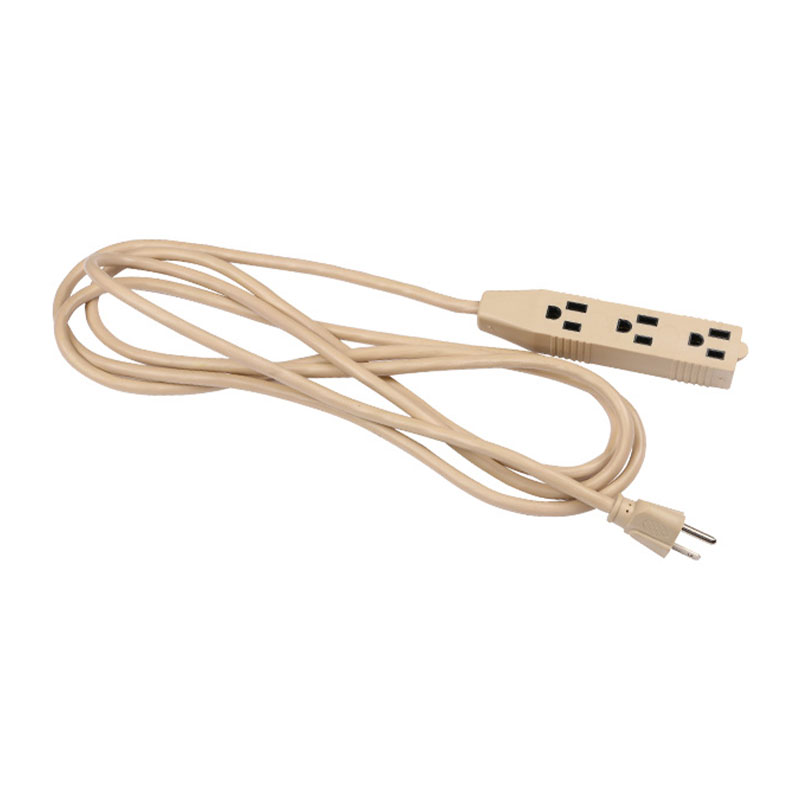
You should specify a PVC Power Cord for standard office equipment, desktop computers, printers, household entertainment centers, television sets, stationary kitchen appliances like blenders and microwaves, and indoor residential lighting fixtures.
In these applications, the power cord is plugged in once and remains virtually static throughout its operational life.
Because the cord is not subjected to freezing temperatures, physical abrasion, mechanical tension, or exposure to industrial oils, the superior durability of rubber is completely unnecessary.
Furthermore, the smooth, non-porous surface of PVC is easy to clean, holds vibrant colors well, and can be manufactured in sleek, thin profiles that blend seamlessly with modern consumer electronics and home decor, making PVC the most logical and economical choice for daily indoor life.
When to Specify a Rubber Power Cord
A rubber power cord is the mandatory choice for any application characterized by physical movement, harsh outdoor conditions, extreme temperatures, or exposure to industrial fluids.
The initial higher cost of a rubber cable is a necessary investment to prevent premature cable failure, reduce equipment downtime, and guarantee the safety of operators in hazardous working environments.
You should always select a rubber power cord for portable power tools used on construction sites, such as circular saws, rotary hammers, and industrial drills, where the cable is continuously dragged, twisted, and stepped on.
Additionally, rubber is the standard choice for heavy-duty extension cords used in outdoor maintenance, landscaping equipment, agricultural machinery, and commercial welding rigs.
In the entertainment industry, including stage lighting, concert sound systems, and temporary outdoor broadcasting events, heavy-duty rubber cables, commonly referred to as SOOW or H07RN-F cables, are specified to ensure reliable power delivery through rain, mud, and heavy foot traffic.
By investing in the rugged, thermoset durability of a rubber power cord, you can guarantee that your equipment remains powered safely, even under the most punishing physical and environmental conditions on Earth.


 English
 русский
 Español
 عربى
عربى

 Custom Electric Heater Components Manufacturers