Heating elements are the core components that convert electrical energy into thermal energy in an enormous range of industrial, commercial, and domestic applications. From the coil inside an electric kettle to the tubular elements in industrial ovens, water heaters, and process equipment, every electrically heated system depends on the performance, material selection, and correct specification of its heating element to deliver efficient, reliable, and safe operation. Understanding what distinguishes one heating element type from another, and what separates a correctly specified element from one that fails prematurely, is the foundation of effective equipment design, maintenance, and procurement.
The direct answer to the core selection question is this: dry burning electric heating elements and immersion heating elements are both tubular sheathed resistance elements in most of their common forms, but they are designed for fundamentally different operating conditions. A dry burning element operates in air or another gas medium and must manage its own heat dissipation through radiation and convection to the surrounding atmosphere. An immersion heating element operates submerged in a liquid medium, primarily water, and relies on the much higher heat transfer capacity of liquid convection to manage element surface temperature. Using either type outside its designed medium, or specifying the wrong watt density for the operating condition, is the primary cause of premature element failure in both categories. This article covers both element types in depth, explains the construction principles that govern their performance, and provides the specification framework for selecting correctly.
What a Heating Element Is and How It Converts Electricity to Heat
A heating element is an electrical conductor with a controlled resistivity that generates heat when current passes through it, converting electrical power into thermal energy according to Joule's first law: the heat generated is proportional to the square of the current multiplied by the resistance and the time of application. This fundamental physical relationship means that the power output of a heating element in watts is completely determined by its electrical resistance and the voltage applied across it, making the resistance of the element the key engineering variable that the designer controls to achieve a specified power output at a given supply voltage.
Resistance Wire: The Active Core of Every Electric Heating Element
The active heat generating component of virtually all industrial and domestic heating elements is a resistance wire or strip wound into a coil or shaped into a specific form and then enclosed within a protective sheath. The most widely used resistance alloys are:
- Nichrome (nickel chromium alloy): The dominant resistance alloy for general heating element applications, containing 80 percent nickel and 20 percent chromium in its most common form. Nichrome has a resistivity of approximately 110 microohm centimeters, excellent oxidation resistance at temperatures up to 1,200 degrees Celsius, good mechanical stability at elevated temperatures, and a long service history in both dry burning and immersion applications. It is the standard material for elements operating below 1,000 degrees Celsius in oxidizing atmospheres.
- Iron chromium aluminum alloy (FeCrAl): A ferritic alloy containing iron, chromium (typically 20 to 25 percent), and aluminum (4 to 6 percent) that forms an alumina surface scale on heating rather than a chromium oxide scale. FeCrAl alloys have higher maximum service temperatures than nichrome, typically 1,300 to 1,400 degrees Celsius, and are the standard choice for high temperature furnace elements, industrial ovens, and any application where temperature exceeds the practical range of nichrome. Their higher resistivity compared to nichrome means shorter element lengths are needed for a given resistance value.
- Stainless steel resistance elements: Used primarily in low temperature immersion applications where cost and corrosion resistance take priority over maximum temperature capability. Stainless steel elements are less efficient as resistance conductors than nichrome or FeCrAl but provide excellent durability in water and mild chemical service conditions.
The Tubular Sheathed Construction That Dominates Both Element Categories
The vast majority of dry burning and immersion heating elements are produced in the same fundamental physical form: the mineral insulated metal sheathed (MIMS) tubular element, also called an MI element or sheathed tubular element. The construction consists of a resistance wire coil centered within a metal tube, with the space between the wire and the tube filled and compacted with magnesium oxide (MgO) powder. The MgO filling provides electrical insulation between the resistance wire and the metal sheath, thermal conduction from the wire to the sheath, and mechanical support that prevents the wire from vibrating or moving during operation and thermal cycling. The metal sheath protects the resistance wire and insulation from the operating environment, and its material is selected to match the specific service conditions of the application.
The watt density of the element, expressed as watts per square centimeter of sheath outer surface area, is the single most critical specification that determines element performance and service life in any application. Higher watt density concentrates more power into less surface area, raising the sheath surface temperature for a given operating condition, which accelerates oxidation and degradation. Correct watt density specification for the medium in which the element will operate is the primary engineering decision in element selection.
Dry Burning Electric Heating Elements: Design and Applications
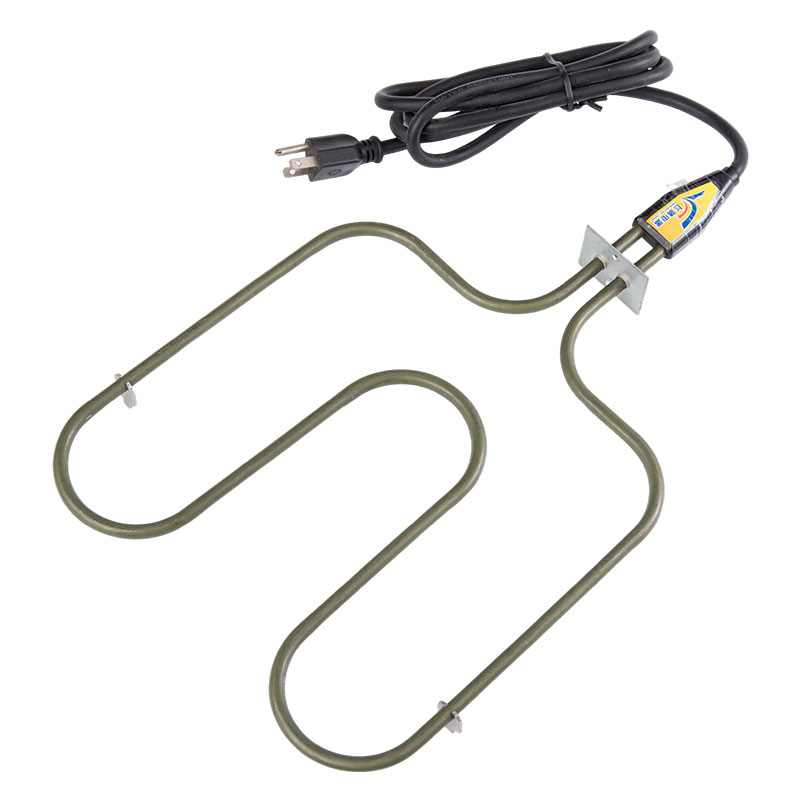
A dry burning electric heating element is designed to operate with its sheath surface exposed to air, gas, or a solid material, without direct contact with a liquid medium for heat transfer. In this operating condition, heat is removed from the element surface primarily by radiation and natural or forced convection to the surrounding atmosphere, both of which are far less efficient heat transfer mechanisms than the liquid convection available in an immersion application. This lower heat removal rate means that the element surface temperature rises to a significantly higher level for a given power input, which imposes strict limits on the watt density that can be safely sustained without exceeding the sheath material's temperature limit or causing premature resistance wire oxidation.
Watt Density Limits for Dry Burning Elements
Dry burning elements operating in free air convection are typically specified at watt densities of 1.5 to 3.5 watts per square centimeter, compared to 5 to 20 watts per square centimeter for immersion elements in water. This approximate six fold difference in maximum watt density directly reflects the difference in heat transfer coefficient between air convection and liquid water convection. When forced air convection is applied by a fan or blower in an oven or forced air heater, the increased air velocity improves heat transfer and allows somewhat higher watt densities, but the improvement is modest compared to liquid immersion conditions.
The practical consequence of this watt density limitation is that dry burning elements for a given power output require more surface area, and therefore more length, than equivalent power immersion elements. This is why industrial oven elements and furnace heating elements are typically wound into multiple loops or formed into complex shapes that maximize surface area within the available installation space.
Sheath Materials for Dry Burning Conditions
The sheath of a dry burning element must withstand prolonged exposure to elevated temperatures in an oxidizing atmosphere without forming excessive oxide scale that could cause element to element bridging or structural weakening of the sheath. Common sheath materials for dry burning applications are:
- Stainless steel grade 304 or 316: The standard sheath material for dry burning elements in domestic appliances and light commercial applications up to approximately 750 degrees Celsius sheath surface temperature. Grade 316 offers better resistance to chloride attack in humid environments but is not meaningfully superior to grade 304 in pure air service at elevated temperatures.
- Stainless steel grade 321 and 347: Stabilized grades with titanium or niobium additions that resist sensitization and intergranular corrosion at temperatures in the 500 to 850 degree Celsius range, where unstabilized grades can suffer carbide precipitation and reduced corrosion resistance.
- Incoloy 800 and 825: Nickel iron chromium alloys with superior oxidation resistance and creep strength at temperatures up to approximately 1,000 degrees Celsius, used for industrial oven and furnace elements where operating temperatures exceed the capability of stainless steel grades.
- Silicon carbide and molybdenum disilicide: Ceramic element materials used in the highest temperature furnace applications above 1,200 degrees Celsius where metal sheaths are no longer viable. These are specialist materials used in ceramics firing, glass production, and laboratory furnaces rather than general heating applications.
Common Applications of Dry Burning Elements
Dry burning electric heating elements are used across a very wide range of industrial and domestic applications wherever heat must be delivered to a gas, solid, or surface without liquid contact:
- Industrial ovens and drying equipment: Tubular elements in finned or plain form heat the air circulated by oven fans, curing coatings, drying materials, and processing food and pharmaceutical products at controlled temperatures from 50 to 400 degrees Celsius.
- Electric cooker hobs and ceramic glass cooktops: Tubular elements beneath ceramic glass transfer heat by radiation and conduction through the glass to the cookware above, operating at sheath temperatures of 600 to 800 degrees Celsius during normal use.
- Space heaters and fan heaters: Finned tubular or open coil elements heat the air stream from a fan, with element temperatures limited to the range safe for proximity to furnishings and occupants, typically below 600 degrees Celsius sheath temperature.
- Electric grills and ovens for domestic use: Overhead radiant grill elements operate at very high sheath temperatures (above 800 degrees Celsius) to produce sufficient radiant heat intensity for grilling food in short time periods.
Immersion Heating Elements: Design for Liquid Service
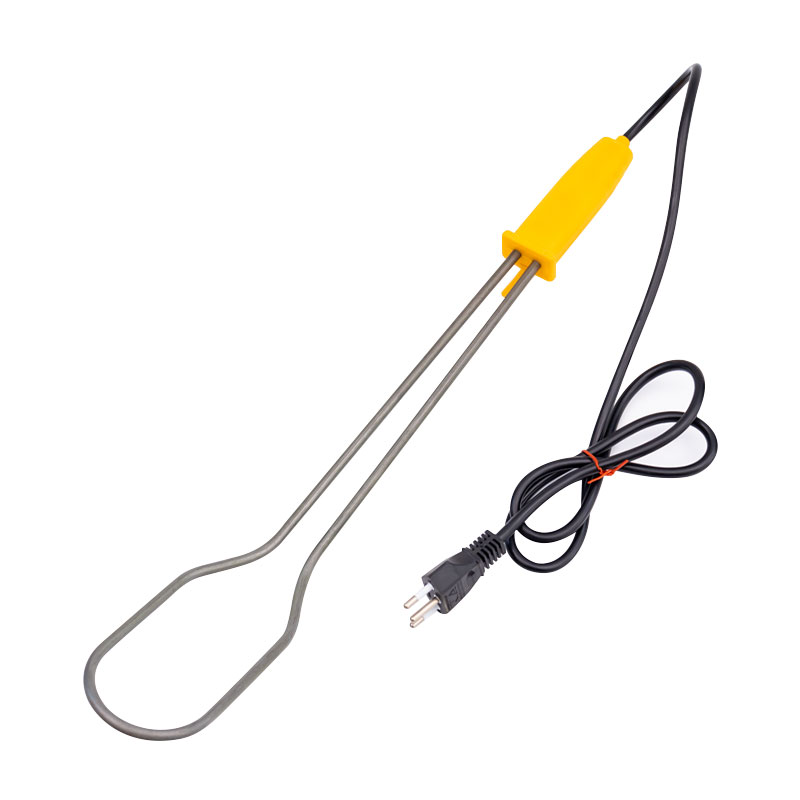
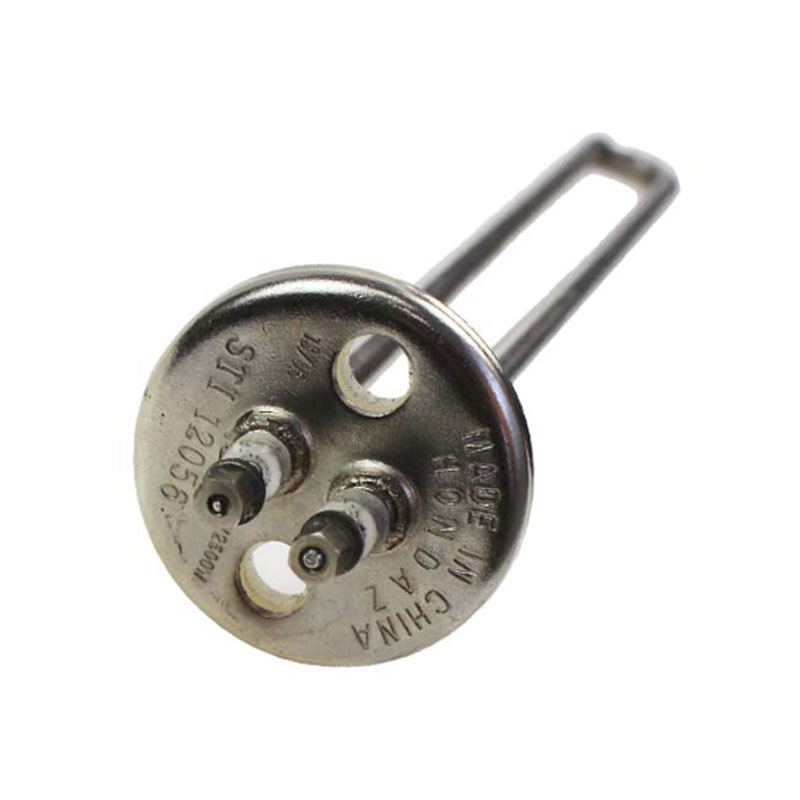
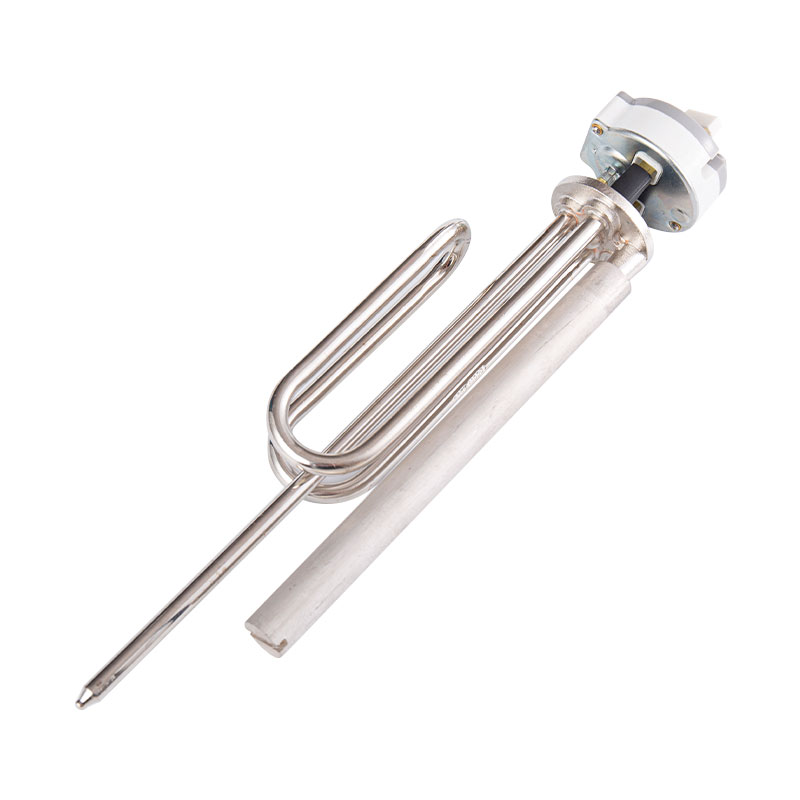
An immersion heating element is designed to operate fully submerged in a liquid medium, most commonly water in domestic and commercial water heating applications, but also oils, chemical solutions, food processing liquids, and industrial process fluids in specialist applications. The defining characteristic of immersion service is the very high heat transfer coefficient of liquid convection at the element surface, which allows heat to be removed from the sheath surface so efficiently that element surface temperatures remain close to the liquid temperature even at watt densities that would cause rapid failure in a dry burning application.
Why Immersion Elements Can Sustain Much Higher Watt Densities
Water at atmospheric pressure has a heat transfer coefficient in natural convection of approximately 200 to 1,000 watts per square meter per degree Celsius, compared to air convection values of 5 to 25 watts per square meter per degree Celsius. This difference of roughly two orders of magnitude means that for the same sheath surface temperature excess above the surrounding medium, water removes approximately 50 to 100 times more heat per unit of surface area than air. This is why immersion elements can be operated at watt densities 5 to 10 times higher than dry burning elements without exceeding safe sheath temperatures, allowing much more compact element designs for equivalent power outputs.
A standard domestic electric water heater immersion element operates at approximately 8 to 12 watts per square centimeter in water service, a watt density level that would cause the element sheath to reach over 1,000 degrees Celsius if operated in air without water coverage, resulting in near instant element failure. This stark illustration of the operating condition dependency explains why the most common cause of immersion element failure in domestic water heaters is operation without adequate water coverage, either through low water level in the tank or air pocket formation around the element during filling.
Sheath Materials for Immersion Applications
The sheath material of an immersion element must resist corrosion from the liquid medium throughout the element's service life, because any corrosion of the sheath will eventually breach the electrical insulation and cause element failure, or introduce corrosion products into the heated liquid that may be harmful or undesirable:
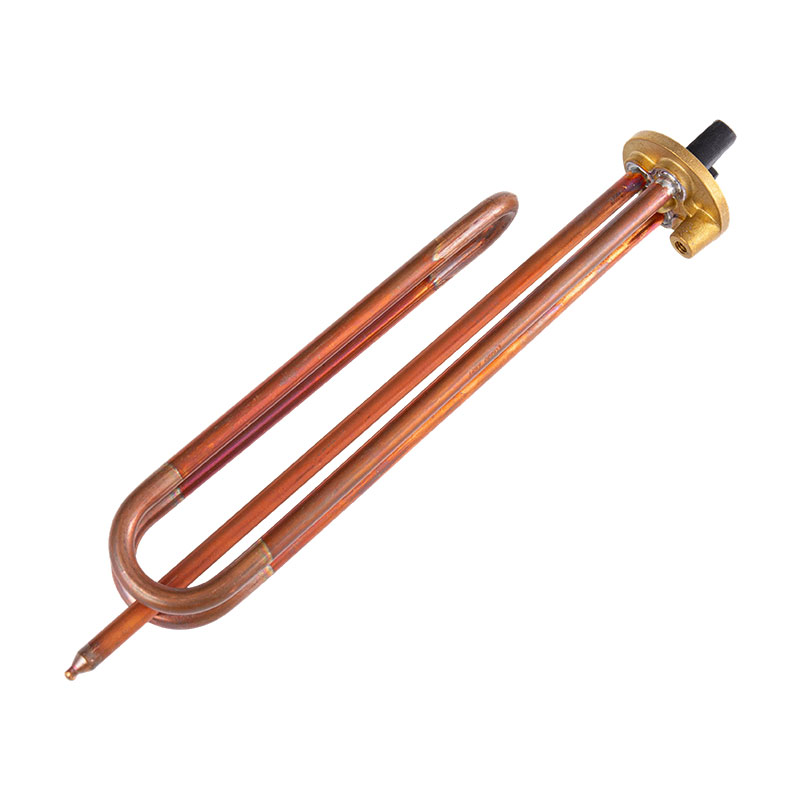
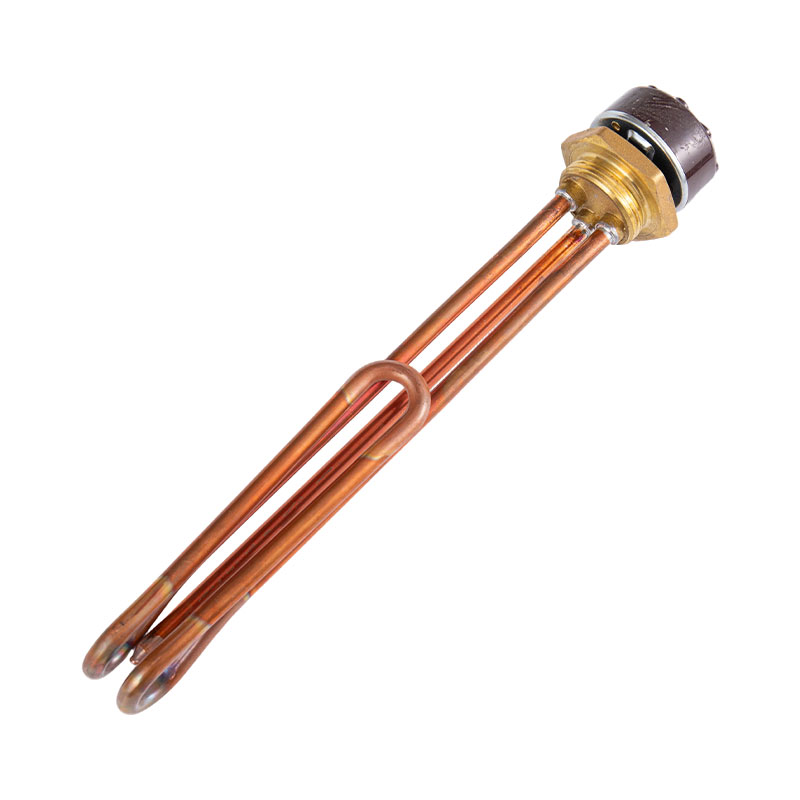
- Copper sheaths: Used extensively in domestic hot water cylinder immersion elements for soft to moderately hard water service. Copper has excellent thermal conductivity (ten times better than stainless steel), good resistance to mild water corrosion, and relatively low cost. It is not suitable for high hardness water above approximately 300 milligrams per liter calcium carbonate equivalent, where scale buildup rate is excessive, or for systems with mixed metal pipework where galvanic corrosion risks exist.
- Stainless steel grade 316L: The standard sheath material for immersion elements in hard water, mildly saline water, and food processing applications where copper is unsuitable or contamination risk is a concern. Grade 316L (low carbon) provides improved resistance to intergranular corrosion compared to standard grade 316, extending service life in aggressive water conditions.
- Titanium: The premium sheath material for immersion elements in seawater, saline solutions, and aggressive chemical service where stainless steel grades are insufficient. Titanium is completely immune to chloride induced pitting corrosion that attacks stainless steel in saline environments, and its oxide film provides reliable long term protection across a wide range of pH and temperature conditions.
- Incoloy 800 and 825: Used for immersion elements in high temperature process fluids, oils, and chemical solutions above the temperature range of stainless steel grades, and in applications where sulfur containing oils would cause sulfidation corrosion of stainless steel sheaths.
Limescale Accumulation and Its Effect on Immersion Element Performance
In hard water service, calcium carbonate precipitates from solution onto heated surfaces, forming a limescale deposit that progressively insulates the element sheath and impedes heat transfer to the water. As scale builds up, the element sheath temperature rises above normal operating levels to maintain the same power output against the increased thermal resistance of the scale layer. Studies of domestic water heater performance have found that a limescale deposit of 1.6 mm thickness on an immersion element increases energy consumption by approximately 12 percent, and a 6 mm deposit increases consumption by approximately 40 percent, while simultaneously raising sheath temperature to levels that accelerate oxidation and significantly reduce element life expectancy. Regular descaling of immersion elements in hard water areas is therefore both an energy efficiency measure and a maintenance practice that directly extends element service life.
Dry Burning vs Immersion Heating Elements: A Direct Comparison
The following table provides a side by side comparison of the key specifications and operating characteristics of dry burning and immersion heating elements to support selection decisions across the most common application parameters.
| Specification or Factor |
Dry Burning Element |
Immersion Element |
| Operating medium |
Air, gas, or solid contact |
Water, oil, or liquid chemical |
| Typical watt density range |
1.5 to 3.5 W per sq cm |
5 to 20 W per sq cm |
| Primary sheath materials |
SS 304, SS 316, Incoloy 800 |
Copper, SS 316L, Titanium |
| Sheath surface temperature (typical) |
400 to 900 degrees C |
100 to 200 degrees C in water |
| Main failure modes |
Oxidation burnout, overtemperature |
Scale insulation, corrosion, dry run |
| Effect of operating outside design medium |
Submerging may cause corrosion or short circuit |
Dry run causes rapid burnout in seconds to minutes |
| Typical domestic application |
Oven, hob, fan heater, grill |
Water heater, kettle, dishwasher |
Table 1: Direct comparison of dry burning and immersion heating elements across key technical and application parameters
Failure Prevention and Correct Specification for Long Service Life
The majority of heating element failures in both dry burning and immersion applications are preventable through correct initial specification and proper operating practice. The most common failure mechanisms and their prevention are:
Preventing Dry Run Failure in Immersion Elements
Dry run failure occurs when an immersion element operates without adequate liquid coverage, causing the sheath to reach destructive temperatures within seconds of the water falling below the element. Prevention requires:
- Thermal cutout devices: Every immersion element installation should include a thermal cutout or thermostat set to disconnect power if the element temperature exceeds a predetermined limit, typically 95 to 110 degrees Celsius for water heating applications. Some elements include an integral thermal fuse that permanently disconnects the circuit on a single overtemperature event, requiring element replacement; others include a resettable bimetallic thermostat that reconnects once temperature falls to a safe level.
- Low water level protection: In automatic water heating systems, an independent level sensor or float switch that cuts power to the element whenever the water level falls below a minimum safe depth above the element provides reliable protection against dry run from low water level conditions independent of the thermal protection system.
- Air pocket prevention during filling: When refilling a water heater or immersion vessel that has been drained, ensure that all air is purged from around the element before energizing. In horizontal element installations, tilt the vessel slightly to allow air to escape from the element zone, or fill slowly through a bottom connection to allow air to rise naturally ahead of the rising water level.
Overtemperature Protection for Dry Burning Elements
Dry burning element failures from overtemperature occur when the element is operated at a watt density exceeding the heat removal capacity of the surrounding air, when the airflow through a forced convection oven is restricted, or when the element is inadvertently covered by a material that reduces heat dissipation. Prevention requires:
- Conservative watt density specification: Specifying dry burning elements at the lower end of the appropriate watt density range for the application provides a safety margin against operating conditions that may deviate from design assumptions, such as higher ambient temperatures, reduced airflow, or higher than expected cycle frequencies.
- Clearance maintenance: Ensuring that minimum clearances between adjacent elements and between elements and oven walls are maintained prevents localized hot spots from radiant heating between elements and ensures adequate air circulation around each element surface.
- High temperature limit thermostats: Independent high limit thermostats that cut power to all elements if the oven chamber temperature exceeds a maximum safe value protect both the elements and the oven structure in the event of control thermostat failure or process error.
Correct Element Specification: A Practical Selection Guide
The following framework covers the key specification steps for selecting a heating element for any new application:
- Define the operating medium: Is the element operating in air, forced air, water, oil, or chemical solution? This single determination drives the watt density range, sheath material selection, and element form factor.
- Calculate required power: Determine the steady state power needed to maintain the process at the target temperature, accounting for heat losses from the vessel, required heating rate from cold start, and any process endothermic heat demands. Add a margin of 10 to 25 percent to this calculated value to account for element degradation over service life.
- Select maximum watt density: Choose a watt density appropriate for the operating medium from established reference ranges: 1.5 to 3.5 W per sq cm for free air, 3 to 6 W per sq cm for forced air, 8 to 15 W per sq cm for water, and 2 to 5 W per sq cm for oils depending on oil viscosity and temperature.
- Calculate required element surface area: Divide the required power by the chosen maximum watt density to obtain the minimum required element surface area, then determine the element length and diameter combination that provides this area within the installation space constraints.
- Select sheath material: Match the sheath material to the operating medium, temperature, and any chemical corrosion requirements using the material selection guidance in this article, erring toward higher grade materials when in doubt about long term service conditions.
- Specify protection devices: Define the required thermal cutout temperature, the control thermostat setpoint, and any level or flow interlocks needed to prevent operation outside the designed medium coverage conditions.
Applying this selection framework systematically eliminates the most common sources of heating element premature failure, reduces replacement frequency, and ensures that the thermal performance of the element matches the application requirements throughout its intended service life. The initial investment in correct specification of element type, watt density, and sheath material is invariably recovered many times over in reduced maintenance costs, improved energy efficiency, and avoided process downtime over the operational life of the heated system.


 English
 русский
 Español
 عربى
عربى

 Custom Electric Heater Components Manufacturers