You have a 50-foot extension cord on a reel, and the plug fits your saw. You unwind it, connect the saw, and the motor starts but sounds strained. The cord becomes warm to the touch, and the saw blade stops easily on a slightly thicker board. The problem is not the tool; it is the gauge of the cord. In simple terms, extension cord gauge defines how much electrical resistance the wire adds to the circuit, and that resistance affects voltage, heat, and the amount of power your equipment actually receives. The right approach is not complicated: determine the load in amps, measure the real distance from the outlet to the appliance, choose the gauge that safely carries that load over that distance, and then confirm the plug style, jacket, and certification match the work environment. This guide covers that process in detail, including reference tables, common mistakes, and purchasing considerations for businesses that buy extension cords in volume.
What Extension Cord Gauge Actually Means
Extension cord gauge refers to the physical cross-sectional size of the copper conductors inside the cable, expressed in American Wire Gauge, or AWG. The system is counterintuitive at first: a lower AWG number means a thicker conductor, and a higher AWG number means a thinner conductor. Most household and light commercial extension cords are built with 16 AWG, 14 AWG, 12 AWG, or 10 AWG conductors. A 16 AWG cord has thin wire; a 10 AWG cord has considerably thicker wire.
This matters because resistance in a copper wire is inversely related to its cross-sectional area. A thicker conductor has less electrical resistance than a thinner conductor of the same material and length. Lower resistance means less voltage drop, less heat generation, and a higher usable current capacity. That is why a 12 AWG cord can handle a 15-amp load safely at 50 feet, while a 16 AWG cord may overheat or cause poor tool performance in the same situation.
Wire gauge is not the same as the cable jacket. The jacket is the protective layer around the conductors, and letters such as SJTW or SOW describe its intended indoor or outdoor use. Gauge only describes the conductor. You can buy a 14 AWG cord with a light indoor jacket, or a 14 AWG cord with a heavy weather-resistant outdoor jacket. The current capacity remains roughly the same; the jacket determines whether the cord can tolerate moisture, abrasion, oil, or sunlight.
There are two practical conclusions from this distinction. First, always read the gauge number printed on the cable jacket before using a cord. If you cannot find a gauge marking, treat the cord as suspect and verify its specifications before trusting it with a heavy load. Second, once you know the gauge, the next question is always the same: how many amps will flow through the cord, and over what distance?
Why Gauge Matters: Voltage Drop and Heat
Voltage drop is the reduction in voltage that occurs as current travels through the resistance of a long conductor. Every wire has resistance, and the resistance of a copper conductor increases with length. When current flows through that resistance, some of the electrical energy is lost as heat. The remaining voltage is what the tool or appliance receives at the far end of the cord.
A useful way to understand this is with Ohm's law: Voltage drop equals current multiplied by resistance. For example, a 50-foot cord has 100 feet of copper path because the current must travel out to the appliance and back to the outlet. A 16 AWG copper conductor has roughly 4 ohms of resistance per 1000 feet. A 50-foot 16 AWG cord therefore has roughly 0.4 ohm of total circuit resistance. At a 10-amp load, that means a 4-volt drop. At 120 volts, that is already more than 3 percent of the supply voltage.
Now consider a 12 AWG cord of the same length. A 12 AWG conductor has roughly 1.6 ohms per 1000 feet, which gives about 0.16 ohm of total resistance in a 50-foot cord. At 10 amps, the voltage drop is about 1.6 volts. The tool receives noticeably more usable voltage, and the cord remains cool.
Heat is the other major concern. The heat generated in a wire is proportional to the square of the current multiplied by the resistance. If you double the current, the heating increases four times. This is why a cord that is too thin for the load can quickly become hot. A warm cord means energy is being wasted in the wire and, in extreme cases, the insulation can soften, melt, or ignite nearby materials.
The problem gets worse when a long cord is kept coiled on a reel. The heat generated by the conductors has nowhere to go because the surrounding coil traps it. A cord that would run safely straight may overheat when wound up under a heavy load. For this reason, any cord that feels hot, even slightly warm in an unusual way, should be replaced with a heavier gauge or shortened before continuing use.
Start with the Load: How to Determine Amps
Before you can choose a gauge, you need to know how much current the connected equipment draws. Most equipment has a nameplate or label that lists either watts, amps, or both. If the label lists watts and your local supply voltage is known, divide watts by voltage to get amps. For example, a 1200-watt heater on a 120-volt circuit draws 10 amps. A 2400-watt heater on a 240-volt circuit also draws 10 amps.
Some devices list watts as the maximum input power. This is not the same as the maximum steady-state current on a motor, because motors can draw considerably more current during startup. Power tools such as saws, compressors, and pumps often have a running current lower than their peak startup current. When sizing your extension cord, use the higher of the two values, and then add a safety margin. An extra 10 to 20 percent of current capacity is cheap insurance against voltage-drop problems and nuisance tripping.
Continuous loads deserve extra attention. A portable heater, a window air conditioner, or a commercial appliance that runs for more than three hours is a continuous load. Many electrical codes apply an 80 percent derating rule to continuous loads, which means you should choose a cord rated well above the measured running current rather than exactly at it.
Table 1: Approximate current draw for common devices and tools
| Device or tool |
Typical power draw |
Voltage |
Approximate current |
| LED work light |
100 W |
120 V |
0.8 A |
| Desktop computer |
300 W |
120 V |
2.5 A |
| Portable electric heater |
1500 W |
120 V |
12.5 A |
| Microwave oven |
1200 W |
120 V |
10 A |
| Circular saw, loaded |
1600 W |
120 V |
13.3 A |
| Air compressor, running |
1200 W |
120 V |
10 A |
Use these numbers only as a starting point. The exact value on the device nameplate is the number that matters. When in doubt, choose a heavier gauge than the table suggests, especially for tools that run under sustained load and for cords longer than 25 feet.
Reference: Extension Cord Gauge vs. Length vs. Load
The following table is a practical starting point for 120-volt circuits common in North American household and light-commercial use. It assumes copper conductors and a voltage-drop budget of approximately 3 percent or less. Longer distances and higher loads always require a heavier gauge.
Table 2: Recommended extension cord gauge for 120 V loads by cord length
| Load (amps) |
25 ft |
50 ft |
100 ft |
| 0 to 5 A |
16 AWG |
16 AWG |
14 AWG |
| 5 to 10 A |
16 AWG |
14 AWG |
12 AWG |
| 10 to 15 A |
14 AWG |
12 AWG |
10 AWG |
| 15 to 20 A |
12 AWG |
10 AWG |
10 AWG |
Reading the table is straightforward. A 5-amp lamp on a 25-foot cord works fine with 16 AWG. A 12-amp heater on a 50-foot cord needs 12 AWG. A 15-amp saw on a 100-foot cord needs 10 AWG. If your application falls between two load rows, use the more conservative row.
This table applies to running current, not peak starting current. If your tool draws 15 amps while running but 30 amps during startup, choose a cord that handles the running current with a generous margin. That usually means one gauge heavier than the table suggests.
A common misunderstanding is that all 16 AWG cords are identical. Two cords with the same AWG number have the same conductor cross-section, but the conductor material can differ. Copper is the standard material for quality extension cords. Aluminum or copper-clad aluminum conductors must be noticeably thicker to carry the same current. If the cord does not state the conductor material, it is safer to assume a higher voltage drop and move up one gauge.
Step-by-Step: Choosing the Right Gauge for Your Application
Put the whole selection process into a repeatable sequence that works for a single household appliance as well as a small fleet of tools.
Step 1: Determine the real current draw
Find the nameplate rating on the tool, heater, or appliance. If it lists only watts, divide by the supply voltage. For motors, also check whether the nameplate gives starting amps. Use the higher number as your planning value.
Step 2: Measure the full cord path
Measure the actual distance from the outlet to the point where the appliance sits, and add any extra length needed for routing around obstacles. Do not forget that the machine's own power cord consumes some of the voltage budget. If the appliance already has a long built-in cord, that should be included in your overall length estimate.
Step 3: Match the load and length to a gauge
Use the reference table as your first pass. For example, a 10-amp appliance at 100 feet needs at least 12 AWG. If the location has poor voltage, or the circuit is already heavily loaded, move one gauge heavier. The cost of one heavier gauge is small compared to the cost of damaged equipment or a cord failure.
Step 4: Confirm plug type and jacket are correct for the environment
A heavy gauge is not enough if the plug does not match the receptacle or if the cord jacket is unsuitable for outdoor exposure. Verify that the cord has the correct grounding blade, that the plug fits the outlet firmly, and that the jacket is rated for the conditions where you will use it. For temporary power at a job site, an industrial-grade plug and a weather-resistant jacket are often more important than the gauge number alone.
Consider a specific case: a contractor wants to run a 12-amp floor heater in a tent at a construction site, using a 75-foot cord. The reference table suggests 12 AWG for 10 to 15 amps at 50 feet and 10 AWG at 100 feet. A 75-foot run is a decision point, so the safer choice is 10 AWG, especially in a temporary structure where the cord may be covered, stepped on, or exposed to moisture. The contractor also needs an outdoor-rated jacket because a standard indoor cord will degrade quickly in damp conditions. This kind of decision depends on the environment, not just the load.
If you regularly connect different tools and appliances, keep a small selection of cords in different gauges rather than buying one universal cord. A short 16 AWG cord is convenient for lamps and chargers. A 12 AWG cord is suitable for heaters and large tools. A 10 AWG cord is useful for long runs and high-load equipment. This approach is more practical than dragging a heavy 10 AWG cord everywhere.
Common Gauge Mistakes and Safety Risks
Choosing the wrong gauge is rarely caused by a single bad decision; it is usually a chain of small shortcuts. The most common mistake is using the cord that is nearest, regardless of load. A 16 AWG cord stored near an outlet works well for an LED floor lamp, but the same cord attached to a 12-amp space heater creates a dangerous situation. The cord will carry the current, but voltage drops, heat builds up, and heat damage progresses slowly until the insulation weakens.
Another frequent mistake is connecting multiple cords in series to reach a distant tool. Two 25-foot 14 AWG cords produce the same total resistance as one 50-foot 14 AWG cord, but every additional plug connection also adds a contact point where heat can concentrate. Loose or corroded contacts at cord ends are the most common source of electrical failures in temporary power setups. The better practice is to buy one cord of the correct total length and gauge.
Leaving a loaded cord on a reel is also dangerous. The coil confines the heat generated by the wire, and a 12 AWG cord rated for 20 amps can overheat on a reel when carrying only 10 amps. Unwind the entire cord before use, or select a reel with a built-in circuit breaker and a tip that is comfortable at full load.
- Never remove the grounding prong from a three-prong plug to force it into an old outlet; use an adapter only if the outlet is properly grounded and the adapter is rated for the same current.
- Never run a heavy appliance on a cord rated for a lamp or phone charger; the gauge on the label is the maximum recommendation, not an optional suggestion.
- Never leave a cord pinched under furniture, doors, or vehicle tires; a damaged cord can still pass current but creates a serious fire and shock hazard.
- Never use an indoor cord outside, even if the load is light; moisture enters the jacket quickly and can cause short circuits or corrosion.
- Never repair a damaged extension cord with electrical tape as a permanent solution; replace the cord or use a proper replacement plug/receptacle rated for the same gauges.
These precautions are not about being overly cautious; they reflect the physical fact that an undersized or damaged conductor creates heat under load. Heat, over time, is what breaks down insulation. Once the insulation fails, a short circuit, shock, or fire can follow.
Indoor vs. Outdoor Cords: Jacket, Plug, and Grounding
The gauge of a cord determines how much current the copper can carry, but it does not determine whether the cord is safe outdoors. Outdoor cords are distinguished by the jacket material, the plug construction, and sometimes the insulation on the individual conductors. A typical outdoor cord jacket is marked SJTW, SJOW, or should have explicit weather/UV resistance.
Outdoor-rated jackets resist moisture, sunlight, and abrasion better than indoor jackets. Cords labeled SJTW are rated for weather-resistant use in residential applications. Cords labeled SJOW use an oil-resistant jacket for general industrial use. For permanent outdoor paths, a cord with a thicker jacket and more flexible insulation is worth the extra weight.
Outdoor usage also demands grounding considerations. For any metal-bodied tool or appliance, use a three-prong grounded cord with the ground prong intact. If the outlet is an older two-hole version, the outlet should be replaced or protected by a GFCI. A ground-fault circuit interrupter is especially important when working near wet ground, metal scaffolding, or damp materials. A heavy 12 AWG cord does not protect a person from a ground fault; only GFCI protection or isolation provides that.
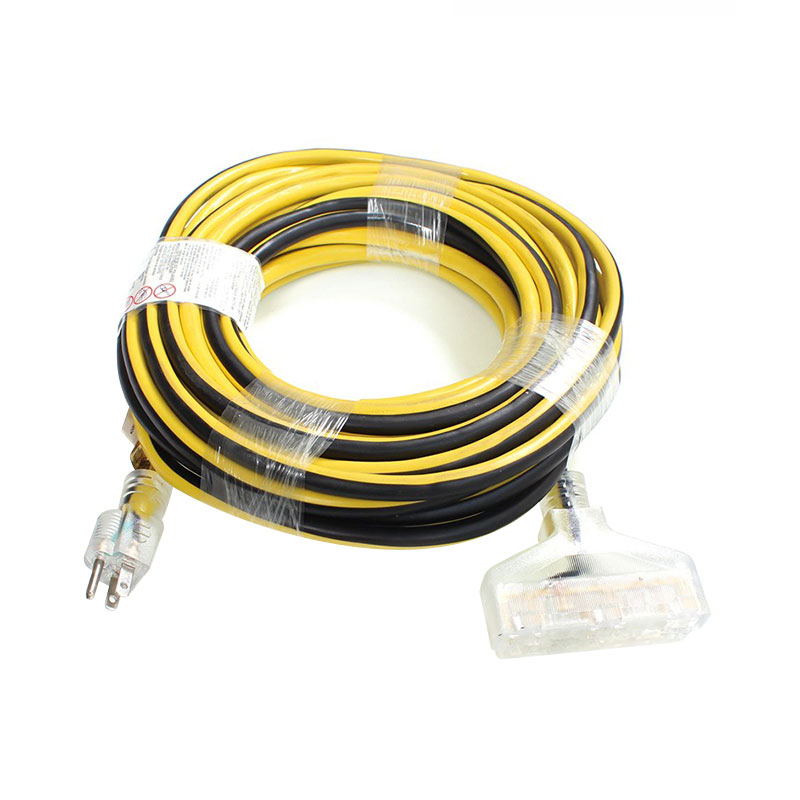
For outdoor lighting, pumps, power tools, and temporary construction power, a durable orange outdoor extension cord with grounded protection is a dependable choice because the bright jacket improves visibility and the thicker insulation reduces accidental damage. The gauge still has to be matched to the load; a 16 AWG outdoor cord is not suitable for a 15-amp saw just because the jacket says “outdoor.”
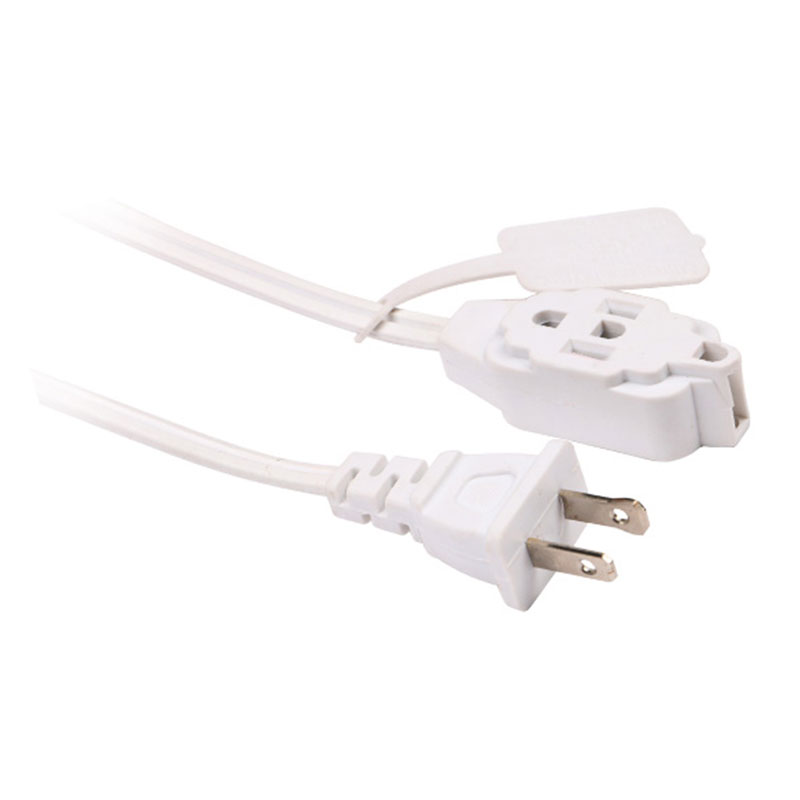
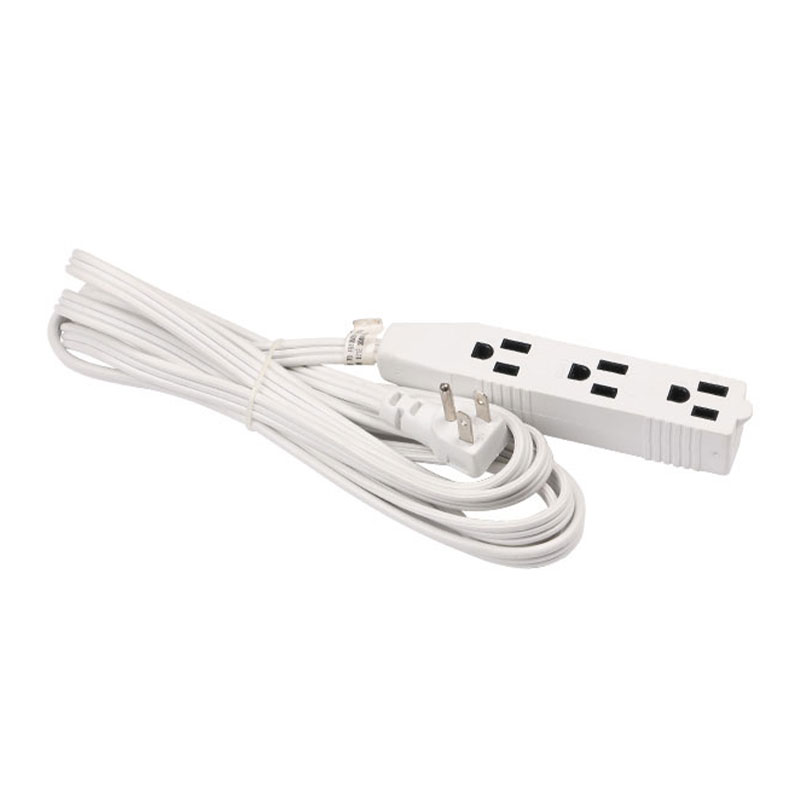
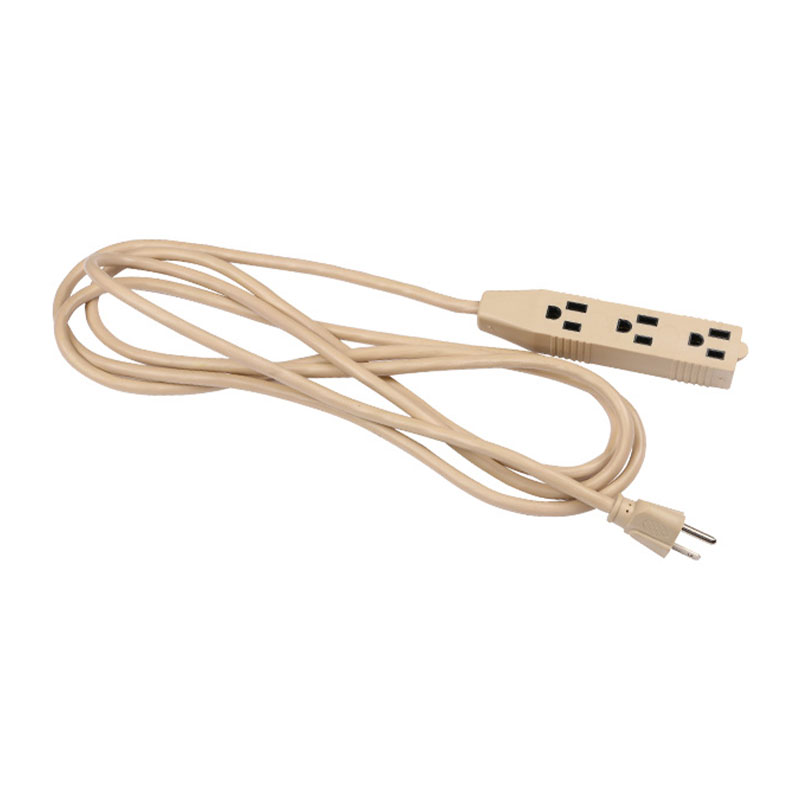
For indoor workshop use, the selection is usually between 16 AWG and 14 AWG for small electronics, and 12 AWG for larger tools. If you only need to power several devices near one workbench, an American-standard household multi-outlet extension cord is more practical than running separate long cords. Multi-outlet cords allow you to power a lamp, a phone charger, and a small bench grinder from one properly sized supply, but remember that the total current through the main plug is what determines the required gauge.
International Standards, Voltage, and Plug Configurations
Extend cord specifications travel across borders, and a gauge guide that only mentions one market is not enough for anyone buying from overseas or selling into export markets. The physical gauge and its current-carrying limit are independent of country, but the supply voltage and the plug type change the practical load calculations.
In a 230-volt market, a 2300-watt heater draws 10 amps, while the same wattage at 120 volts draws about 19 amps. That means a 230-volt portable heater can run on a 16 AWG cord where a 120-volt version would require 12 AWG or heavier. This tension confuses buyers who compare a gauge chart from one market with a product sold in another. Always calculate current from the local voltage, and always use the actual supply voltage in the watts-to-amps formula.
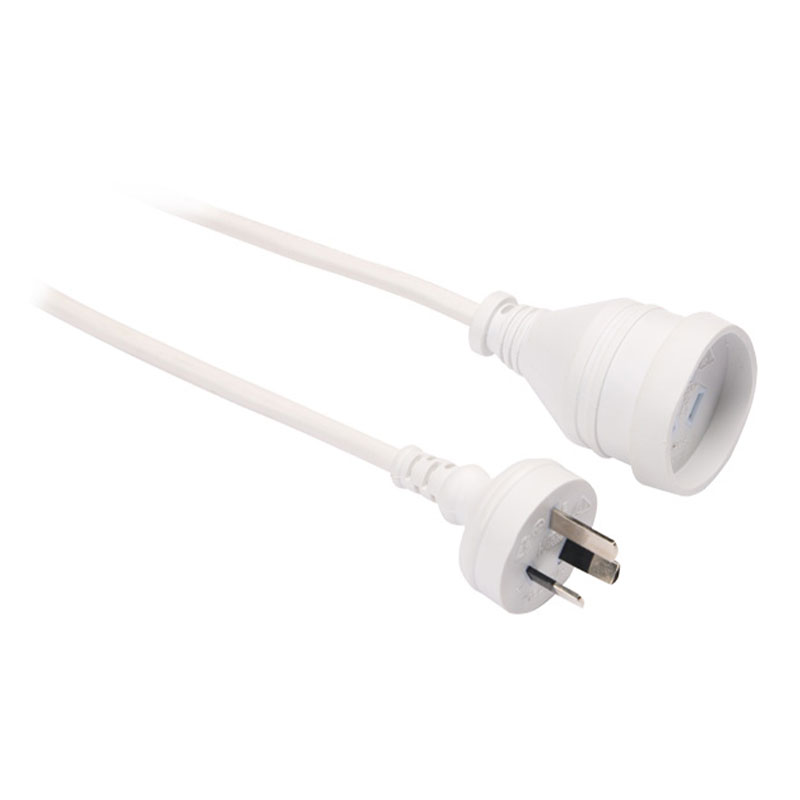
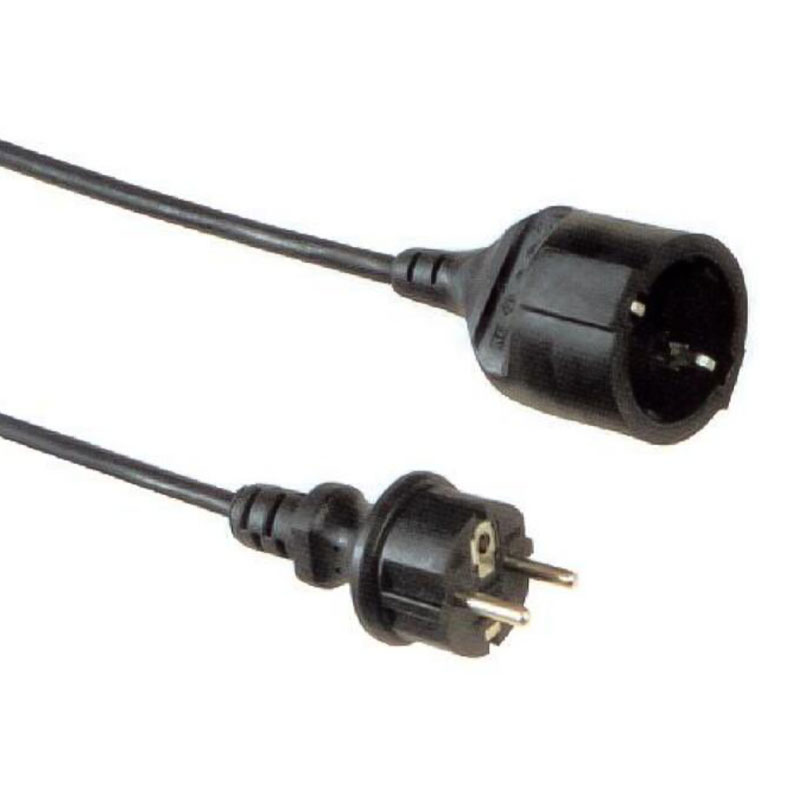
Plug design is controlled by regional standards, and the cord must match the local receptacle. A European plug is different from an American plug, an Australian plug, or a British plug. For export products, matching the plug is as important as matching the gauge, because a cord that is electrically adequate but physically incompatible is not useful. The plug itself must also be rated for the full current of the load, not just the wire gauge.
For buyers and distributors serving European markets, a heavy-duty high-visibility European plug extension cord is often the most practical option for job sites because it provides a standard CEE7 plug, a weather-resistant jacket, and a bright outer casing that reduces trip hazards. The gauge should still be selected according to the current and length, but the plug style and certification mark are essential for legal sale and safe installation.
Manufacturers that supply several regions typically maintain separate product lines for American, European, Australian, and other standards. This matters when a buyer wants a specific gauge range together with the correct plug. A factory that can produce 10 AWG, 12 AWG, and 14 AWG cords in different plug configurations gives the buyer more flexibility and faster delivery than one that only produces a single regional standard.
Procurement and OEM Buying Considerations for Businesses
Business buyers, importers, and brand owners should look beyond the simple gauge number and examine the complete specification package: conductor material, number of strands, jacket rating, plug construction, and test reports. These details make the difference between a cord that performs for years and a cord that causes returns, rejected shipments, or safety incidents.
Start with the conductor material. High-quality copper conductors have low resistance and stable performance. Some low-cost cords use copper-clad aluminum or other alloys that are cheaper but have higher resistance. A cord with the same AWG label may perform differently if the conductor is not pure copper. In a buying specification, explicitly state that the conductor must be copper or ask for the DC resistance test report.
Check the jacket material. PVC jackets are common for indoor cords, but rubber or TPE jackets are more flexible and durable in cold weather. For outdoor and industrial cords, the jacket should have a clear test standard such as SJTW, SJOW, or an equivalent regional designation. Ask the manufacturer for the jacket type and the temperature rating.
Review the plug and socket quality. The plug terminals should be made of a corrosion-resistant material and crimped or welded properly. Loose terminals inside the plug are a major cause of overheated connections. Ask whether the manufacturer tests each finished cord for continuity and dielectric withstand voltage.
For industrial buyers, the selection process often feeds into a broader decision about how to select the right power cord for different machines and environments. A supplier that understands both gauge selection and wire/cord construction can prevent problems before they occur.
When choosing a supplier for private-label or wholesale extension cords, verification is the key step. Ask for a sample, measure the actual conductor diameter with a micrometer, compare the measured resistance to the AWG standard, inspect the jacket thickness, and test the cord under a load close to its rated amperage. The supplier should be able to provide these details without difficulty. Manufacturers with integrated production lines and in-house lab testing are generally more reliable than resellers who cannot verify their own product.
Danyang Feipeng Electrical Appliance Co., Ltd. is an example of a manufacturer with a product line that includes heating elements and extension cords. Its factory structure and testing capabilities matter less than the actual specification sheets you receive, but a long production history does suggest that processes for raw material control and finished product testing are in place. When evaluating any manufacturer, treat the gauge standard as a contract item, not a descriptive label.
Final Rule for Extension Cord Gauge: Plan the Full Circuit
Extension cord gauge is not something that should be guessed in the aisle of a store or decided at the last minute on a job site. The full circuit includes the outlet breaker, the cord conductor size, the cord length, the plug contacts, and the appliance load. Every part of that circuit needs to be balanced.
The practical sequence is always the same: find the load in amps, measure the actual length, choose a gauge that keeps voltage drop below about 3 percent, add a safety margin for motor starting current, and then verify that the cord has the right plug and jacket for the environment. This takes less than two minutes and prevents the most common extension cord failures: overheating, voltage starvation, nuisance breaker trips, and equipment damage.
Do not rely on a single universal gauge. A 16 AWG cord is fine for lights and small electronics. A 12 AWG cord is the better minimum for heaters, saws, and heavy tools at moderate length. A 10 AWG cord is the safe answer for long runs and multi-outlet power distribution. If the load is unknown, stop and measure it before connecting the cord.
Finally, remember that extension cords are designed for temporary use. They are not a replacement for permanent wiring, and they should always be inspected before use. A small investment in the correct gauge, a quality jacket, and a correctly rated plug reduces risk at every future workplace. Selecting the right gauge is less about memorizing a table and more about understanding that current, distance, and safety are linked in one simple relationship: thicker wire, less resistance, more dependable power delivery.


 English
 русский
 Español
 عربى
عربى

 Custom Electric Heater Components Manufacturers