

 English
 русский
 Español
 عربى
عربىDon't hesitate to send a message

Extension Cord Gauge Guide: Choosing the Right AWG for Your Application
Content
- 1 Extension Cord Gauge: What the Numbers Mean
- 2 Ampacity: The Current-Carrying Limit
- 3 Voltage Drop: Why Length Changes Everything
- 4 Extension Cord Gauge Selection Chart
- 5 Matching Gauge to Real-World Applications
- 6 Jacket Materials and Operating Environment
- 7 Safety Risks of Choosing the Wrong Gauge
- 8 What Importers and Distributors Must Verify
- 9 Conclusion: Specifying Extension Cords With Confidence
A purchasing director at a Middle Eastern trading company sent us a question that looked simple on the surface. Why did a batch of 16 AWG extension cords, ordered to a precise specification, cause customer complaints about motors running slowly and cords feeling warm? The cords had the right plug, the right jacket colour, and the right length. The only problem was the gauge.
Gauge is the answer. It is also the source of a common misunderstanding in the extension cord trade. Many specifications focus on plug type, cable diameter, and visual appearance, only to omit the one property that determines whether power reaches the appliance correctly. If you import or distribute extension cords, gauge is not a nice-to-have detail. It is the central engineering parameter that separates a safe, durable product from a return rate that will damage your business.
Here is the conclusion up front. Extension cord gauge is a measure of the copper conductor's cross-section. Lower AWG numbers are thicker wires that carry more current and lose less voltage over distance. For a 120V circuit, 16 AWG is acceptable for light loads under 25 feet, 14 AWG covers 15A up to 50 feet, and 12 AWG handles 20A up to 100 feet. For 230V markets, the same mass of copper supports the same wattage over roughly twice the distance. The remainder of this guide explains why these numbers hold, what goes wrong when they are ignored, and how to specify the right cord for your market.
Extension Cord Gauge: What the Numbers Mean
The term gauge is used in many industries, but in electrical wiring it refers to the American Wire Gauge (AWG) system. This system was introduced in 1857 and has been the standard method for describing copper wire diameter in North America ever since. The scale is inverted. The smaller the number, the larger the wire diameter.
An 18 AWG wire is thinner than 16 AWG. A 16 AWG wire is thinner than 14 AWG. A 14 AWG wire is thinner than 12 AWG. A 12 AWG wire is thinner than 10 AWG. Each step between gauges represents a consistent change in cross-sectional area, roughly a factor of 1.26 per gauge step.
Extension cords rely on stranded copper for a good reason. Copper offers excellent electrical conductivity, second only to silver among common materials, and stranded construction gives the cable the flexibility it needs to survive repeated coiling, bending, and dragging across floors. The strands are twisted together and insulated with a PVC or rubber jacket. The total copper cross-section determines the resistance.
Let us look at the actual dimensions for the common cord gauges:
Conductor Cross-Section by AWG
- 18 AWG: 0.823 mm²
- 16 AWG: 1.31 mm²
- 14 AWG: 2.08 mm²
- 12 AWG: 3.31 mm²
- 10 AWG: 5.26 mm²
Notice that 10 AWG has roughly 6.4 times the cross-section of 18 AWG. This translates directly into lower resistance. For every foot of cord, a thick conductor lets current flow with less resistance, and resistance is what creates heat and voltage loss.
Consider two cords, both 50 feet long. One is 16 AWG, the other is 10 AWG. When you push 15 amps through both, the 16 AWG cord wastes roughly four times as much electrical energy as heat compared to the 10 AWG cord. The thinner cord will be noticeably warmer after several minutes of operation, and the voltage at the end of the cord will be significantly lower.
Gauge also intersects with the buying process. A purchasing agent may request an extension cord with 1.5 mm² conductor, thinking it will cover all their needs. But 1.5 mm² is approximately 15 to 16 AWG, which is only suitable for light-duty use. A 2000W kettle drawing 8.7A at 230V over a 25-metre extension cord may run fine on 1.5 mm². A 3000W industrial machine drawing 13A at 230V over the same length requires at least 2.5 mm², which is about 13 to 14 AWG.
Understanding gauge is therefore not just an engineering exercise. It is a core part of sourcing extension cords that perform in the field.
Ampacity: The Current-Carrying Limit
Ampacity is the maximum current a conductor can carry continuously without exceeding its insulation temperature rating. Extension cords add complexity because they are rarely installed in open air where heat can dissipate freely. Instead, they are coiled, bundled with other cables, left in direct sunlight, or run under carpets. Each of these conditions reduces the cord's ability to shed heat.
The standard ampacity table from the National Electrical Code is intended for installed wiring, not for loose flexible cords. A 14 AWG copper wire in a wall is rated for 15 amps at 60°C. A 14 AWG extension cord, however, is typically rated for only 13 amps at 50 feet and 10 amps at 100 feet. The difference comes from the cord's jacket, which retains heat, and from the voltage-drop effect at longer lengths.
Extension cord ratings published by responsible manufacturers are practical values that combine ampacity and voltage-drop limits. The common chart values for 120V systems are:
The values in this chart assume a 3% voltage-drop limit. If a cord is rated for 10 amps at 100 feet, it will deliver roughly 116V to a 120V appliance at that load, instead of the ideal 120V. That is acceptable for most motor-driven tools and heating appliances.
To calculate the current draw of an appliance, use this formula:
Watts = Volts × Amps
Therefore:
Amps = Watts ÷ Volts
For a 120V system:
- A 500W tool draws 4.2A
- A 1000W heater draws 8.3A
- A 1500W kettle draws 12.5A
- A 2000W air compressor draws 16.7A
- A 5000W portable heater draws 41.7A (not suitable for a standard 15A or 20A circuit without a dedicated outlet)
For a 230V system:
- A 1000W appliance draws 4.3A
- A 2000W appliance draws 8.7A
- A 3000W appliance draws 13A
- A 5000W appliance draws 21.7A
Notice that for the same wattage, a 230V system draws half the current of a 120V system. This is why European and other 230V markets can often use the same gauge cord for higher-wattage appliances compared to the US market. It is also why a purchasing manager in the Middle East or Southeast Asia might be confused when a US customer insists on heavier gauge cords for the same power tools.
Motors are a special case. Induction motors draw three to seven times their rated current during startup. A 1500W air compressor may run at 12.5A during operation but draw 45A or more at startup for a brief period. This startup surge is why extension cords used with motor-driven equipment should be rated at the higher gauge appropriate for the tool, not the minimum acceptable for continuous operation.
Voltage Drop: Why Length Changes Everything
Voltage drop is the reduction in voltage that occurs as current flows through a conductor. It is caused by the conductor's resistance. The longer the cord, the greater the total resistance, and the greater the voltage drop.
The voltage drop formula for a two-conductor circuit is:
Vd = (2 × L × R × I) ÷ 1000
Where:
- Vd = voltage drop in volts
- L = one-way length in feet
- R = resistance per 1000 feet in ohms
- I = current in amps
If the result is more than 3% of the supply voltage, you are likely to encounter performance problems. For 120V, 3% is 3.6V. For 230V, 3% is 6.9V.
Let us evaluate a practical example. A 12 AWG cord has a typical resistance of about 1.588 ohms per 1000 feet. For a 100-foot cord, which creates 200 feet of round-trip conductor, the total resistance is 0.3176 ohms. If the load is 15 amps, the voltage drop is:
Vd = 15 × 0.3176 = 4.76V
That is about 4% of the 120V supply. It is slightly over the recommended limit, but most tools will still run, with a noticeable drop in performance. A 10 AWG cord has about 0.999 ohms per 1000 feet. For 100 feet, the total resistance is 0.1998 ohms, and the voltage drop at 15 amps is 3V, which is 2.5% and comfortably within limits.
Why does this matter to the user? A voltage drop of 5% or more has several effects.
Effect on Motors
Motors produce less torque. A circular saw spins slower, a drill stalls more easily, and an air compressor takes longer to cycle. In some cases, a motor under voltage drop will draw additional current to compensate, which accelerates insulation aging and can eventually cause premature motor failure.
Effect on Heating Elements
Heating elements produce less heat. The power output of a resistive heater is proportional to the square of the voltage. A 10% voltage drop results in approximately a 19% reduction in heat output. A kettle that should boil water in three minutes may take nearly four minutes on a badly undersized cord.
Effect on Electronics
Electronics may shut down or behave erratically. Variable-speed power tools with electronic control boards often have undervoltage protection. A power supply may cut out, or a display may flicker. In industrial equipment, undervoltage can trigger nuisance circuit breaker trips and unexpected machine stops.
Effect on the Cord Itself
The cord heats up more. Because the appliance needs the same wattage but receives less voltage, it draws more current to compensate. The higher current generates more heat in the cord, which increases resistance further. This creates a dangerous feedback loop that can lead to insulation melting or fire.
The practical implication is that gauge and length must be considered together. A 16 AWG cord may be perfectly adequate for a 10A load at 25 feet, but the same cord at 100 feet is only rated for 5A. When you specify extension cords for a market, you cannot prioritize either gauge or length independently. You must decide the maximum length you need to support, then choose the gauge accordingly.
For distributors and importers, this pressure is especially real. Different markets have different standard lengths. A contractor in the US commonly buys 50-foot and 100-foot cords. An industrial facility in Germany may need 20-metre and 30-metre lengths. A 16 AWG cord sold to a US customer at 100 feet would be unsuitable for a 10A tool, while the same cord as a 25-foot part is completely safe. Clear product communication and labelling matter here.
Extension Cord Gauge Selection Chart
Use this chart as a front-line reference when specifying a cord for a specific load and distance. The values are conservative enough to include a safety margin for heat buildup and normal fluctuations in line voltage.
| Gauge (AWG) | Cross-Section (mm²) | 25ft Max Amps | 50ft Max Amps | 100ft Max Amps |
|---|---|---|---|---|
| 16 | 1.31 | 13 | 10 | 5 |
| 14 | 2.08 | 15 | 13 | 10 |
| 12 | 3.31 | 20 | 15 | 10 |
| 10 | 5.26 | 30 | 25 | 20 |
For 230V systems, the same current ratings apply, but the wattage capacity roughly doubles. A 12 AWG cord at 50 feet rated for 15A on 120V can deliver 1800W. The same 12 AWG cord at 50 feet on a 230V system can deliver up to 3450W at 15A, provided the insulation and plug ratings support that current. When distributing cords for a 230V market, the same gauge chart is used while being mindful that the market's plugs and sockets carry higher voltage, so the limiting factor is current, not voltage, for sizing.
When you compare different manufacturers' claims, the most useful verification is to check whether the ampacity figures they publish are tied to a defined length and a defined voltage-drop percentage. Some catalogues list a 16 AWG cord at 13A without mentioning that this is only valid at 25 feet. If you sell that same cord as a 100-foot product and label it 13A, you are creating a failure risk for your customer.
Matching Gauge to Real-World Applications
The most effective way to choose a gauge is to work backwards from a known tool or appliance, through the cord length, to the table. Here are the common application categories and the gauge that fits each.
Power Tools
Corded power tools are the most common customer for extension cords. A 7.25-inch circular saw typically draws 15A at 120V under heavy load. A 5-amp router draws 5A. A 15A saw on a 50-foot cord needs at least 12 AWG, ideally 10 AWG if the cord will be used on a jobsite with other equipment. A 5A router on a 50-foot cord runs fine on 16 AWG.
Many contractors prefer to use 12 AWG or 10 AWG cords universally because of the excellent voltage stability they provide. The weight penalty is acceptable when reliability matters more than portability. This is a key insight for sellers: a contractor will gladly pay a premium for a 10 AWG 100-foot cord if it means their saw blade cuts at full speed at the far end of a job site.
Household Appliances
Portable heaters, kettles, toasters, window air conditioners, and vacuum cleaners all have different current draw. A 1500W space heater on 120V draws 12.5A. If you plug it into a 16 AWG 50-foot extension cord, you are right at the 10A limit, and the cord will overheat. The correct choice for a 1500W heater at 50 feet is at least 14 AWG, with 12 AWG preferred.
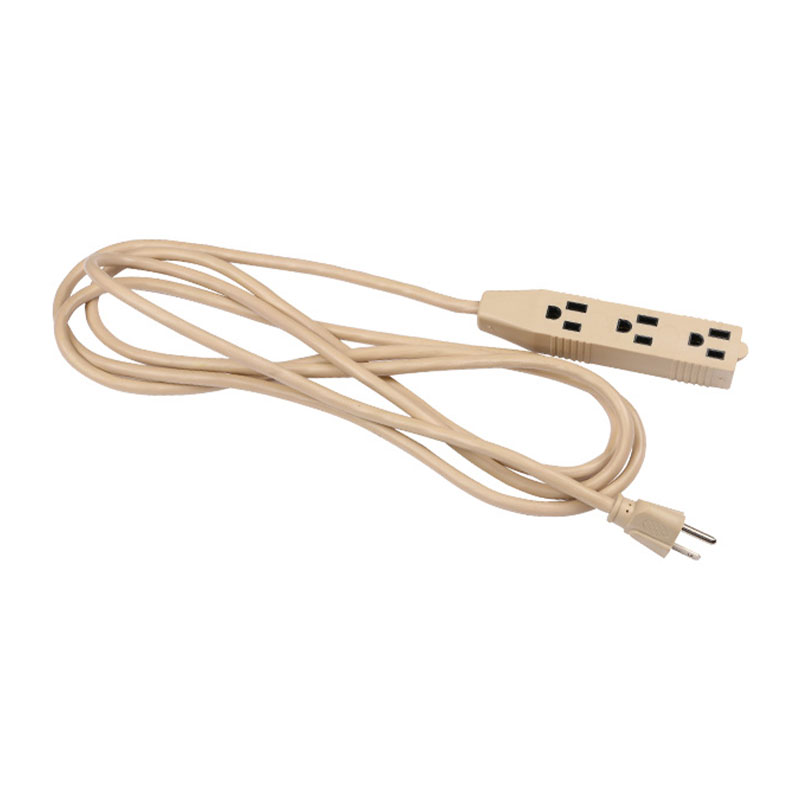
Household use is also where multi-outlet cords are common. A customer may plug a TV, lamp, phone charger, and a kettle into the same power strip. The total load is what matters. The cord attached to the strip must be sized for the sum of the loads. A 16 AWG indoor household extension cord is appropriate for lights and electronics, but not for appliances with motors. This is a common source of customer dissatisfaction when a cord was bought for a home office and used for a dryer.
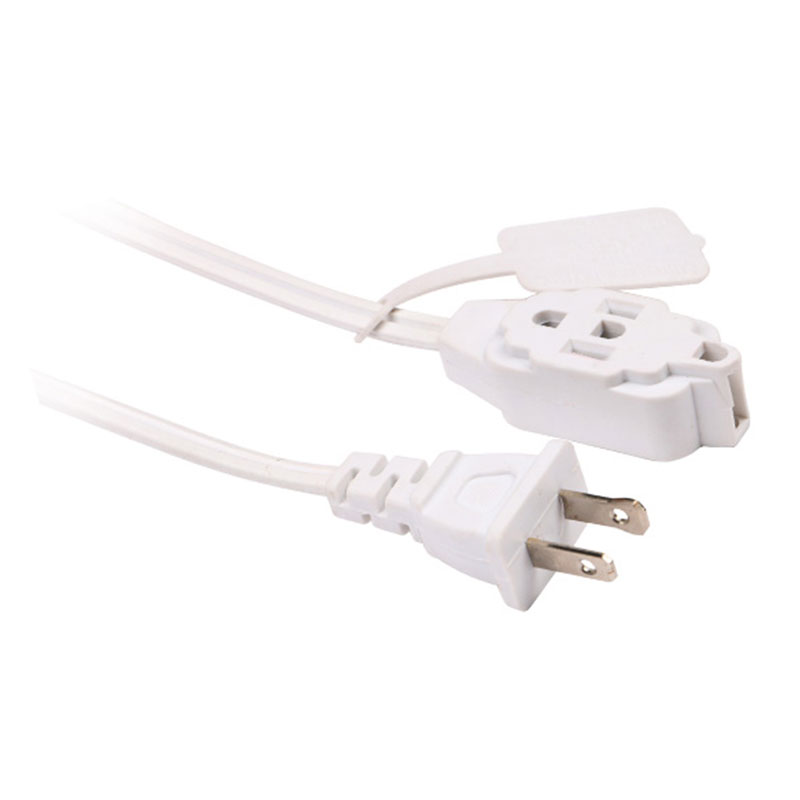
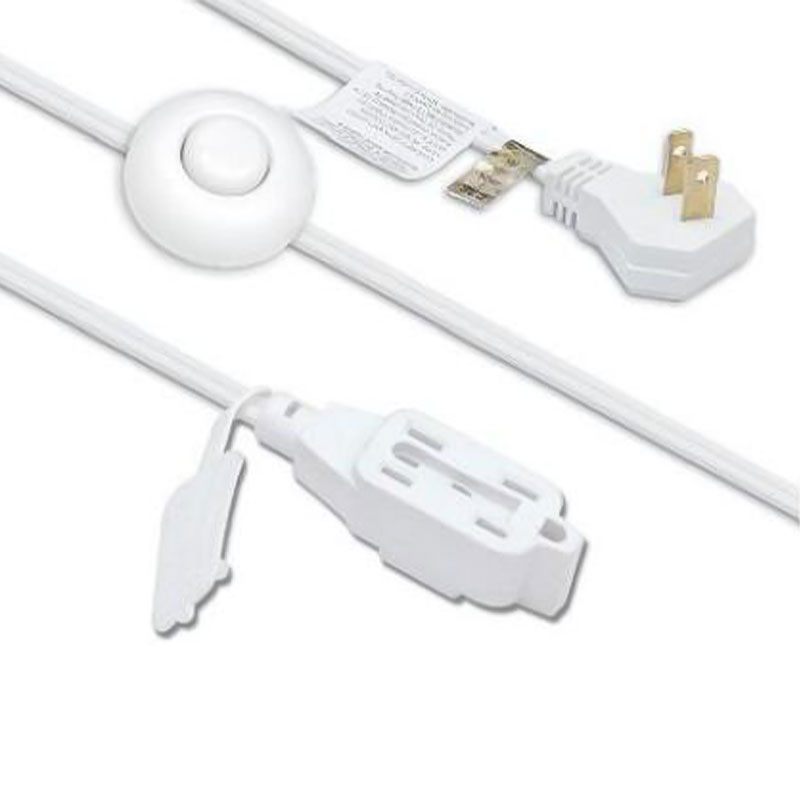
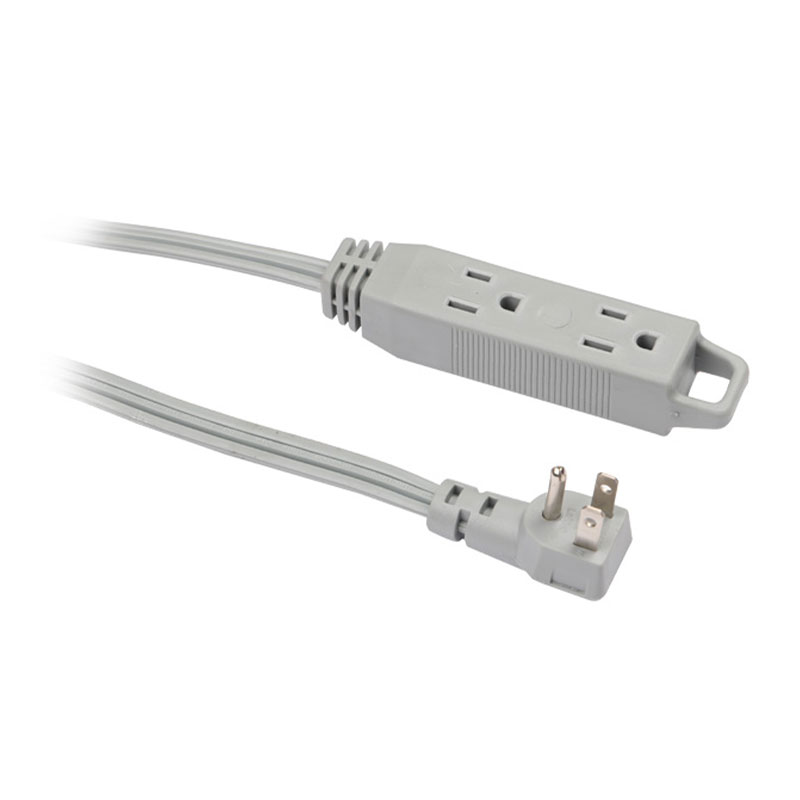 American Standard Household Multi-Outlet Extension Cords for Indoor UseDesigned for indoor applications, these multi-outlet cords allow connecting lamps, chargers, and small electronics. They suit light loads but are not recommended for motor-driven appliances like dryers.View Product →
Outdoor and Construction Equipment
Outdoor equipment includes pressure washers, leaf blowers, electric lawn mowers, and string trimmers. These tools often have travel distances of 50 to 100 feet between the outlet and the point of use. A pressure washer drawing 14A at 120V needs 12 AWG at 50 feet, or 10 AWG at 100 feet.
An extension cord used on construction sites must also tolerate abuse from dragging, moisture, and sunlight. A heavy-duty outdoor cord with a tough jacket and a grounded plug is the minimum for this environment. The gauge must be selected to handle the tool load, not just the total length.
For temporary power distribution at a job site, a cord with multiple outlets allows you to run several tools from one power source. The gauge must be sized for the maximum expected total load, not just the load of one tool. If you run a 15A saw and a 7A work light from the same power source through a single extension cord, the total load is 22A and you need at least 10 AWG.
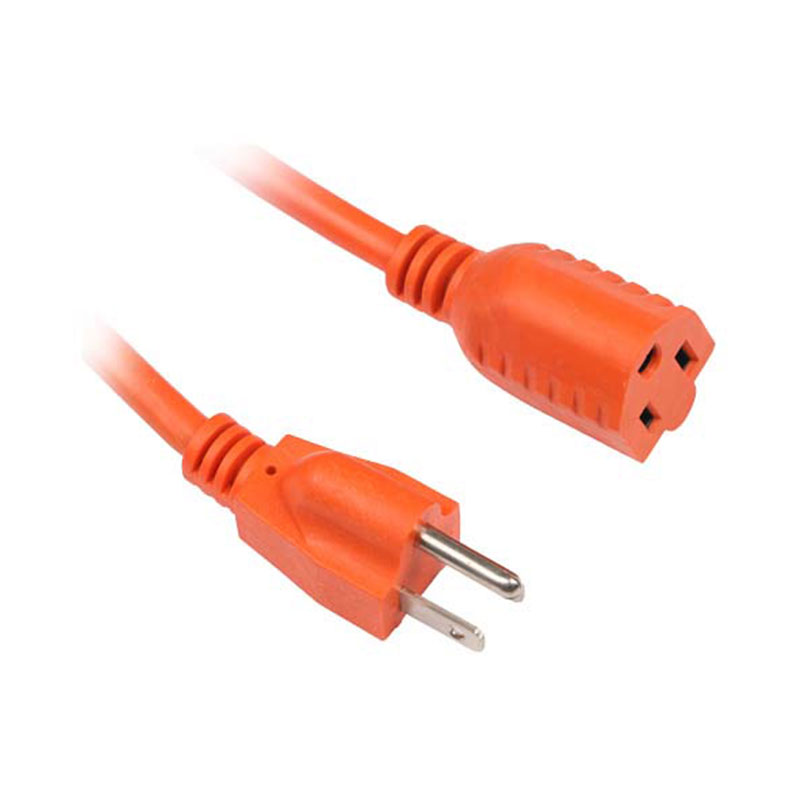
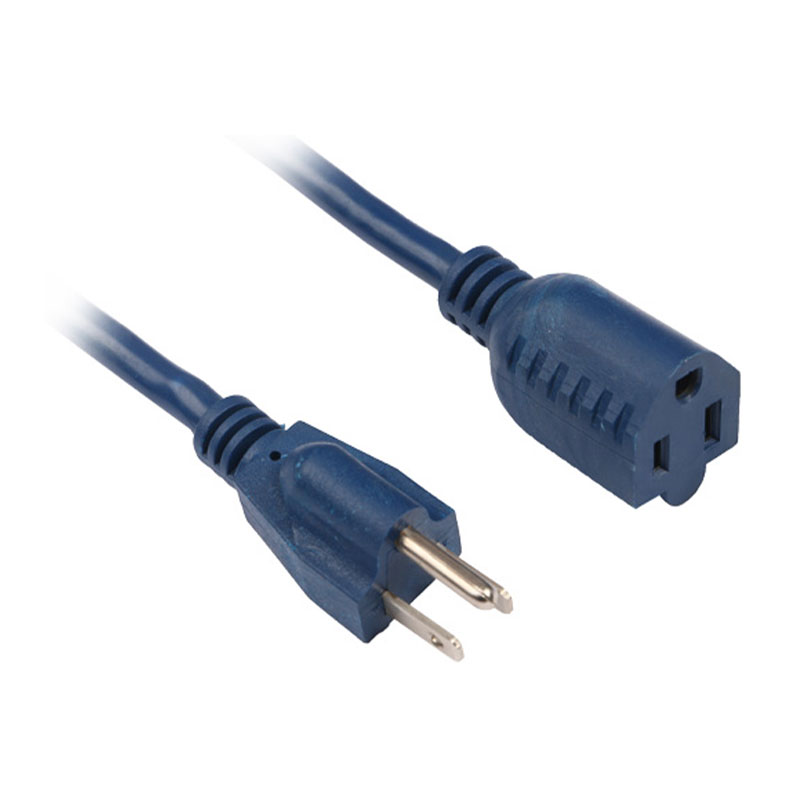 Durable Orange Outdoor Extension Cord with Grounded ProtectionFeaturing a bright orange jacket for visibility and a grounded 3-prong plug, this cord provides safe power for tools and small appliances in workshops, garages, or sheltered outdoor areas.View Product →
Industrial and Commercial Applications
Industrial facilities use extension cords for temporary equipment, maintenance, and production line setup. The loads can be significant. A 3kW electric heater on 230V draws 13A. A 20-foot run can use 14 AWG with acceptable results, but a 100-foot run needs 10 AWG to keep voltage drop under 3%. In industrial environments, phase and neutral conductor integrity is critical, and cords with thicker jackets and reinforced termination are preferred.
For OEMs building equipment into a product, the internal wiring harness is a different matter, but extension cords that ship with the equipment should always be matched to the equipment's current draw. If you are exporting appliances to a market where the mains voltage is lower than the appliance's rated voltage, the extension cord gauge must be increased to deliver the same wattage at the lower voltage.
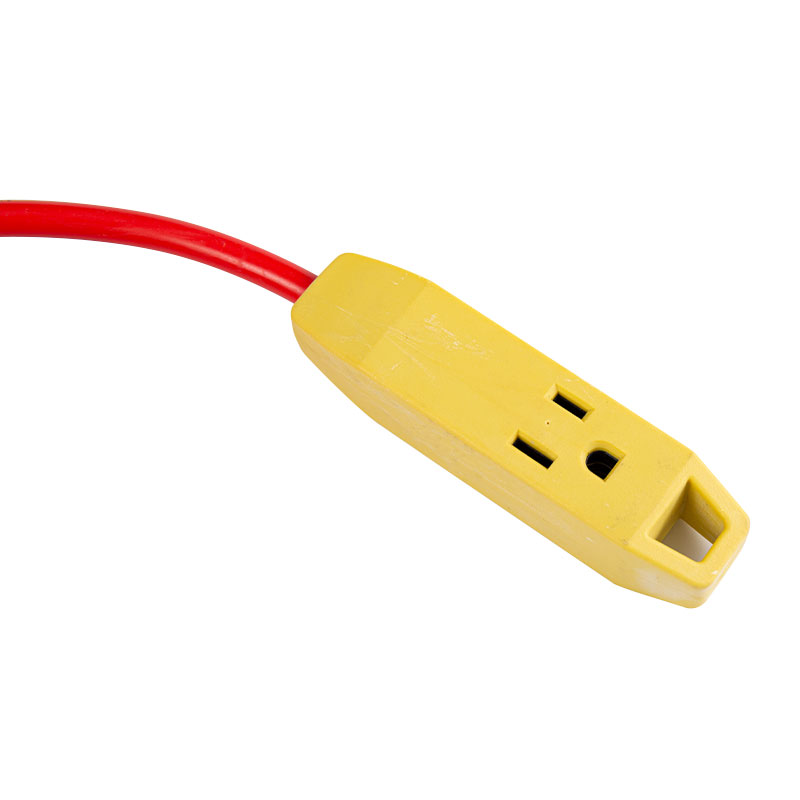 Heavy-Duty Multi-Outlet Extension Cord for Temporary Power NeedsWith multiple grounded outlets and 16 AWG copper conductors, this heavy-duty cord is ideal for powering several tools or appliances simultaneously in temporary indoor or outdoor setups.View Product →
When you need to match a cord to a specific appliance, the engineering team at our facility can support you. Our application guide for extension cords walks through the most common appliance types and the recommended cord specifications for each market voltage.
Jacket Materials and Operating Environment
Gauge is only one part of the specification. The jacket material determines whether a cord can be used outdoors, whether it resists UV degradation, whether it remains flexible in cold weather, and whether it will survive contact with oil, grease, or chemicals. The environment and the gauge work together to define the cord's useful life.
The most common jacket constructions in the market are:
SPT Cord (Service-Parallel Thermoplastic)
SPT cords are flat, light-duty cords. Their insulation is usually PVC, and they are suitable for indoor use with small appliances like lamps, radios, and office equipment. SPT cords are not designed for outdoor exposure or rough handling. SPT-2 is a heavier version with thicker insulation, but still best for indoor use.
SJTW Cord (Service Junior, Thermoplastic, Weather-resistant)
SJTW is the workhorse outdoor cord. It has a tough PVC jacket that resists moisture, UV light, and abrasion. It is rated from -40°C to +60°C and is the most common cord type for outdoor power tools, construction sites, and portable appliances. The wire is stranded copper, and the jacket provides enough protection for use in rain and general weather exposure.
SJOW Cord (Service Junior, Oil-resistant, Weather-resistant)
SJOW is similar to SJTW but uses a rubber or rubber-like compound jacket that resists oil and grease. This is important in industrial settings, garages, and workshops. SJOW cords remain flexible at low temperatures and tolerate exposure to petroleum-based fluids. The jacket is also resistant to sunlight, which makes it suitable for long-term outdoor installations.
SOOW Cord (Service, Oil-resistant, Weather-resistant)
SOOW is the heaviest standard portable cord. It is a round, multi-conductor cable with a thick rubber jacket. It resists oil, water, abrasion, and extreme temperatures. SOOW is common on construction sites, in factories, and for power distribution to portable equipment. It is also the cord type used for temporary power panels and wiring in harsh environments.
The jacket material does not change the ampacity of the conductor, but it directly affects whether the cord can be used in the intended environment. A 16 AWG SJTW cord is rated for 13A at 25 feet, while the same gauge in a flat SPT cord may be rated lower because the jacket is thinner and dissipates heat less effectively. When you specify cords for a specific market, consider the environmental conditions your customers will encounter.
A heavy-duty outdoor cord with a grounded plug and an orange UV-resistant jacket, such as our FP672 orange outdoor extension cord, is an example of a product that combines the right gauge with the right jacket for demanding outdoor use.
Some markets require cords with a specific plug type and voltage rating. Our European-standard heavy-duty extension cords use Schuko or other Euro plugs, while American-standard cords use NEMA 5-15 or 5-20 plugs. The gauge and jacket specifications need to be matched to both the local voltage and the local plug standard at the same time.
Safety Risks of Choosing the Wrong Gauge
Using a wire that is too thin for the load causes a cascade of problems. Some are immediately visible, and some accumulate slowly until a failure occurs.
Overheating and Fire Risk
The most dangerous risk is overheating. When current exceeds the cord's ampacity, the copper heats up, the insulation jacket becomes soft, and eventually the jacket may melt or crack. If the conductors come into contact with each other or with a grounded surface, a short circuit or arc fault can occur. In the worst case, this starts a fire. The National Fire Protection Association reports that extension cords are involved in a significant number of home and workplace electrical fires every year, with many cases directly attributed to undersized gauge cords.
Reduced Equipment Performance
Voltage drop from a thin wire reduces the performance of motors and heating elements. A vacuum cleaner may sound like it is working but lose suction. A drill may stop when a harder screw is encountered. A heater may run for twenty minutes without raise the room temperature as expected. Customers often blame the appliance rather than the cord, which creates warranty disputes and negative reviews for the appliance manufacturer, not the cord supplier.
Premature Motor Failure
Motors running at reduced voltage draw higher current for the same mechanical output. This extra current generates additional heat in the motor windings. Over months of use, the insulation in the motor degrades faster. The motor winding insulation breaks down, and the motor fails. The motor manufacturer will identify this as a premature failure and may decline warranty coverage if the cause is determined to be a voltage-supply issue.
Circuit Breaker Nuisance Trips
An undersized extension cord does not necessarily trip a breaker on its own. The breaker at the wall outlet sees the total current, not the voltage drop. But a longer start-up time due to low voltage can cause motors to draw higher current for longer, which can exceed the breaker's time-current curve. This results in nuisance trips that interrupt daily operations.
Danger from Multiple Cords in Series
Connecting two extension cords in series, also called daisy-chaining, is a major safety concern. The combined length increases the total resistance. The combined heat from both thin cords can cause overheating at the connection points, especially at the plug junction. The ampacity of a combined extension cord should be evaluated as if one cord were the entire length, not the sum of the individual ratings. Practically, this means that a 16 AWG 25-foot cord connected to another 16 AWG 25-foot cord produces a 50-foot 16 AWG cord. The ampacity is now 10A, not 13A.
What Importers and Distributors Must Verify
For buyers who are not electrical engineers, the extension cord specification sheet is a compact document with several values. The gauge is just one line item. Yet, it is the easiest parameter to overlook and the most consequential when wrong. Here are the checks that matter before placing a purchase order.
Verify the Gauge Spec, Not the Cable Diameter
Some suppliers mark the cable's outer diameter but not the actual conductor gauge. A cord with a larger outer diameter can still have a thin conductor if the insulation is thick. Always ask for the conductor cross-section in mm² or the AWG number. If the spec sheet says 1.5 mm², that is roughly 16 AWG. If it says 2.5 mm², that is roughly 14 AWG. The gauge must be stated explicitly, and the copper material should be verified as pure copper, not copper-clad aluminium, which has higher resistance and can fail in demanding applications.
Confirm the Ampacity Rating is Length-Specific
Many catalogues list a single amp value for a cord family. Always ask for the ampacity at the maximum length you intend to sell. A 16 AWG cord listed at 13A is only valid at 25 feet. If you sell a 100-foot version of that cord, the rating drops to 5A. Your sales literature should reflect the length-specific rating, or your customers will experience failures that they will associate with your brand.
Check Insulation Temperature Rating
The insulation has a temperature class. PVC jackets are usually rated 60°C or 105°C. The ampacity values used in charts assume a temperature rating. A cord with a 60°C rating will not tolerate the same operating temperatures as one with a 105°C rating. In practice, a 105°C insulation gives you a larger safety margin when a cord is coiled and operating under load.
Consider the Continuous Load Duration
Continuous load, defined as three hours or more, requires a derating factor of 125% for the appliance current. In other words, a cord carrying a continuous 10A load should be selected as if it were a 12.5A load. This is often ignored in furniture and industrial power distribution. If you supply cords for equipment that runs continuously, sizing must account for the derating.
Verify the Standard and Certification Marks
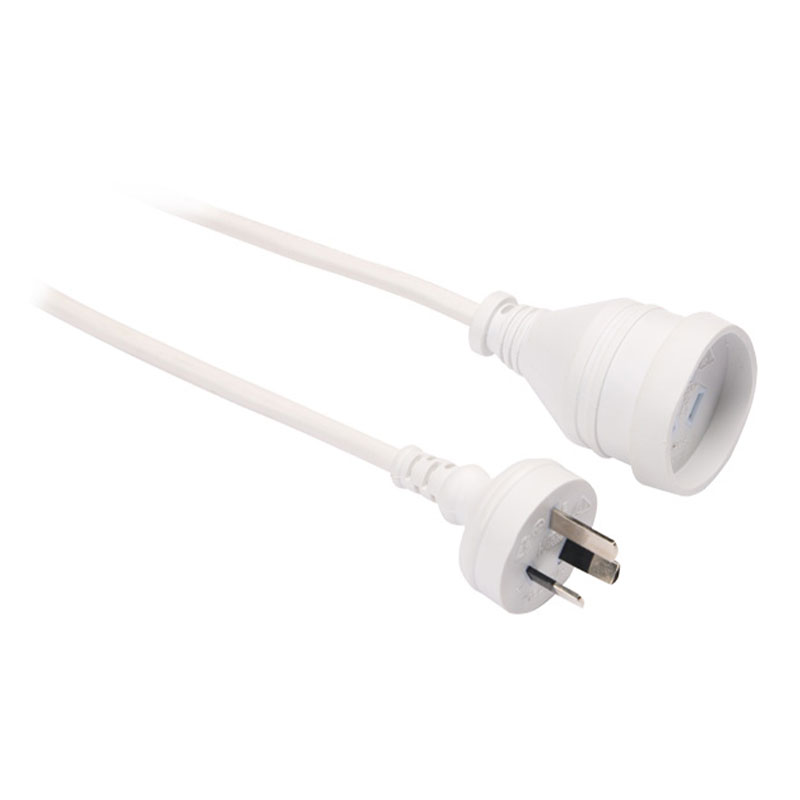
Different markets require different approvals. The European Union requires CE marking for extension cords. The United States requires UL or ETL listing. Australia requires SAA approval. A manufacturer with the capability to produce cords against multiple standards demonstrates a depth of engineering control that reduces your regulatory risk. Our guide on power cord selection for industrial applications covers the standard considerations in more depth.
Test the Cord Before Committing to a Container
If you are a distributor, you should request samples and conduct a basic load test. Connect a known load, run it for 30 minutes, and measure the temperature at the plug and along the cord. The cord should feel warm but not hot. You can measure the voltage at the far end under the load to verify that the voltage drop is within 3%. This takes less than an hour and can prevent a failed shipment that damages your relationship with your customers.
Conclusion: Specifying Extension Cords With Confidence
Extension cord gauge is not a minor detail that can be chosen by habit or by a simple plug requirement. It is a technical parameter with direct consequences for user safety, equipment performance, and product reliability. Lower AWG numbers mean thicker conductors, more current capacity, and less voltage drop. The longer the cord, the more important the gauge becomes.
When you are sourcing extension cords for a consumer market, a distributor network, or an OEM application, begin with the appliance or tool current draw. Add the maximum cable length the end customer will use. Then apply a 3% voltage-drop limit. This gives you a clear specification that you can communicate to your supplier and your customers.
Danyang Feipeng Electrical Appliance Co., Ltd. has been manufacturing extension cords and power supply components since 1990. Our production facility covers more than 6,000 square metres with integrated production and packaging lines, and our engineering team works closely with importers, distributors, and brand owners to develop cords that match the voltage, plug type, and safety requirements of each target market. We build both standard product lines and custom cords for specific applications. If you need help determining the right gauge for a particular market or appliance, our team can support you with the calculation and the production quality control that your project requires.
The most important takeaway is this: when you look at an extension cord specification, make sure the gauge is listed, length-specific, and matched to the real current draw. That simple check will protect your customers, your brand, and your business from the hidden costs of an undersized cord.
Latest Updates
Provide You With The Latest Enterprise
Provide You With The Latest Enterprise
and Industry News.
We will continue to focus on the intelligent temperature control field and serve global users with technical concepts of "safer, more energy-efficient and more environmentally friendly".
-
Industry News
The Ultimate Guide to Immersion Water Heaters: From Portable Heating to Safety Best Practices
11
Feb 2026
Be the First to Know
For exclusive deals and latest offers, sign up by entering your email address below.
-

Provide one-stop service from design optimization, process improvement to volume delivery.
-
Quick Links
Home Products About Us Advantages Application News Contact Us -
Products Categories
Immersion Water Heater Extension Cord Power Strip Power Cord Heating Element Hot Plate Magnesium Anode Rod Electrical Water Heater Stem Thermostat -
Contact Information
Add : Feida Industrial Park , Houxiang Town, Danyang City , Jiangsu Province ,China
E-mail: gm@cnfpdq.com
Tel: +86-13306103666
Fax: +86-511-86321126
Copyright © 2025 by Danyang Feipeng Electrical Appliance Co., Ltd. All Rights Reserved.
 Custom Electric Heater Components Manufacturers
Custom Electric Heater Components Manufacturers