

 English
 русский
 Español
 عربى
عربىDon't hesitate to send a message

12 Gauge vs 14 Gauge Extension Cord: Which Gauge Is Right for Your Job?
Content
You are in the garage, about to rip a few boards with a circular saw. The nearest outlet is 30 feet away, so you grab a 14-gauge extension cord. After a few cuts, the cord feels warm. Is that normal? Not really. The saw draws 13 amps, and 14-gauge wire is rated for 15 amps, but the length and the motor's startup surge push the cord close to its limit. The right choice between 12-gauge and 14-gauge extension cords comes down to three factors: the current your tool needs, the distance from the outlet, and where you will use the cord. For most heavy-duty tools and runs over 50 feet, 12-gauge is the safer bet. For small appliances and short runs, 14-gauge works fine. Let's break down why.
Understanding Wire Gauge: What 12 and 14 Actually Mean
Wire gauge follows the American Wire Gauge (AWG) system. Lower numbers mean thicker wire. A 12-gauge cord has a larger conductor than a 14-gauge cord. That extra copper lowers resistance, so less energy is lost as heat and more reaches your tool. The difference sounds small, but it changes how much current the cord can carry safely and how far you can run it before voltage drops too low.
To put the physical difference in perspective, a 12-gauge conductor has a diameter of about 2.05 mm, while 14-gauge is about 1.63 mm. That translates to roughly 60% more copper cross-section in the 12-gauge wire. More copper means lower resistance per foot, which directly affects voltage drop and heat buildup. If you are running a high-draw motor, that margin can mean the difference between a tool that runs cool and one that stutters and overheats.
| Feature | 12 Gauge | 14 Gauge |
|---|---|---|
| Conductor diameter | 2.05 mm | 1.63 mm |
| Typical ampacity | 20 A | 15 A |
| Common uses | Power tools, generators, long runs | Lamps, fans, small appliances, short runs |
| Voltage drop over 50 ft at 15 A | About 2–3% | About 4–5% |
| Weight and flexibility | Heavier, stiffer | Lighter, more flexible |
The table shows why 12-gauge is often called heavy-duty. It carries more current and loses less voltage over distance. But that extra copper also makes the cord heavier and less flexible. For a job that requires dragging a cord around a workshop, the extra weight can be a minor annoyance. For a job that requires safety and consistent power, it is a worthwhile trade-off.
Ampacity and Safety: The 15A vs 20A Divide
14-gauge extension cords are rated for 15 amps. 12-gauge cords are rated for 20 amps. But the National Electrical Code (NEC) recommends using only 80% of a circuit's capacity for continuous loads. That means a 14-gauge cord should really handle no more than 12 amps continuously, and a 12-gauge cord no more than 16 amps. If your circular saw draws 13 amps, a 14-gauge cord is already over that safe threshold. A 12-gauge cord gives you headroom.
This headroom matters because motors and compressors draw a surge of current at startup, often two to three times their running amps. If the cord is undersized, voltage drops, the motor runs hotter, and you risk tripping breakers or damaging the tool. For example, a table saw with a 15-amp motor might briefly pull 30 amps when you flip the switch. A 14-gauge cord will struggle to deliver that surge without a significant voltage sag. A 12-gauge cord handles it with less strain. Over time, running a motor on an undersized cord shortens its life. The windings overheat, insulation degrades, and eventually the tool fails. The cost of a thicker cord is small compared to repairing or replacing a good tool.
Length and Voltage Drop: Why Distance Changes Everything
Resistance builds with length. A 100-foot 14-gauge cord has about twice the resistance of a 50-foot cord. That resistance causes voltage drop. If voltage at the outlet is 120 V, a 14-gauge cord running a 15-amp load 100 feet might deliver only 110 V or less. Many tools will still run, but they run slower and heat up. For runs over 50 feet, step up to 12-gauge. For runs over 100 feet, consider 10-gauge. Here is a quick rule of thumb:
- Up to 25 ft: 14-gauge is fine for 15 A.
- 25–50 ft: 14-gauge for 12 A or less; 12-gauge for 15–20 A.
- 50–100 ft: 12-gauge for 15 A; 10-gauge for 20 A.
- Over 100 ft: 10-gauge or heavier.
When you are shopping for a cord, check the amp rating on the jacket. It will say something like "15 A/125 V" or "20 A/125 V". Also look at the wire gauge printed on the cord. If you need help matching a cord to a specific machine, see this guide on how to select the right power cord for your industrial equipment. Remember that voltage drop is not just about the cord; it is also about the outlet and the wiring inside your walls. If you are already at the end of a long circuit, adding a long extension cord can compound the problem. In that case, a 12-gauge cord is not overkill—it is a practical necessity.
When to Choose 12 Gauge
Choose 12-gauge when you need to run:
- Circular saws, table saws, and miter saws (typically 12–15 A)
- Portable generators (up to 20 A)
- Air compressors (15–20 A)
- Electric chainsaws and log splitters
- Any tool that will be used more than 50 feet from an outlet
- Outdoor jobs where the cord may be exposed to sunlight, moisture, or abrasion
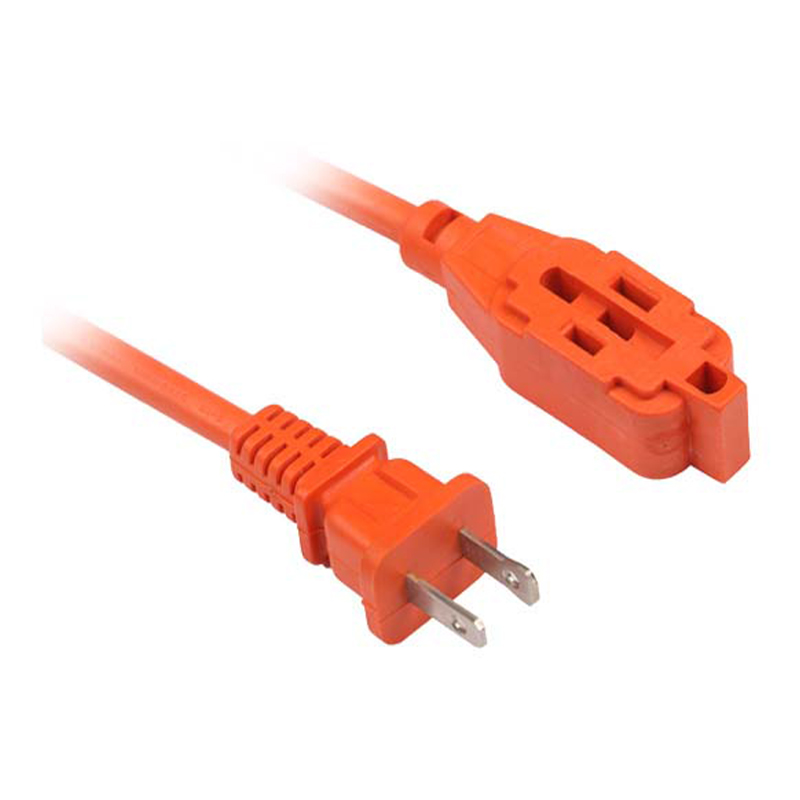
For these situations, a heavy-duty 12-gauge cord with a grounded plug is the right tool. For example, the FP672 durable orange outdoor extension cord from Feipeng is built with 12-gauge wire, a grounded three-prong plug, and a bright jacket that resists oil, moisture, and sunlight. It is designed for temporary outdoor power, which is exactly where 12-gauge earns its keep.
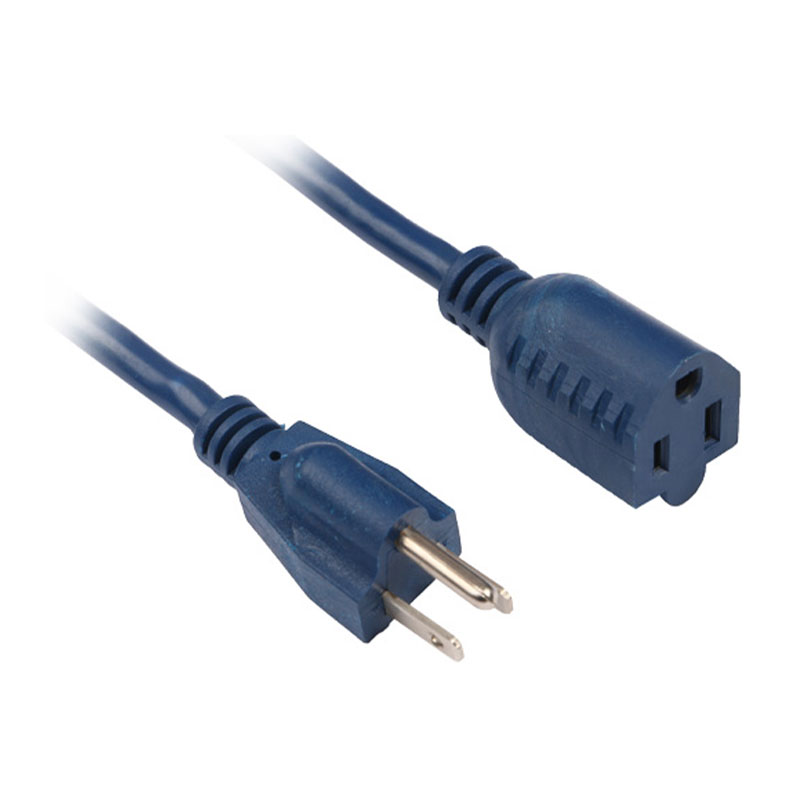 Feipeng FP-672 12-Gauge Orange Outdoor Extension Cord with Grounded PlugHeavy-duty 12-gauge cord with grounded three-prong connections and high-visibility orange jacket for temporary outdoor power and longer high-load runs.View Product →
Another scenario: you are running a 15-amp heater in a garage workshop during winter. The heater runs for hours. A 14-gauge cord would be at its limit, and the continuous load would cause noticeable heat. A 12-gauge cord stays cooler and delivers more stable voltage. If the heater has a thermostat that cycles on and off, the inrush current at each cycle puts extra stress on the cord. The thicker wire handles those surges with ease. For any load that runs longer than a few minutes, 12-gauge is the smart choice.
When 14 Gauge Is the Right Call
14-gauge cords are lighter, more flexible, and less expensive. They are a good match for:
- Lamps, fans, and phone chargers
- Power tools that draw under 12 A and run less than 25 feet
- Indoor holiday lights and small appliances
- TV, computer, and home office equipment
If you are running a 10-amp table fan 15 feet, a 14-gauge cord is perfectly safe. But if you try to run a 15-amp space heater 50 feet, the cord will overheat. The rule is simple: never exceed the cord's amp rating, and always account for distance. For household tasks, a multi-outlet 14-gauge cord can be convenient. Feipeng offers an American standard household multi-outlet extension cord that fits standard 15 A outlets and provides several receptacles for low-power devices.
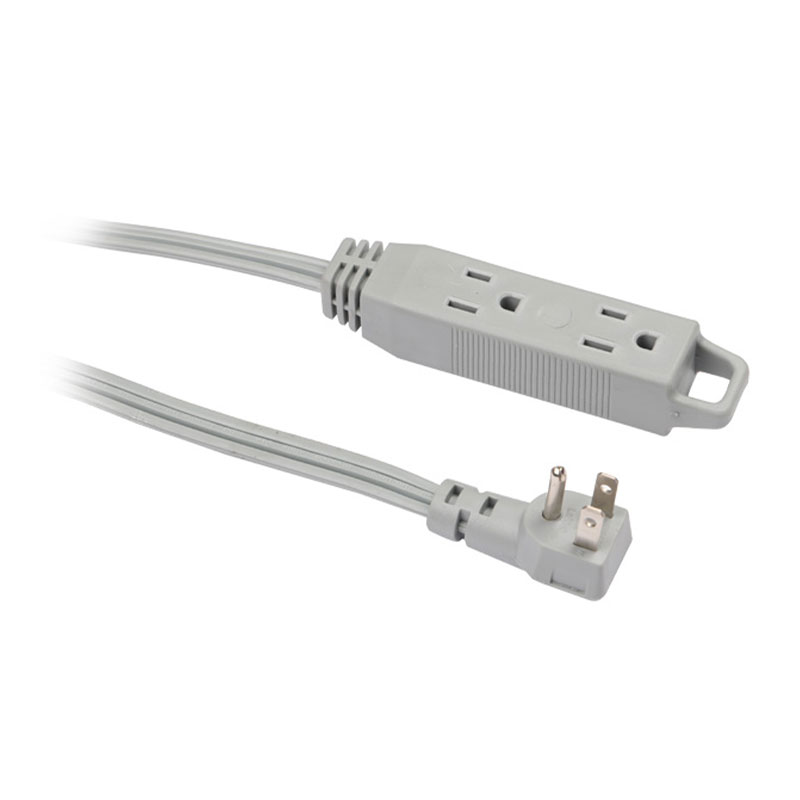 Feipeng FP-694/FP-698 American Standard Household Multi-Outlet Extension CordsIndoor multi-outlet cord with two-prong US plug and several receptacles for lamps, chargers, computers, and other low-power devices.View Product →
It is also worth noting that 14-gauge cords are often the default choice for indoor use because they are easier to route around furniture and less likely to damage baseboards. But do not let the convenience fool you. If you are plugging in a vacuum cleaner that draws 12 amps, a 14-gauge cord is right at the 80% limit. If the cord is coiled or covered by a rug, heat cannot dissipate, and the risk of overheating rises. Always uncoil extension cords fully before use, and never run them under carpets or through doorways where they can be pinched.
Safety, Compliance, and Buying Checklist
Before you buy any extension cord, check for these marks and features:
- UL listing (or ETL, CSA) for safety.
- A gauge and amp rating printed on the jacket.
- A grounded three-prong plug for tools with metal housings.
- Outdoor cords marked with a "W" (e.g., SJTW, SJOOW) for weather resistance.
- A jacket that stays flexible in cold weather.
- The right plug type for your region. For instance, European, Australian, and UK standards differ.
If you are sourcing cords for commercial or industrial use, you may need cords that meet specific national standards. Feipeng manufactures extension cords for various electrical appliances and can adapt plugs and wire gauges to your market. Their factory has been producing cords and heating elements since 1990, and they offer both standard and custom configurations. Whether you need a 12-gauge cord for heavy tools or a 14-gauge cord for light-duty tasks, the key is to match the cord to the load and the environment. A cord that is too thin for the job is a fire hazard; a cord that is thicker than necessary is simply a bit heavier and more expensive, but it will never let you down.
To sum up, the choice between 12-gauge and 14-gauge comes down to amps and feet. If your tool draws more than 12 amps or you need to run more than 50 feet, buy a 12-gauge cord. If you are powering small devices within 25 feet, a 14-gauge cord will do the job safely. Always check the amp rating on the device and the cord, and never run a cord at its maximum capacity for long periods. When in doubt, go thicker. A few extra dollars for 12-gauge copper is cheap insurance against overheated cords and damaged tools.
Latest Updates
Provide You With The Latest Enterprise
Provide You With The Latest Enterprise
and Industry News.
We will continue to focus on the intelligent temperature control field and serve global users with technical concepts of "safer, more energy-efficient and more environmentally friendly".
-
Industry News
The Ultimate Guide to Immersion Water Heaters: From Portable Heating to Safety Best Practices
11
Feb 2026
Be the First to Know
For exclusive deals and latest offers, sign up by entering your email address below.
-

Provide one-stop service from design optimization, process improvement to volume delivery.
-
Quick Links
Home Products About Us Advantages Application News Contact Us -
Products Categories
Immersion Water Heater Extension Cord Power Strip Power Cord Heating Element Hot Plate Magnesium Anode Rod Electrical Water Heater Stem Thermostat -
Contact Information
Add : Feida Industrial Park , Houxiang Town, Danyang City , Jiangsu Province ,China
E-mail: gm@cnfpdq.com
Tel: +86-13306103666
Fax: +86-511-86321126
Copyright © 2025 by Danyang Feipeng Electrical Appliance Co., Ltd. All Rights Reserved.
 Custom Electric Heater Components Manufacturers
Custom Electric Heater Components Manufacturers