

 English
 русский
 Español
 عربى
عربىDon't hesitate to send a message

EV Charging Extension Cord: Safety, Gauge, and When It Is Acceptable to Use
Content
- 1 Why a Standard Household Extension Cord Is Not Safe for EV Charging
- 2 What Distinguishes an EV Charging Cable from an Extension Cord
- 3 When Using an EV Charging Extension Cord Is Acceptable
- 4 How to Choose the Right Extension Cord for Your EV Charger
- 5 What a Manufacturer Knows about Extension Cord Build Quality
- 6 Safe Practices to Follow Every Time
- 7 Final Takeaway
Your EV charger cable stops three feet short of the garage outlet. You have a long household extension cord in the basement, and you are tempted to simply plug it in. The question is whether that will work safely. The short answer: an extension cord can be used for EV charging, but only when the cord is rated for the same current and voltage as the charger, has a grounded plug, and is designed for outdoor use. Using a standard indoor 16 AWG cord, by contrast, can create heat, voltage drop, and fire risk. This article explains when a cord becomes an acceptable option and what happens when it does not.
Why a Standard Household Extension Cord Is Not Safe for EV Charging
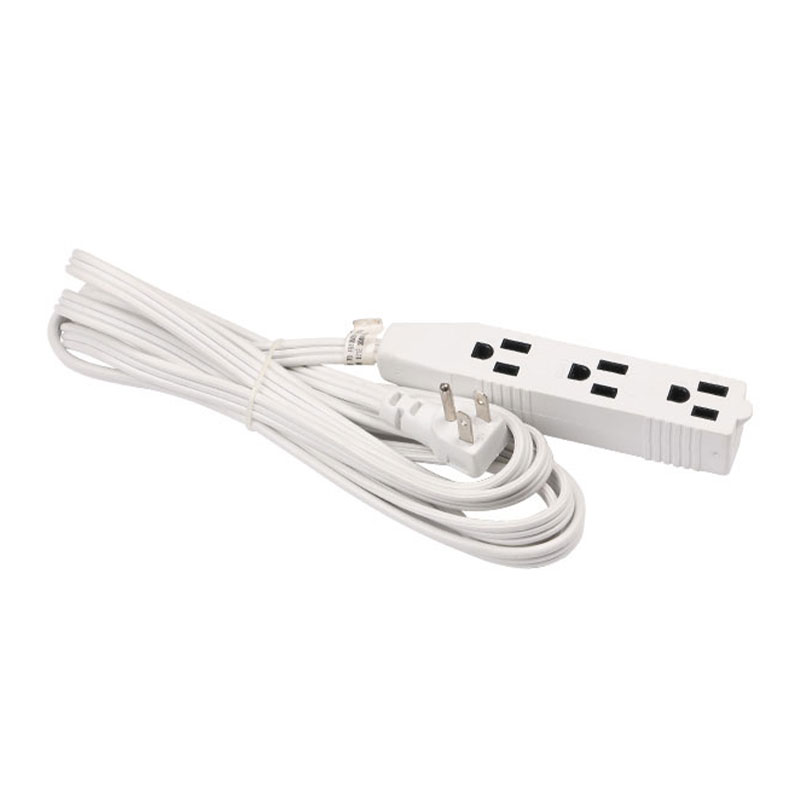
An electric vehicle charges at a constant current for several hours. A Level 1 charger draws 12 amps at 120 volts. That is a sustained load, not a brief surge. A typical household extension cord is 16 AWG, which is rated for around 10 to 13 amps in intermittent use. When you pull a continuous 12 amps through 16 AWG copper, the wire warms.
The longer the run, the more the resistance, and the more the voltage drops. The charger sees a lower voltage and responds by drawing more current to deliver the same power, which produces even more heat. In a tightly coiled cord, that heat cannot escape. Over time, the insulation can soften, crack, and expose conductors. Because the charging circuit stays energized for hours, the scenario increases the chance of electrical fire and can also damage the portable EV charger itself.
The same applies to Level 2 chargers, which push 30 to 50 amps at 240 volts. A 16 AWG cord under those conditions is not a slow-burning risk—it is a near-instant failure. This is why automakers and electrical safety bodies generally discourage extension cords for EV charging. However, they usually mean the cheap, under-rated cords people keep in the garage. A properly engineered cord with the correct gauge, insulation, and connectors changes the picture.
What Distinguishes an EV Charging Cable from an Extension Cord
An EV charging cable is not just a wire with a plug on each end. It contains thicker conductors, high-temperature insulation, and molded connectors that maintain a tight fit over thousands of connect-disconnect cycles. It may also include communication signals between the vehicle and the charging station, especially for Level 2 chargers. A standard extension cord does none of that. It is designed for a lamp or a power tool, not for an eight-hour continuous load.
| Feature | EV charging cable | Typical household extension cord |
|---|---|---|
| Conductor gauge | 10 to 12 AWG for Level 1/2 | 14 to 16 AWG |
| Current rating | Matches charger (12A, 30A, 40A) | Often 10A to 13A |
| Insulation | Heat-resistant, oil-resistant | PVC, less heat tolerant |
| Connector type | Locking or tight-fit | Loose fit, often ungrounded |
| Service rating | Continuous duty | Intermittent duty |
These differences explain why the answer to “can I use an extension cord?” is not a simple yes or no. It depends on whether the cord belongs to the same category as the charger cable or to the category of a temporary household tool.
When Using an EV Charging Extension Cord Is Acceptable
An extension cord becomes acceptable when all four conditions are met. First, the distance should be short. Twenty-five feet is about the maximum for a Level 1 charger with a 12 AWG cord. Longer runs increase voltage drop and heat. Second, the wire gauge must match the charger. For a 12-amp Level 1 charger, use 12 AWG minimum; for a 32-amp Level 2 charger, use 10 AWG and a 240-volt rated cord.
Third, the cord must be marked for outdoor use, because EV charging often takes place in a driveway, garage, or parking area where moisture is possible. Fourth, the plug must be a grounded three-prong plug. An ungrounded cord removes a critical layer of shock protection.
The cord also needs its own overcurrent protection, which is present in a high-quality outdoor extension cord by design. If your supplier cannot confirm that the cord is rated for continuous outdoor use, do not use it for EV charging.
How to Choose the Right Extension Cord for Your EV Charger
Selecting a cord starts with reading the charger label. Look for the amperage and voltage. For a Level 1 charger, you need a cord that handles at least 15 amps at 120 volts. For a Level 2 charger, you need a cord rated for 30 or 50 amps at 240 volts.
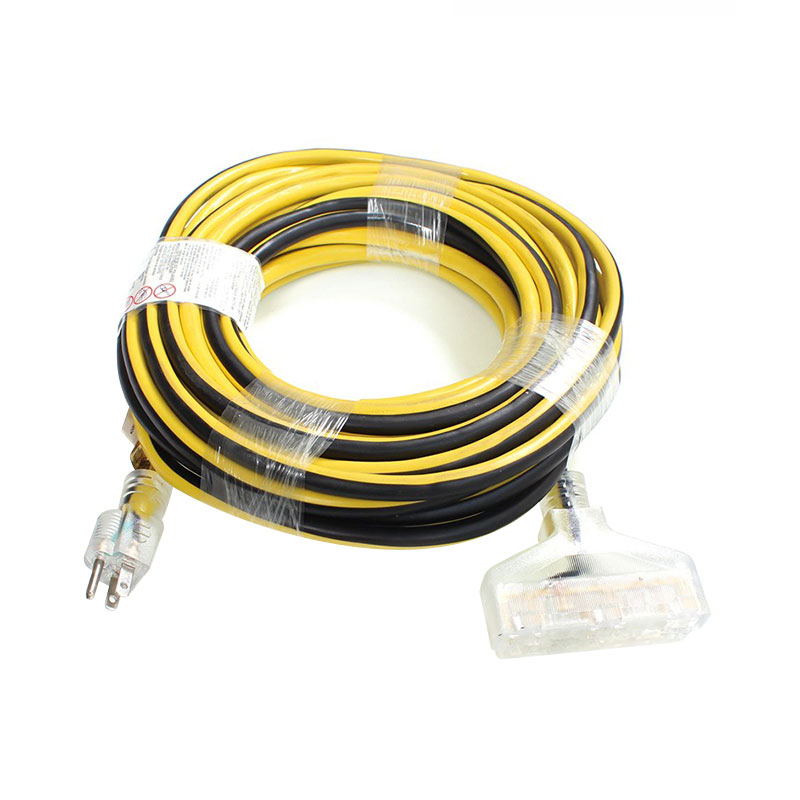
Then decide whether it will be used outdoors. A GA-rated cord with a durable orange jacket is a safe choice for a driveway or garage. In cold weather, the jacket stays flexible and resists cracking.
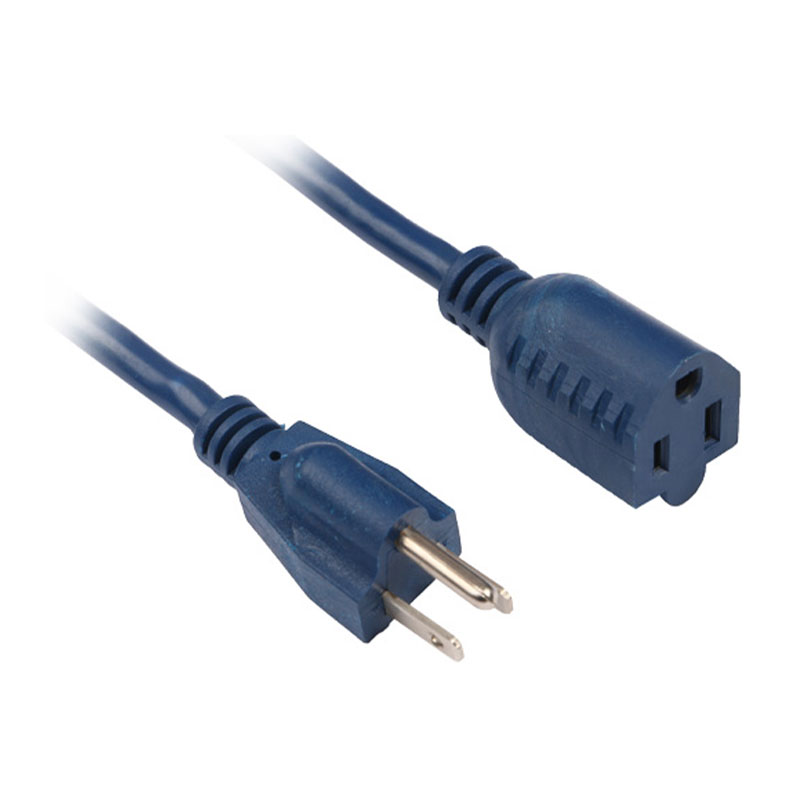 Durable Orange Outdoor Extension Cord with Grounded 3-Prong PlugThis bright orange cord offers high visibility to reduce tripping risks and a weather-resistant jacket for sheltered outdoor use, making it a reliable power source for tools and appliances in workshops, garages, or patios.View Product →
The insulation should be a high-temperature type, and the plug should be molded rather than assembled, so that moisture does not enter the connection points. A cord with a molded strain relief also prevents the conductor from breaking at the point where the cable meets the plug, which is a common failure after repeated flexing.
| Charger type | Current | 0-25 ft | 25-50 ft |
|---|---|---|---|
| Level 1 | 12A | 12 AWG | 10 AWG |
| Level 2 | 30A | 10 AWG | 8 AWG |
| Level 2 | 40A | 8 AWG | 6 AWG |
Using a heavier gauge than the minimum is never a problem. The cord will run cooler, and the vehicle will charge at full speed. The only trade-off is that heavier cords are stiffer and less convenient to handle.
What a Manufacturer Knows about Extension Cord Build Quality
From a manufacturer's perspective, the strength of a cord lies in three areas: the copper, the insulation, and the molding process. A producer that starts with high-purity copper and uses the actual conductor size printed on the jacket rather than a thinner substitute makes a long-term difference.
The insulation compound matters too. A heavy-duty cord with a heat-resistant, oil-resistant jacket can survive dragging across concrete and exposure to sunlight. The molding process around the plug determines whether moisture can migrate into the wire strands. A well-molded strain relief prevents the conductor from breaking at the point where the cable meets the plug. These are the details that distinguish a cord suitable for EV duty from one that is not. Danyang Feipeng has manufactured extension cords for various electrical appliances since 1990, which means the company has tested cord designs for export markets and for appliances with varying load profiles.
Safe Practices to Follow Every Time
Even the best extension cord can become a risk if used incorrectly. Follow these practices on every occasion:
- Inspect the cord before each use. Look for cuts, exposed wire, or a cracked plug.
- Fully uncoil the cord before charging. A coiled cord traps heat.
- Do not connect a second extension cord to extend reach. Use a single cord of the right length.
- Avoid plugging other appliances into the same cord unless the cord and outlet are rated for the combined load.
- Keep the connection between the cord and the EV charger dry and off the ground.
- Store the cord in a clean, dry place after use. Do not wrap it loosely on the charger cable when it is still hot.
These practices are especially important because EV charging runs for hours. A 10-second visual check is cheap insurance against a very expensive problem.
Final Takeaway
An EV charging extension cord is not an everyday household extension cord. It must carry continuous current, resist outdoor conditions, and maintain a safe connection for hours. If you need to extend the reach of your charger, buy a cord with the right gauge, the right voltage rating, and a grounded outdoor plug. Keep the run as short as possible, and uncoil it fully. When you treat the cord as part of the charging system instead of a temporary add-on, you can charge your vehicle safely and reliably.
Latest Updates
Provide You With The Latest Enterprise
Provide You With The Latest Enterprise
and Industry News.
We will continue to focus on the intelligent temperature control field and serve global users with technical concepts of "safer, more energy-efficient and more environmentally friendly".
-
Industry News
The Ultimate Guide to Immersion Water Heaters: From Portable Heating to Safety Best Practices
11
Feb 2026
Be the First to Know
For exclusive deals and latest offers, sign up by entering your email address below.
-

Provide one-stop service from design optimization, process improvement to volume delivery.
-
Quick Links
Home Products About Us Advantages Application News Contact Us -
Products Categories
Immersion Water Heater Extension Cord Power Strip Power Cord Heating Element Hot Plate Magnesium Anode Rod Electrical Water Heater Stem Thermostat -
Contact Information
Add : Feida Industrial Park , Houxiang Town, Danyang City , Jiangsu Province ,China
E-mail: gm@cnfpdq.com
Tel: +86-13306103666
Fax: +86-511-86321126
Copyright © 2025 by Danyang Feipeng Electrical Appliance Co., Ltd. All Rights Reserved.
 Custom Electric Heater Components Manufacturers
Custom Electric Heater Components Manufacturers