What is a Floating Water Heater, and Why Did It Go Viral in 2026?
What are the Core Principles and Technical Breakthroughs?
The core competitiveness of the Floating Water Heater lies in its revolutionary "Dynamic Liquid Level Equilibrium Design." Unlike traditional straight-insert or bottom-sink heating rods, this device has undergone a disruptive structural innovation:
-
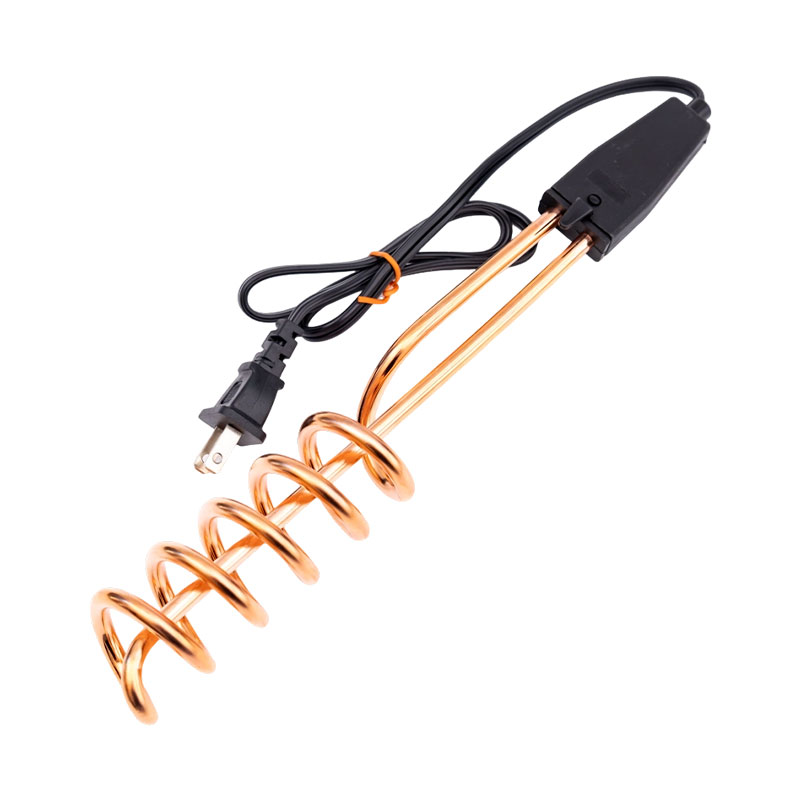
Precision Balance of Gravity and Buoyancy: By integrating high-density, heat-resistant closed-cell composite buoyant materials or utilizing specially designed air buoyancy rings above the heating component, the device ensures the heating tube remains stably suspended at an optimal depth of 5 to 15 centimeters below the liquid surface. This depth is recognized as the "Golden Heating Zone" in thermodynamics, ensuring the heat source is most effectively surrounded by cold water, minimizing ineffective heat loss to the air, and maximizing the energy efficiency of the Floating Immersion Water Heater.
-
360-Degree Radial Thermal Convection System: Since the heating element is located in the upper layer of the water, heat naturally dissipates upwards and is guided outwards by a shroud optimized for fluid dynamics. This design forces colder water from the bottom to rise and replenish the area, forming an efficient physical convection cycle. Experimental data shows that this method is approximately 35% faster than stationary bottom heating, making the Bucket Heater highly efficient and achieving temperature uniformity with less than a 2°C error across the container.
-
Laser Welding and Vacuum Annealing Process: The heating tubes of a high-quality Electric Water Heater Rod typically utilize industrial-grade seamless laser welding and high-vacuum annealing. This eliminates the risk of micro-cracks in welds caused by thermal expansion and contraction. This precision process significantly extends the structural stability of the device during frequent switching and long-term high-temperature use, ensuring a tight seal for electrical components even under extreme water pressure.
What Scenarios are Driving High Search Volume?
In 2026, shifts in global social environments and lifestyles have collectively boosted the search weight of the Floating Water Heater:
-
Fusion of "Nomadic Work" and Glamping: As remote work becomes normalized, more people are choosing to live in RVs, mobile tiny houses, or wilderness campsites. Their demand for a Portable Bucket Heater—efficient solutions that do not require fixed installation—has surged. Floating Immersion Heaters are now a standard life configuration for digital nomads due to their portability and ability to work seamlessly with simple shower pumps.
-
Global Energy Strategy and Household Resilience: In regions with unstable gas supplies or fragile power grids, households commonly stock a Submersible Water Heater as a backup. The Floating Water Heater has become a star product in "survivalist" gear kits because it is compact, easy to store, and far more efficient than a traditional kettle, fitting perfectly into various non-fixed containers like plastic buckets or folding basins.
-
Popularity of Emerging Home Entertainment and Inflatable Spas: Inflatable outdoor hot tubs and oversized pools are surging in popularity. Since these containers are often made of PVC or TPU, traditional Immersion Heaters can melt the container walls due to localized overheating. The Floating Water Heater solves this industry pain point by maintaining physical isolation from the container walls through its buoyancy.
-
Modernization of Winter Agriculture and Livestock: Providing ice-free drinking water for livestock is a critical challenge in cold climates. Floating Tank Heaters are rapidly replacing traditional bottom heaters—which pose fire and shock risks to animals—due to their reliable anti-shock protection and automatic anti-dry-burn shutdown designs, becoming key micro-components in agricultural automation.
Consumers' Biggest "Safety" Pain Point: Is It Truly Reliable?
What are the Major Upgrades in Anti-Shock Technology?
Safety is the core challenge for any Electric Water Heater Rod. The 2026 models of Floating Immersion Water Heaters have reached unprecedented heights in hardware defense:
-
Third-Generation Smart Leakage Sensor (GFCI 3.0): Modern Floating Water Heaters are equipped with digital GFCI 3.0 technology. It not only monitors leakage but analyzes current waveforms to filter out normal inductive interference, cutting the circuit in less than 0.025 seconds if a 5-10 mA leak occurs—a speed faster than a human heartbeat cycle.
-
Multi-Layer Insulation Sealing System: The heating core is filled with high-thermal-conductivity but high-insulation nano-grade magnesium oxide powder. The power outlet is reinforced with aviation-grade epoxy resin, ensuring insulation resistance remains above 200MΩ even after 10,000 hours of continuous immersion, preventing any water ingress in this Portable Heater.
-
Real-Time Grounding Continuity Monitoring: Mid-to-high-end Floating Water Heaters feature LED status lights on the plug to verify if the household outlet is properly grounded. If the device detects an ungrounded or substandard outlet, it will lock the heating function and issue a red warning, actively avoiding electric shock risks.
How to Prevent Fire Hazards Caused by "Dry Burning"?
"Water running out" or "unattended use" are leading causes of fires with traditional heaters. The Floating Water Heater integrates multiple electronic defenses:
-
Non-Contact Capacitive Liquid Level Sensing: By sensing changes in the dielectric constant, the sensor recognizes if the Heating Rod is in water or air. If the liquid level drops below the critical point, the sensor cuts the circuit within milliseconds to prevent the tube from glowing red-hot.
-
Resettable Mechanical Thermal Cut-out: As a physical last line of defense, if the electronic system fails, a bimetallic thermostat switch forces a trip when the temperature reaches 120°C (the typical dry-burn threshold), achieving a reliable physical power disconnection.
-
6-Axis Gyroscope Tilt-Sensing Auto Shut-off: Considering outdoor use where containers might be knocked over, a built-in gyroscope monitors the Floating Heater's posture. If it offsets more than 45 degrees, the system shuts down immediately to prevent it from sliding onto flammable surfaces.
How to Choose Among Global Brands?
What are the Core Performance Indicators?
When purchasing a Floating Water Heater, consumers should focus on these "Gold Standard" parameters:
-
Power Density and Circuit Matching: For standard 110V/15A circuits (common in North America), choose a 1500W Immersion Heater to prevent tripping. For 220V/16A regions, a 3000W Bucket Heater is the best choice for extreme heating efficiency in large tubs.
-
Watt Density (Surface Heat Load): High-quality brands use longer tubes with compact multi-loop designs, meaning less heat dissipation burden per unit area. This low surface load significantly reduces metal fatigue and prevents "red-heating," extending the life of the Floating Immersion Water Heater for years.
-
Wire Specifications and Protection Rating: The power cord should have a cross-section of at least 1.5mm² (pure copper) to reduce self-heating. A Heavy Duty Bucket Heater should also have a cord length of over 2 meters to ensure the power interface stays dry.
Why is There Such a Huge Price Difference?
|
Core Dimension
|
Budget ($15-$35)
|
Standard ($40-$75)
|
Premium ($80+)
|
|
Heating Material
|
201 Stainless Steel (rusts easily)
|
304 Food-grade Stainless Steel
|
316L Stainless Steel + Nano Coating
|
|
Plug Safety
|
Standard 2-pin
|
Built-in GFCI Module
|
Wide-voltage Digital GFCI + Grounding Check
|
|
Control System
|
None or simple fuse
|
Mechanical fixed thermostat (70°C)
|
Digital Control + App Real-time Monitoring
|
|
Buoyant Material
|
Cheap plastic foam (deforms)
|
High-density heat-resistant sponge
|
Aviation-grade hollow aluminum or UV-resistant plastic
|
|
Warranty
|
30-day limited
|
1-year limited warranty
|
3-5 year warranty + Liability Insurance
|
|
Certification
|
CE only (self-declared)
|
ETL / FCC / CE Triple Certification
|
UL Professional + IPX8 Rating
|
Which Erroneous Operations Can Damage the Machine?
What are the "Must-Not-Dos" During Use?
Even a high-end Floating Water Heater can become hazardous if basic electrical logic is violated:
-
Overloading with Multiple Appliances: Never plug the Bucket Heater into the same power strip as an air conditioner or high-power microwave. The continuous large current can melt ordinary power strips and trigger electrical fires.
-
Immediate Removal in "Hot State": This is the most common cause of failure. After cutting power, the internal residual heat is immense. Removing the Floating Immersion Heater from water immediately can cause the metal to become brittle or generate micro-cracks from thermal stress.
-
Use in Strong Chemical Environments: Unless specified as an "Industrial Grade" model, never use a standard Portable Water Heater for strong alkaline cleaners or high-concentration brine, as these will corrode the passivation layer and cause internal leakage.
What are the Tips for Maintenance and Care?
-
"Vinegar Bath" Regular Descaling: Limescale acts as a thermal barrier, increasing electricity bills and causing uneven heating. For any Immersion Heater, soak it in a 1:3 white vinegar solution for 30 minutes monthly to soften and remove calcification.
-
Dry Storage Management: After cooling and wiping the Floating Water Heater dry, store it in a ventilated box. Avoid leaving it on damp bathroom floors to prevent electrochemical oxidation of the controller terminals.
-
Mandatory GFCI Safety Features: Safety features aren't permanent. Press the "Test" button on the Floating Heater's plug monthly. If the "Reset" button doesn't pop out immediately, the protection has failed—discontinue use immediately.


 English
 русский
 Español
 عربى
عربى

 Custom Electric Heater Components Manufacturers