


 English
 русский
 Español
 عربى
عربى
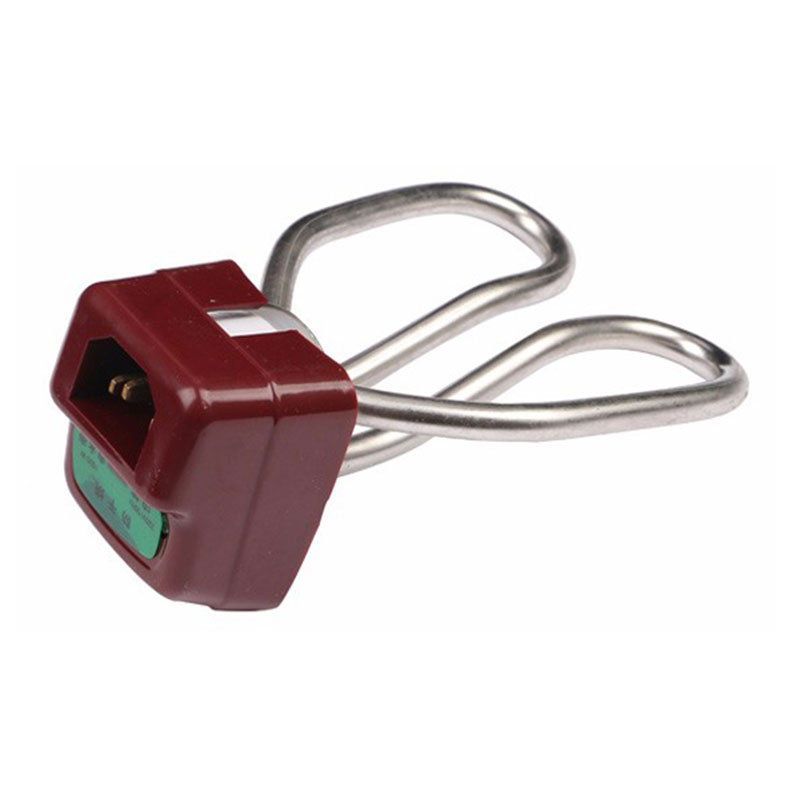
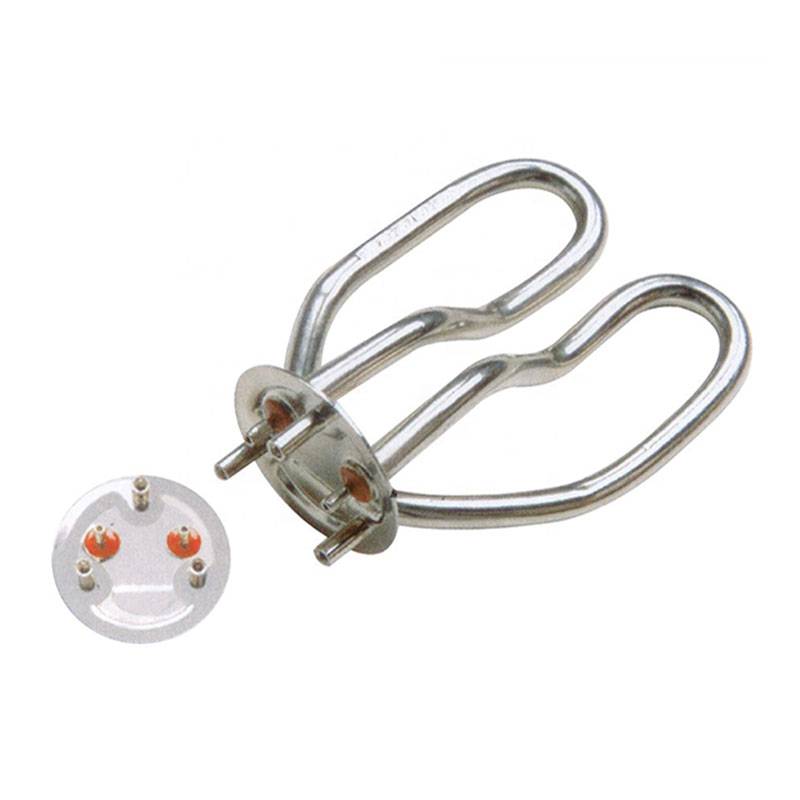
Core Technical Analysis: What is a Water Kettle Heating Element?
In the field of modern household appliances, the Water Kettle Heating Element is the soul of the electric kettle. Its core function is to efficiently and rapidly convert input electrical energy into thermal energy through the Joule heating effect, thereby bringing the water in the container to its boiling point. As a manufacturer that has been providing professional heating elements worldwide since 1990, Danyang Feipeng Electrical Appliance Co., Ltd. has always remained at the forefront of technical research and development in this field.
From a physical construction perspective, a standard Water Kettle Heating Element typically consists of an internal resistance wire (usually nickel-chromium alloy), insulating filler (high-purity magnesium oxide powder), and an external metal sheath tube. This structure ensures that high temperatures are generated when current flows through the interior while remaining completely insulated from the outer shell, guaranteeing user safety.
Core Working Principle
When the power is turned on, current passes through the resistance wire inside the Water Kettle Heating Element. According to Joule's Law, the heat generated is proportional to the square of the current and the resistance. The heat is rapidly conducted through the magnesium oxide powder layer to the metal tube wall, and then released into the water through thermal conduction and convection. Danyang Feipeng Electrical Appliance Co., Ltd. employs high-precision filling technology in this process to ensure uniform heat generation and high thermal conversion efficiency.
Comparison of Key Technical Parameters
To more intuitively understand the performance differences of different Water Kettle Heating Element specifications, the following table compares mainstream solutions currently on the market:
| Parameter | Standard Spiral Element | Concealed Stainless Steel Base | High-Power Thick Film Element |
| Heat Start Time | Fast | Moderate | Extremely Fast |
| Thermal Efficiency | 90% - 92% | 93% - 95% | Over 97% |
| Scale Resistance | Weak (Large surface area) | Strong (Flat surface) | Extremely Strong |
| Service Life | Approx. 3,000 - 5,000 cycles | Approx. 8,000 - 10,000 cycles | Over 15,000 cycles |
| Insulation Strength | 1500V/min | 1800V/min | 2500V/min |
Status in Modern Smart Manufacturing
As China Electric Heating Elements and Parts manufacturers and suppliers, Danyang Feipeng Electrical Appliance Co., Ltd. understands that the quality of the Water Kettle Heating Element directly determines the energy efficiency rating and safety evaluation of the entire appliance. A high-quality element not only shortens boiling time (usually boiling 1.5L of water within 3-5 minutes) but also prevents the kettle from melting due to dry boiling under extreme conditions.
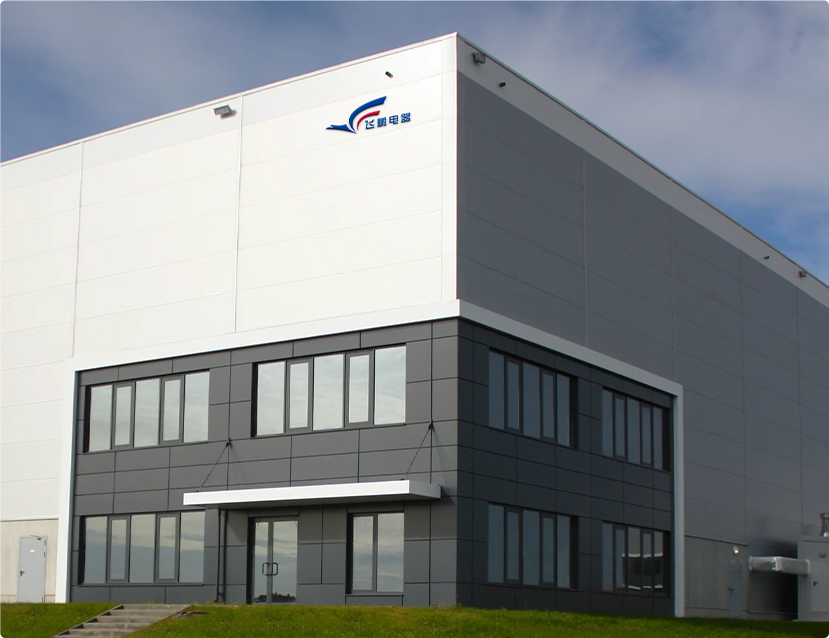
After more than 30 years of development, Danyang Feipeng Electrical Appliance Co., Ltd. has grown into a national high-tech enterprise covering an area of more than 6,000 square meters. Its produced Water Kettle Heating Element is not just a heating component; it is an industrial masterpiece integrating precision design, advanced materials science, and rigorous laboratory testing.
Evolution of the Core Keyword: From Exposed Coils to Concealed Bases
The design evolution of the Water Kettle Heating Element has witnessed the leap of modern home appliances from function-driven to health and aesthetics-driven. Since 1990, Danyang Feipeng Electrical Appliance Co., Ltd. has closely followed technological changes, participating in and promoting the comprehensive upgrade of heating elements from early open coils to modern integrated chassis.
Early Exposed Spiral Heating Elements
In the 1990s, most electric kettles used a spiral Water Kettle Heating Element immersed directly in the water.
Structural Features: Composed of a metal tube bent into a spiral shape (usually copper-nickel plated or stainless steel), fixed directly to the side wall or bottom of the kettle body.
Advantages: Because the element is in direct contact with water, the heat conduction path is extremely short, making the initial heating speed very fast.
Limitations: Long-term use causes limescale to quickly wrap around the coil surface, which not only reduces thermal efficiency but also causes local overheating. Additionally, the complex geometry makes manual cleaning extremely difficult.
Modern Concealed Base Heaters
Entering the 21st century, concealed designs became mainstream. This solution welds the Water Kettle Heating Element to the back of a stainless steel base plate, making the interior bottom of the kettle completely flat.
Design Breakthrough: Water no longer directly contacts the heating tube but is heated indirectly through the high thermal conductivity of the stainless steel base.
Core Advantages: Greatly reduces limescale accumulation, and the bottom of the kettle is smooth, allowing users to complete cleaning with a simple wipe.
Manufacturing Strength: Danyang Feipeng Electrical Appliance Co., Ltd. has a modern factory covering more than 6,000 square meters. Its production line is equipped with mature laser welding and integrated assembly technology to ensure the thermal resistance between the base and the heating tube is minimized.
Comparison of Heating Element Types
| Performance Characteristic | Exposed Coil Element | Concealed Base Element | Thick Film Heater |
| Installation | Exposed in kettle | Hidden at bottom | Ultra-thin integrated |
| Cleaning Ease | Very Low | High (Flat bottom) | Extremely High |
| Heat Distribution | Localized hot spots | More uniform | Extremely uniform |
| Minimum Water Level | Must submerge coil | Cover base plate | Extremely low |
| Production Process | Tube bending + Sealing | Welding + Stamping | Screen printing + Sintering |
Key Materials and Their Impact on Heating Performance
In the manufacturing of the Water Kettle Heating Element, the choice of material determines not only thermal efficiency but also durability, food safety, and performance in different water quality environments. Danyang Feipeng Electrical Appliance Co., Ltd. has established strict standards in material science application based on over 30 years of global market experience.
The Core Position of Stainless Steel
Currently, stainless steel is the most mainstream outer sheath material for the Water Kettle Heating Element. It provides excellent corrosion resistance and mechanical strength.
SUS 304: As a food-grade standard, it performs excellently in most common water qualities and has good oxidation resistance.
SUS 316L: For environments with hard water or special corrosion requirements, Danyang Feipeng Electrical Appliance Co., Ltd. provides 316L solutions containing Molybdenum, offering stronger resistance to pitting corrosion from chlorine ions.
The Thermal Efficiency Advantage of Copper
While stainless steel dominates the concealed base market, copper Water Kettle Heating Element solutions still hold a place in specific immersion heaters due to high conductivity.
Thermal Characteristics: The thermal conductivity of copper is approximately 401 W/(m K), which is much higher than that of stainless steel (16-24 W/(m K)).
Surface Treatment: To prevent copper from reacting with water at high temperatures, nickel plating or special surface coatings are usually applied by Danyang Feipeng Electrical Appliance Co., Ltd. to ensure long-term stability.
Performance Parameter Comparison of Main Materials
| Physical/Chemical Index | SUS 304 Stainless Steel | SUS 316L Stainless Steel | Pure Copper (Nickel Plated) | Aluminum Alloy |
| Thermal Conductivity (W/m K) | 16.2 | 16.3 | 398 | 205 - 230 |
| Oxidation Limit Temp | Approx. 850 C | Approx. 900 C | Approx. 300 C | Approx. 400 C |
| Chloride Resistance | Moderate | High | Average | Low |
| Food Safety Grade | Excellent | Superior | Requires Coating | Requires Isolation |
Performance Indicators: How to Measure an Excellent Water Kettle Heating Element?
When evaluating a Water Kettle Heating Element, one must consider its stability and energy efficiency under long-term high-frequency use. Danyang Feipeng Electrical Appliance Co., Ltd. has established a rigorous performance evaluation system to ensure every output meets global smart manufacturing standards.
Power Density and Heating Rate
Power (Wattage) is the primary indicator of performance. Household kettles are usually set between 1500W and 3000W.
High Power Advantage: Significantly shortens boiling time. For example, a 2200W element can boil 1.7L of water in about 4 minutes.
Technical Challenge: Higher power increases the surface load. Danyang Feipeng Electrical Appliance Co., Ltd. optimizes the geometric distribution of internal resistance wires to ensure uniform heat diffusion even under high power, avoiding localized burnout.
Electrical Strength and Insulation
Safety is the lifeline of the Water Kettle Heating Element, depending on the quality of the magnesium oxide powder used.
Insulation Resistance: The element must maintain extremely high resistance (usually over 100M ohms) to prevent current leakage.
Pressure Testing: High-standard elements must pass high-voltage tests (1500V-3750V) to ensure no breakdown occurs in high humidity and high-temperature environments.
Reference Table for Heating Element Performance
| Evaluation Dimension | Industry Standard | Danyang Feipeng Standard | Performance Impact |
| Wattage Tolerance | +5% / -10% | +/- 5% | Accuracy of boiling time |
| Insulation Resistance | 5 M ohms | 500 M ohms | User operation safety |
| Leakage Current | 0.75 mA | 0.2 mA | Prevents circuit tripping |
| Service Life | 3,000 hours | 5,000 hours | Kettle longevity |
| Thermal Efficiency | 88% - 91% | 95% | Lowers energy loss |
Safety Defense Mechanisms: Core Components Working with the Heating Element
The Water Kettle Heating Element does not operate in isolation. Danyang Feipeng Electrical Appliance Co., Ltd. prioritizes system safety to ensure the element can achieve instantaneous self-protection under abnormal conditions.
Steam Induction and Automatic Power-Off
When water boils and generates steam, the steam acts on a bimetallic sensor through a duct, triggering a physical lever to trip and cut off the current to the Water Kettle Heating Element. This requires the element to have low thermal inertia to prevent residual boiling.
Boil-Dry Protection
This is critical for fire prevention. When there is no water in the kettle, the temperature of the Water Kettle Heating Element soars rapidly.
Reaction Mechanism: The thermal protector at the bottom senses abnormal temperature rises (usually set between 105 C - 130 C) and immediately cuts the circuit. Danyang Feipeng Electrical Appliance Co., Ltd. conducts thousands of simulated dry-boil tests in its professional laboratory to ensure response speed and component durability.
Safety Component Response Parameters
| Mechanism | Trigger Threshold | Response Speed | Protection Effect |
| Steam Cut-off | 100 C (Steam) | Less than 15 seconds | Prevents over-boiling |
| Primary Boil-Dry | 105 C - 115 C | Less than 5 seconds | Prevents element deformation |
| Secondary Overheat | 125 C - 135 C | Less than 2 seconds | Prevents shell melting |
| Thermal Fuse | 150 C - 200 C | Instant | Ultimate fire prevention |
Maintenance: Extending the Life of the Water Kettle Heating Element
Scientific maintenance is vital to ensure long-term efficiency. Danyang Feipeng Electrical Appliance Co., Ltd. has found that about 70% of element damage is caused by improper maintenance or scale accumulation.
Damage Mechanism of Limescale
Limescale acts as an insulator. When the Water Kettle Heating Element is covered in scale, its thermal conductivity drops sharply.
Thermal Resistance: Heat cannot be transferred quickly to the water, causing the metal tube wall to overheat and accelerate material oxidation. Even 1mm of scale can reduce heating efficiency by more than 10%.
Scientific Cleaning Methods
Citric Acid Method: Mix citric acid with water, boil, and let stand for 15-30 minutes to dissolve deposits on the concealed base safely.
Avoid Physical Scrapers: Never use steel wool to scrub the stainless steel base, as it damages the protective layer. Danyang Feipeng Electrical Appliance Co., Ltd. elements are processed with smooth surfaces specifically to make cleaning easier.
Maintenance Frequency Table based on Water Quality
| Water Type | Mineral Content (ppm) | Scaling Speed | Cleaning Frequency |
| Purified Water | Less than 50 | Very Slow | Every 3-6 months |
| Tap Water (Soft) | 50 - 150 | Moderate | Every 1-2 months |
| Well Water (Hard) | Over 250 | Very Fast | Every 2 weeks |
FAQ
Why does the kettle get louder during heating?
This is caused by cavitation. Limescale creates tiny gaps where water vaporizes rapidly into bubbles that collapse and vibrate. Danyang Feipeng Electrical Appliance Co., Ltd. recommends regular descaling to reduce noise and protect the Water Kettle Heating Element.
Are the rust spots on the element surface dangerous?
These are usually mineral deposits or rainbow spots, not actual rust. Elements from Danyang Feipeng Electrical Appliance Co., Ltd. use high-grade 304 or 316L stainless steel. If vinegar removes the spot, it was just scale.
Why does the plug or cord get warm with high-power elements?
High-power Water Kettle Heating Element units (above 2200W) require high-specification cords. Danyang Feipeng Electrical Appliance Co., Ltd. operates a dedicated power cord assembly line to ensure heating elements and cords are perfectly matched in current-carrying capacity.
What is the lifespan difference between immersion and concealed elements?
| Dimension | Exposed Spiral Element | Concealed Base Element |
| Thermal Stress | High expansion/deformation | Stable welded structure |
| Mechanical Strength | Prone to bending | High impact resistance |
| Typical Life (Hours) | 2,000 - 3,500 | 5,000 - 8,000 |
Will the element burn out immediately if the kettle is empty?
Not necessarily. If the kettle has sensitive boil-dry protection designed by Danyang Feipeng Electrical Appliance Co., Ltd., the circuit will cut off before the Water Kettle Heating Element reaches its limit. However, frequent dry boiling causes material fatigue and should be avoided.
Manufacturing Excellence and Global Commitment
As China Electric Heating Elements and Parts manufacturers and suppliers, Danyang Feipeng Electrical Appliance Co., Ltd. remains committed to data-driven product iteration. From material selection in the R&D stage to automated production in the 6,000 square meter workshop, the company ensures every Water Kettle Heating Element operates reliably in complex electrical environments worldwide.
